As the United Nations prepares for its 2025 Peacebuilding Architecture Review (PABR), civil society actors have mobilised to ensure that their perspectives contribute to reshaping the UN’s peacebuilding efforts. These reviews serve a dual purpose: evaluating the UN’s past and present peacebuilding and peace-sustaining efforts and enhancing the effectiveness of the UN’s future initiatives. Two recent consultations held in Nairobi, Kenya provided insights towards this process.
In May 2024, Life & Peace Institute, Saferworld, and Interpeace hosted a dialogue to share perspectives on the current state of peace and security in the Horn of Africa. The dialogue assessed the UN's effectiveness and relevance in peacebuilding efforts, identifying challenges and areas for improvement. Key points raised in the dialogue included:
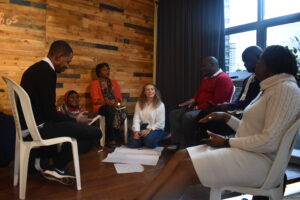
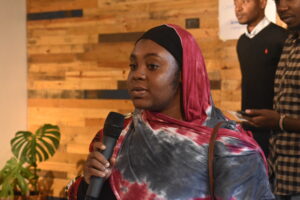
Graeme Simpson, Principal Representative in New York, and Senior Peacebuilding Advisor at Interpeace, emphasised the importance of institutionalising civil societies voices in the international system, stating, “For too long, the multilateral system remains about only governments, but people don’t trust or cannot access their governments - we need to institutionalise civil society voices in the international system.”
Another participant stated, “What we want from the UN is genuine partnerships rooted in trust, we don’t want to be perceived as a tick in the box for them to fulfil a donor requirement.”

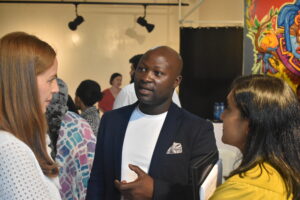
The ImPACT Coalition on Peacebuilding, convened on 10 May 2024 at the UN Civil Society Conference, was enriched by insights shared by variety of peacebuilders to ensure that the aspirations for peace are grounded in a peacebuilding architecture that is effective and adaptable to changing circumstances. The session focused on building the ImPACT Coalition as a tool to operationalise the aspirations of the Pact for the Future through the PBAR, and to ensure that the 2025 Peacebuilding Architecture is “fit for purpose”. The session brainstormed ways for civil society organisations to utilise the ImPACT Coalition effectively, including by identifying steps to strengthen partnerships for peacebuilding between the UN, civil society, and Member States.
Abdalla El-Saffi, Life & Peace Institute, Sudan Country manager emphasised the importance of recognising the UN's current legitimacy crisis and the need for reform in the peacebuilding vision. He highlighted the unique opportunity presented by the upcoming PBAR to address modern challenges such as climate change, migration, and digital risks. El-Saffi stressed the need for collaboration among multi-stakeholder, inclusive development, and grassroots impact for sustainable peace.
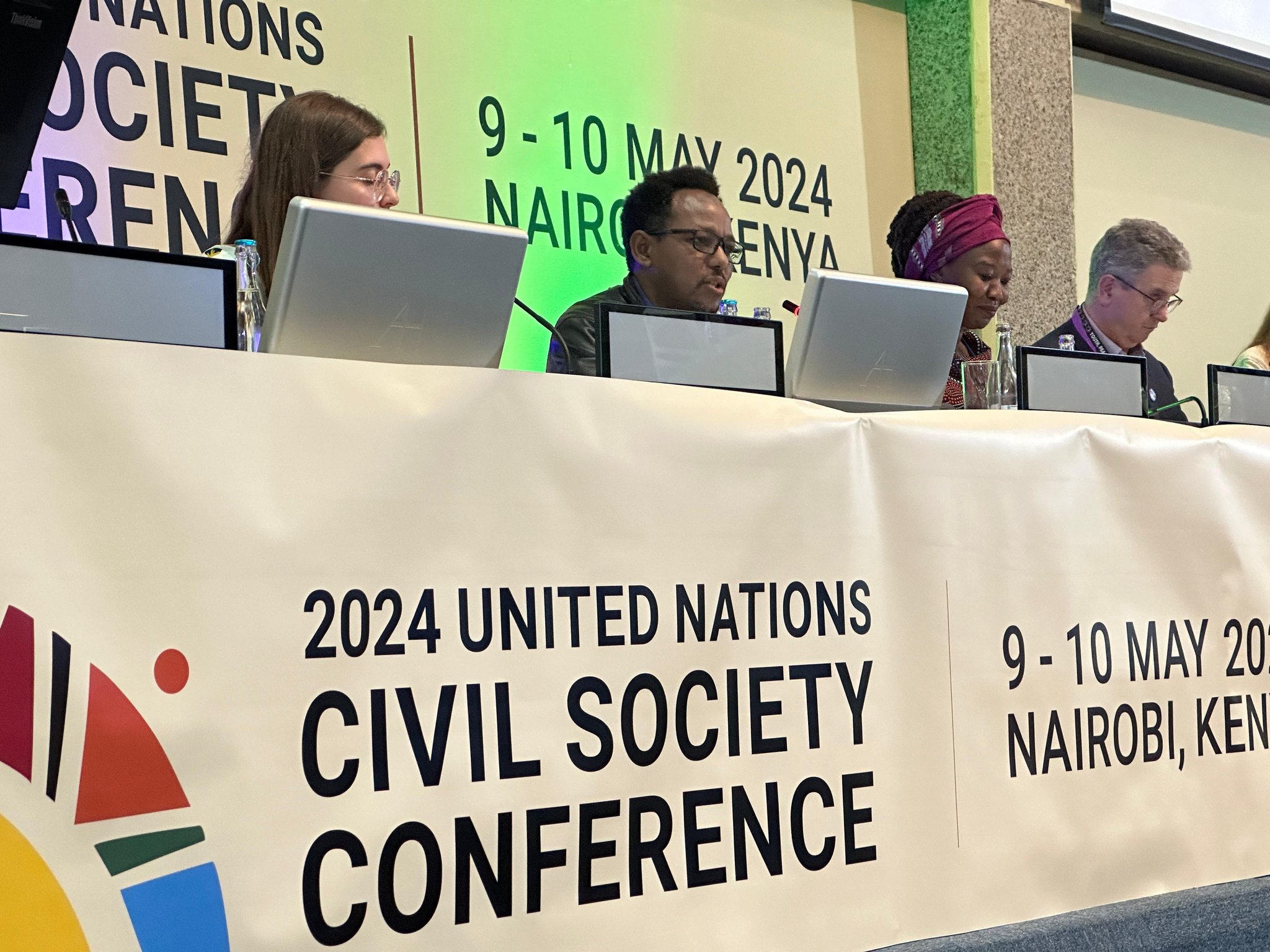
Ana Maria Bernal-Gaviria, representing Grupo Internacional de Paz (GIP), an NGO committed to social transformation for peacebuilding in Colombia, highlighted the CSO-UN Dialogue Initiative on Peacebuilding, and its goal to institutionalising civil society engagement in UN policy processes, such as the PBAR. Moreover, she pointed out the disconnect between the policy discussions happening in New York, and the peacebuilding work peacebuilders are doing on the ground, and thus the need to ensure that the upcoming PBAR is informed by, and reflective of, the work local peacebuilders are doing around the world.
Upholding the calls from civil society for sustained partnerships, localised funding and decision-making processes, and multi-stakeholder collaboration is essential in creating a peacebuilding architecture that is "fit for purpose" in addressing the complexities of 21st-century conflicts. Because, without policies grounded in people's experiences, implementation becomes challenging, if not impossible.
The Ministry of National Unity and Civic Engagement (MINUBUMWE), in collaboration with Interpeace has released new research titled: a Community-based Participatory Framework for the Assessment of Resilience in Rwanda. These findings were presented, along with insightful recommendations, during a stakeholder engagement event held on 8 March 2024 in Kigali, Rwanda.
The objective of this study, conducted across all 30 districts of Rwanda, was fourfold. Firstly, it aimed to formulate and validate resilience indicators for structuring future research activities, policies, and programmes related to community resilience in Rwanda. Secondly, it sought to devise a participatory, multi-level methodology for assessing resilience indicators, drawing from existing frameworks, while tailoring them to Rwanda's specific context. Additionally, the study aimed to establish a baseline for community resilience across all districts of Rwanda and to propose actionable policy and programmatic recommendations for enhancing resilience nationwide. Involving a significant sample of 7,481 individuals, the study adopted a mixed-methods approach, integrating both qualitative and quantitative methods. Resilience was evaluated across four levels—individual, household, community, and institutional—using a comprehensive set of 38 indicators.
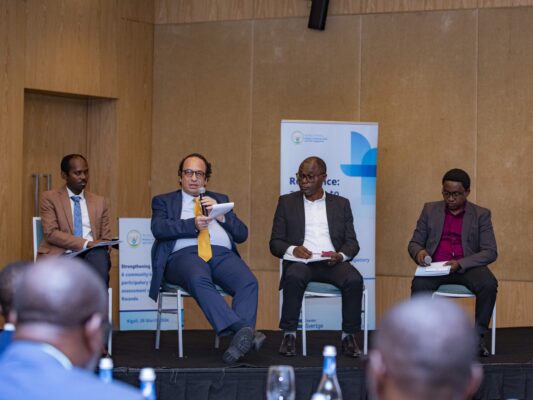
The findings underscored a commendable degree of resilience across all assessed levels, demonstrating a significant milestone three decades after the Genocide against the Tutsi. Recommendations emphasised the need for intensified efforts in societal healing initiatives, infrastructure development, and facilitating access to finance and employment opportunities.
During the stakeholder engagement event, Professor Francois Masabo, a lecturer and researcher at the University of Rwanda, lauded the study. He acknowledged its holistic approach and alignment with Rwanda's contextual realities.
The study received financial support from the Government of Sweden through its embassy in Rwanda. Martina Fors Mohlin, Counselor and Head of Development Cooperation at this embassy, reiterated Sweden's commitment to supporting the implementation of the developed framework within Rwandan communities. “We are proud to have taken part in this study by supporting Interpeace and also the ministry (MINUBUMWE) and enabling this conversation to take place. I very much look forward to working together to take those conclusions forward as we implement them in the society,” she noted.
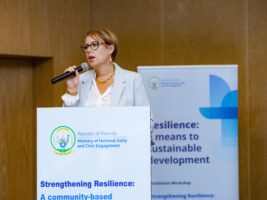
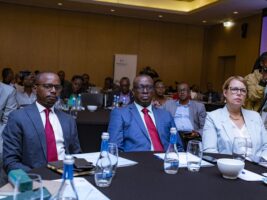
The Community-based Participatory Framework for the Assessment of Resilience stands as a landmark initiative in Rwanda. It serves as a foundational reference point for future studies in the field of resilience within the country. Honorable Dr. Jean Damascene Bizimana, Minister of National Unity and Civic Engagement, underscored the timeliness of the research, noting Government of Rwanda’ s shift through MINUBUMWE, towards enhancing and strengthening the resilience of Rwandans amidst ongoing challenges stemming from the consequences of the Genocide agains the Tutsi.
“Resilience is one of Rwandan values. We want to design programmes and initiatives that are informed by our cultural values, which will help to effectively address our specific problems. This research that MINUBUMWE conducted jointly with Interpeace responds to this need. It will enable us to strengthen the resilience of Rwandans, to build a peaceful and prosperous country based on concrete and realistic indicators,” Hon. Bizimana highlighted.

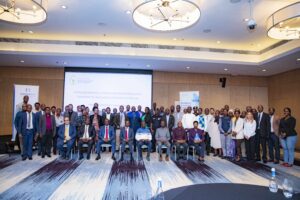
As a way forward, a comprehensive roadmap is currently in development. This roadmap will guide the implementation of findings and recommendations derived from the research study. It serves as a strategic blueprint for all stakeholders involved in societal healing and resilience efforts. Each stakeholder will be tasked with setting specific strategic and programmatic objectives, along with corresponding targets and actions. These objectives aim to sustain the gains achieved in resilience while simultaneously addressing any fragilities identified during the research study.
In Côte d'Ivoire, the socio-political environment and democratic governance remain fragile in many localities, more than a decade after the 2010 post-electoral crisis that officially claimed more than three thousand lives. The population's low level of participation in the management of public affairs, coupled with persistent tensions surrounding the appointment of certain customary or political authorities, and a feeling of abandonment and mistrust towards certain government authorities, provide fertile ground for the political manipulation of latent conflicts and tensions within communities.
This risk is particularly acute during elections. On the occasion of the local elections (municipal and regional on October 13, 2018) and the presidential election on October 31, 2020, violent confrontations within the population took place. In some localities, in addition to these tensions, accusations of pressure, manipulation of the electoral process and falsification of results were made between supporters. These cycles of political and electoral violence are further exacerbated by the lack of support for local democratic governance mechanisms, which are often weakened.
In response to these threats to peace and cohesion, Indigo Côte d'Ivoire and Interpeace, with the technical support of their partner SeeD (Centre for Sustainable Peace and Democratic Development), carried out a consultation process and a survey called SCORE, to analyze the key determinants and levers for preventing political violence in the country.
One of the key messages to emerge from this research is that "a locality's vulnerability to political violence is illustrated by a context in which communities tend to withdraw into themselves and avoid integrating with others".
Such contexts can be identified by the uneasy nature of daily interactions between social groups (political, religious, ethnic) and the easy transition from "harmless" events (e.g. a soccer match or a car accident) to inter-group conflict. This dynamic weakens the social bonds between communities, predisposing them to violent confrontation.
In response to these findings, the “Cadre de Collaboration” (CdC - Collaboration Frameworks) have been set up. This collaborative governance engineering of conflict prevention and management initiatives at local level has produced satisfactory results, such as the absence of violence observed during the municipal, senatorial and regional elections in 2023, in the areas where the project was implemented.
In Béoumi (central Côte d'Ivoire), for example, the CDC was set up in a context of great mistrust between communities. However, thanks to their actions, the first members of the collaborative framework, essentially made up of influential members of a single community, managed to integrate members of other communities into the group. They achieved this by canvassing relevant and influential actors to facilitate the participation of other communities in community-building initiatives; the latter were subsequently invited to the various workshops and dialogue sessions with the CDC, which facilitated their adhesion. Thanks to this strategy, the framework has a heterogeneous and inter-community coloration and now carries out activities in the different neighborhoods of the locality.
Similarly, the town of Divo (in the south of the country), which was notorious for inter-community clashes at every election, whether local or national, was able to win the bet of "Zero violence" at the last poll.
"In Divo, our CDC is quite young, dating back to March 2023. But before that, the town of Divo was marked by a succession of post-electoral conflicts. And these conflicts have remained etched in the collective memory. As a result, violence peaked in August 2020 (presidential election), resulting in loss of life (...). There was a certain polarization between natives and non-natives. The CDC initiated a number of actions aimed at these people, who were heavily involved in the violence of 2020. There were talk-debates with women who were also actively involved in the conflicts, and also a meeting with young people. This helped us enormously, as this year's regional and municipal elections took place peacefully. The CDC met with the political candidates and staff, and they got involved in the peace process. They resolved to talk to their militants to ensure that this year's elections take place in good conditions, and that's what's been done", says the sub-prefect of Divo.
Several of the region's administrative authorities have expressed the wish to see a Collaborative Framework set up in their constituencies. And indeed, as the 2025 presidential election approaches, there seems to be a major need to scale up and strengthen these prevention structures and mechanisms within the areas most affected during previous electoral cycles, as expressed by the stakeholders. The aim is to prevent divisions between supporters of different political leaders turning into community conflicts in the long term.
As the Ivorian Minister for National Cohesion, Solidarity and the Fight against Poverty, LOGBOH Myss Belmonde DOGO, put it at the close of the project: "As the project draws to a close, and with the 2025 elections looming, anticipation must be the watchword. We need to step up the pace so that we don't just act on the eve of the elections and reap positive results. That's why I'm inviting Interpeace, Indigo, SeeD and others to join us in building the future. (...) It's important to be able to extend this collaborative, citizen-based governance engineering beyond the localities that have already benefited, because the results show that this is an approach that can really help reduce violence and conflict in a sustainable way, and above all through the commitment and ownership of everyone", she asserted.
The head of the European Union delegation to Côte d'Ivoire, Ambassador Francesca Di Mauro, agrees: "We are all looking ahead to the upcoming elections, particularly the presidential elections, which are generating a great deal of excitement and therefore potentially present risks. This general context arouses our attention and challenges us all to consider our responsibility and our role in ensuring that the democratic game and the animation of political life are not opportunities for violence, but rather moments of dialogue to build a harmonious and peaceful society".
In line with these orientations, one of the main recommendations of this survey is the short-term implementation of a barometric tool enabling an early warning and response system based on the results of the SCORE analysis, going hand in hand with the scaling-up of collaborative frameworks throughout Côte d'Ivoire.
Access all SCORE survey results here and the summary report of analyses and recommendations here.
Mogadishu, Somalia, 2 March 2024 – The Ministry of Interior, Federal Affairs & Reconciliation (MOIFAR) of the Federal Government of Somalia and Interpeace, an international organization dedicated to peacebuilding, have signed a Memorandum of Understanding (MoU) to advance the National Reconciliation Plan. This plan aims to rebuild trust among the Somali people and in government institutions for peaceful co-existence, recovery, and reconstruction.
The MoU, signed by His Excellency Ahmed Moallim Fiqi, Minister, MOIFAR, and Itonde Kakoma, President of Interpeace, establishes a partnership focused on promoting reconciliation, sharing expertise, and supporting peacebuilding processes across Somalia. Through this collaboration, MOIFAR and Interpeace aim to work on key areas to empower local communities, civil society, and government stakeholders in their joint pursuit of sustainable peace.
In his remarks on the partnership, Minister Ahmed Moallim Fiqi stated, "We are honored to commence this vital partnership with Interpeace. Together, we will endeavor to foster an environment conducive to peace and reconciliation through the framework of the national reconciliation pillars, which are crucial for Somalia's stability."
Interpeace, known for its 30 years of community-led peacebuilding efforts, will utilise its experience and networks to aid MOIFAR's endeavors in Somalia. "This partnership represents a significant step towards a genuine commitment to advancing the National Reconciliation Plan," affirmed Itonde Kakoma, President of Interpeace.
The collaboration between MOIFAR and Interpeace marks a significant step forward in advancing peacebuilding and reconciliation efforts in Somalia. By embracing the principles of peace, dignity and participatory approaches, both parties are committed to contributing meaningfully to Somalia's journey towards sustainable peace and development.
For more information please contact:
Ahmed Abdullahi
Country Representative, Somalia Interpeace
abdullahi@interpeace.org