In many developing countries, traditional or informal justice systems are responsible for the resolution of over 80% of conflicts in a community. These conflict resolution mechanisms play a significant role in rural and urban areas worldwide, addressing matters ranging from local crime to protection of land and property, to issues concerning the resolution of family disputes and inheritance. As a result, these practices and traditions are deeply entrenched in local populations and pre-date formal justice systems. In most cases, these practices offer benefits in costs and physical accessibility. However, research has shown that these conflict resolution mechanisms disproportionately affect women and children.
In Guinea-Bissau, traditional conflict resolution mechanisms are deeply rooted in the costumes of the different communities of the country. In 2019, as part of a larger programme, UNDP and UNICEF, funded by the Peacebuilding Fund, asked Interpeace and Voz di Paz to develop a project of “Technical Support to Strengthen the Integration of Traditional Justice in the Stabilization of the Justice Sector in Guinea-Bissau through Peacebuilding.” The project included a participatory research process, which resulted in the publication of a report that seeks to contribute to a discussion about traditional mechanisms of conflict resolution, focusing on the conflicts involving women and children. Research was conducted through six focus-groups in three regions of the country. These results were then validated through a participatory process. The study focuses on exploring the traditional justice system in Guinea-Bissau, by focusing on women’s issues, the treatment of children in traditional justice and the perception of the population regarding traditional and formal justice systems.
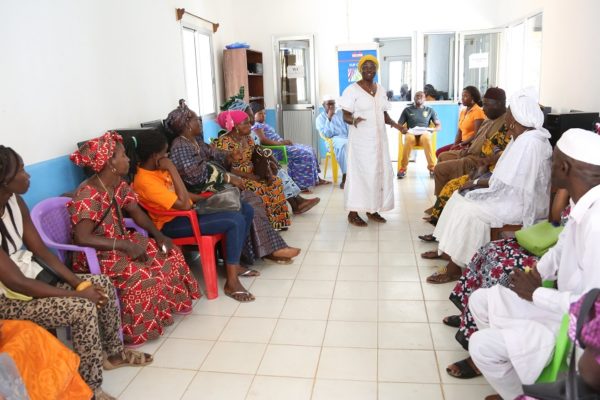
Photo credit: Voz di Paz
The study showed that traditional conflict resolution mechanisms in Guinea-Bissau are centered on dialogue and reconciliation and are guided by people who have historical and/or religious importance in the community – village chiefs, elders, imams, priests and the committees established after independence. Therefore, the application of traditional justice is versatile and depends on the attitude of the actor who applies it. Regarding the treatment of women, there was an idea that was often raised: women have a subordinate position vis-à-vis men – and especially their husbands – and must "sufri" (resign themselves). As a result, in the opinion of many of the women consulted, their problems are not solved impartially and fairly by traditional justice mechanisms. Concerning children, their position is subordinate to older people, and are very rarely given the opportunity to speak during these proceedings.
To promote peaceful and inclusive societies there must be an effort to improve traditional justice systems in developing countries. Therefore, during the participatory validation session, key recommendations were raised to improve these practices in Guinea-Bissau: a) including women and youth in councils that mediate conflicts in communities, can strengthen their participation and ensure greater openness; b) allow men and women to be present and listened to equally, can make the procedures more inclusive; c) village chiefs and committees should work to promote transparent decision-making processes in order to improve legitimacy and impartiality of traditional justice; and lastly, c) improve respect for the rights of women and children in traditional justice. The report also includes recommendations for institutions and organizations working with the traditional justice systems.
Read full report in Portuguese here.
Read Executive Summary in English here.
Read Executive Summary in French here.
Dr Agnes Abuom, moderator of the Central Committee of the World Council of Churches and director of TAABCO Research and Development Consultants, is the newest member of Interpeace’s Governing Board. Dr Abuom was formally announced as member of the Board on Tuesday, 3 December 2019, during the board’s biannual meeting in Kigali, Rwanda.
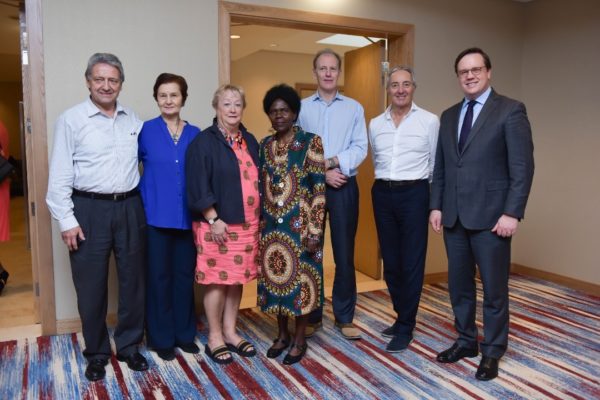
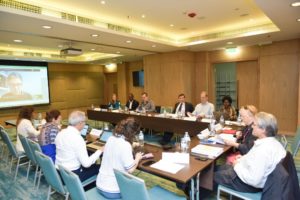
Matthias Stiefel, Necla Tschirgi, Monica McWilliams, Agnes Abuom, Andrew Gilmour, Martin Aked and Scott Weber. Photo credit: Interpeace
Dr Abuom is a committed peacebuilder, gender and human rights advocate. She has a wealth of knowledge and experience in ecumenical, community work and peacebuilding in the Horn of Africa and other parts of the world. She was elected Moderator of the Central Committee of the World Council of Churches (WCC) in 2013 at its General Assembly in Busan, South Korea. She is the first woman and the first African to hold the position.
Dr. Agnes Abuom has been active with WCC since 1975, including working for the organization in Switzerland, Sudan and Zimbabwe. She served as WCC Africa president from 1999 to 2006. She has also worked for the Anglican Church of Kenya on development and civic programs and served as a member of the Advisory Committee for Peace of All Africa Conference of Churches, the African Council of Religious Leaders (ACRL), Religions for Peace, and National Council of Churches of Kenya.
“I am thrilled to serve on the Governing Board of Interpeace. The work of peace requires that everyone plays a role. Interpeace’s wisdom, experience and its commitment to give a voice to and build capacities of local communities contributes to sustainable peace,” said Dr. Abuom.
She added: “Interpeace’s vision to create safe spaces for reconciliation and sustainable peace, resonates with my faith. As the President of Interpeace says, peace is a calling. This is what has inspired me to serve on this board.”
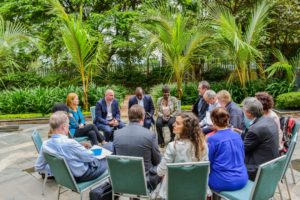
Dr. Abuom’s involvement in politics forced her into exile in 1976 to Sweden where she later studied and obtained a degree in education and a doctorate in missiology. She leads TAABCO Research and Development Consultants - a consulting firm for civil society and aid organisations - as the director.
“Agnes’s experience will greatly enrich our efforts to support home-grown solutions to conflict and to build on the resilience already present in societies,” said Scott Weber, President of Interpeace.
She has previously served as a member of the Interpeace Eastern and Central Africa Board.
The Interpeace Governing Board is the highest decision-making body of the organization and plays a key role in defining Interpeace’s overall strategy. It is the legal authority that is responsible for the organization.
The Governing Board is made up of prominent individuals from the government, international, and business sectors. There is also a seat for the host government, Switzerland, and a designated representative of the United Nations Secretary-General.
We are sad to announce the death of Mambo Zawadi, programme coordinator at Sofepadi, our local partner in the Democratic Republic of Congo (DRC). Mrs Zawadi and her husband died in a plane crash this Sunday, 24 November 2019.
The couple were returning to Beni from a family visit in Bukavu, when the plane went down shortly after take-off in Goma, a city in the East of DRC. The plane was carrying 17 passengers - including Ms Zawadi and her husband – and two crew members.
We have lost a dear friend, valued colleague and courageous peacebuilder.
“I have learned of the tragic death of our colleague in DRC, Mrs Mambo Zawadi and her husband in a plane crash near Goma. My deepest condolences to her family and all our brave colleagues,” Scott Weber, President of Interpeace writes on Twitter.
Mambo’s death is an irreplaceable loss, but we will be there to help her team to continue to build a safer DRC for all.
We will be working closely with our partner Sofepadi in the coming days and weeks to offer them as much support as we can at this difficult time, and to ensure their great work and the work that Mambo heartily believed in continues.
Our hearts and prayers go out to Mambo’s family and all those affected by Sunday’s crash. Mambo’s memory will live on in all that we do, for many years to come.
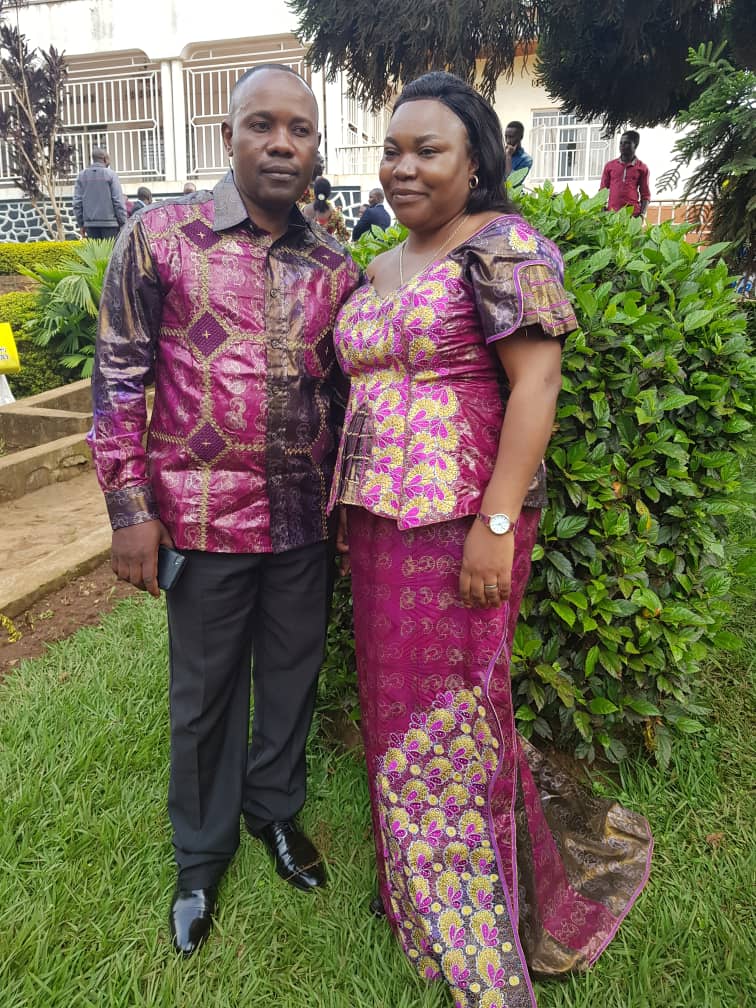
Ms Mambo Zawadi and her husband
Our new initiative, “Principles for Inclusive Peace” is among 10 of the most promising governance projects presented at the 2019 Paris Peace Forum (PPF) that ended in the French capital on 13 November. The project was chosen from over 700 initial submissions and 114 projects presented at the Forum.
“Principles for Inclusive Peace” is a project initiated by Interpeace and co-led by the Swedish Ministry for Foreign Affairs to open a global participatory process and establish a new normative framework and standard to guide inclusive and effective peace processes around the world. Interpeace developed the initiative after identifying fundamental challenges to peace processes today – as a fresh new approach to re-think the way these processes are conceived and structured.
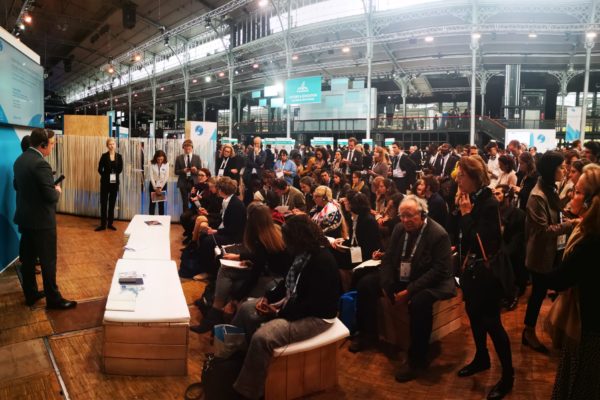
Paris Peace Forum 2019. Photo credit: Interpeace
Announcing the selected projects for short-list of ten at the closing ceremony of the Paris Peace Forum, Trisha Shetty of the scale-up projects committee said: “We will provide mentorship to these 10 new projects. We will follow up with them; we will ask them how we can be of service, what is the best marriage we can have between our team and the project members”.
“This is a recognition of the critical need to re-think peace processes from a conceptual and practical point of view, but also to do it in a collective way so that robust principles can guide all those who will be leading peace efforts in the future,” said President of Interpeace, Scott Weber.
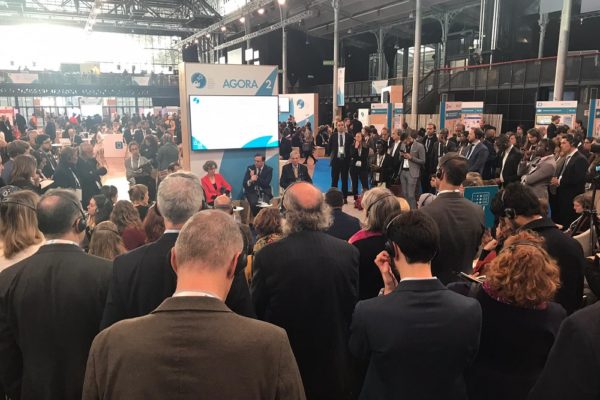
Paris Peace Forum 2019. Photo credit: PPF
Other projects selected for the scale-up projects include “Model Drug Law – West Africa” submitted by the Global Commission on Drug Policy as well as projects from the United Nations Entity for Gender Equality (UNWomen), International Labour Organization among others.
The second edition of the Paris Peace Forum, an annual international event for global governance and multilateral issues ended this Wednesday, 13 November 2019, after two days of intense conversations, talks, panels and debates.
To learn more about our initiative, visit the website: principles4inclusive.org. We encourage all people who are interested in the subject to share their insights and contribute to this initiative, by subscribing to our Newsletter and/or writing a message through the website’s platform.
Le français suit
It is a sunny morning in Shobtoy village, Doomal, a small village in Banisa constituency in the Mandera county of north-eastern Kenya. A cool breeze softens the heat of the rising sun and people move around with smiles on their faces. This was not the atmosphere few weeks back when people struggled to suppress stubborn tears, spoke with quavering lips and hands trembling.
Shobtoy Village was raided at the time by armed militia, in a retaliatory attack that killed at least 15 people. But there are no noticeable signs of distress here now, until you start talking to people.
In an arid region where water is scarce and many people rely on pastoral farming as a source of livelihood, competition for meagre resources means disputes over land and other resources.
An unnamed elder in Banisa quoted by a local news source said “the Degodia clan does not want this Garre community back in Malka-ruka area and we believe this is the cause of this raid to send that message.”
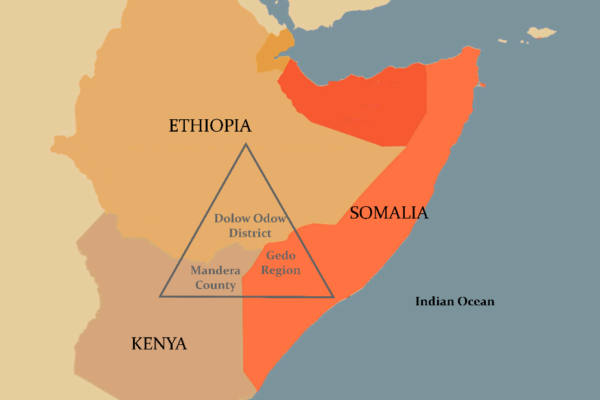
Early September’s attacks were not the first. Mandera County has suffered several deadly clashes over the years linked to inter-clan conflicts on resource sharing, mainly among the Degodia and Garre clans.
The intercommunal clashes resurfaced in this area near the Kenya-Ethiopian border with revenge attacks fueling violence across borders. The latest attacks are linked to a local militia believed to be from the Degodia clan which attacked Shobtoy village in Doomal, inhabited by the Garre.
Until recently, the surge in violent attacks over the years between the Garre and Degodia clans has given little hope that violence is close to being contained, despite a ceasefire agreed by both clans in July 2014.
But the fears for more violence are fading away. The National Cohesion and Integration Commission (NCIC) of Kenya and Interpeace are working to stem the violence and bring lasting peace between the warring communities, by reconciling them and building trust.
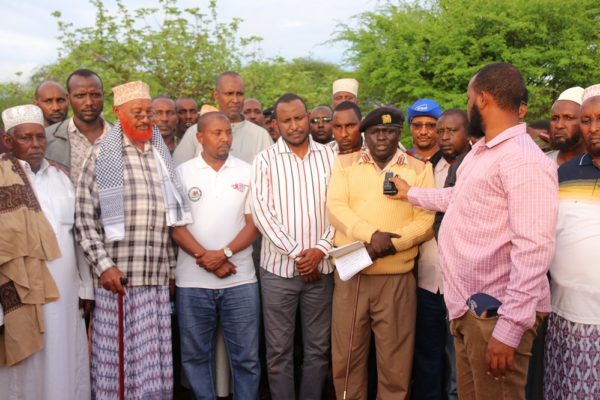
Banisa, Kenya. Photo credit: NCIC
“Our peacebuilding programme with the NCIC has established dialogue spaces in communities, where people are encouraged to identify and report persons carrying out violent activities and fueling clan feud. Now the communities trust the security forces. People in Malka Mari division of Banisa arrested five perpetrators of the latest violence in September and handed them to security forces with an AK47 rifle. The Gare Clan of Banisa also did the same in 2018 when they handed in similar criminals. They no longer hide culprits,” said Hassan Ismail, Kenya Country Representative at Interpeace.
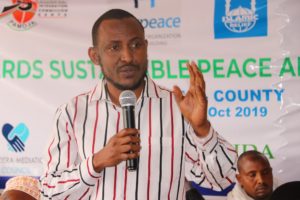
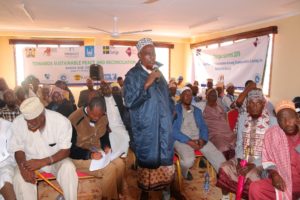
Following the deadly retaliatory clashes in September 2019, the NCIC with support from Interpeace, spearheaded a dialogue meeting in the town of Banisa in Mandera county. The three-day meeting held from 17 to 19 October. Community elders, religious leaders, elected leaders, representatives of parties to the conflict and various peace actors all met and agreed to end the violence between Garre and Degodia clans, and to work together for lasting peace after years of conflict.
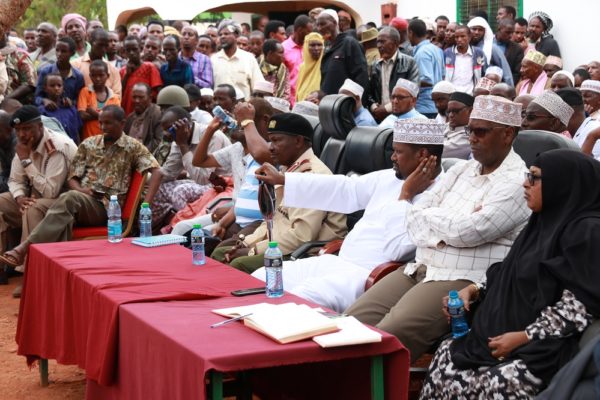
Banisa, Kenya. Photo credit: NCIC
“This is the first time, after the July 2014 ceasefire brokered by NCIC, that we are having all stakeholders sit together, dialogue and resolve in writing to end violence and live in harmony,” explained Mr Ismail.
The reconciliation meeting defused the rising tension and saw, for the first time, a written commitment to peaceful coexistence by participants – a hopeful sign for sustainable peace in the troubled Mandera triangle in the Horn of Africa where Kenya, Ethiopia and Somalia meet.
"Many lives were lost. But the speed at which the conflict was contained shows increased resilience of the community and a great shift from the culture of retaliation and revenge. We thank the people of Banisa for taking lead in building their own peace. As NCIC, our main role is to provide facilitation support," said Dr. Sellah King’oro, Assistant Director of Research, Policy and Planning at NCIC.
The National Cohesion and Integration Commission (NCIC) of Kenya and Interpeace remain committed to providing the most suitable support possible to sustain the peace agreement.
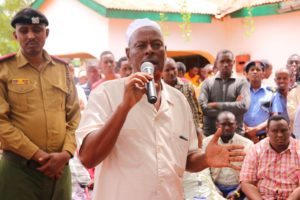
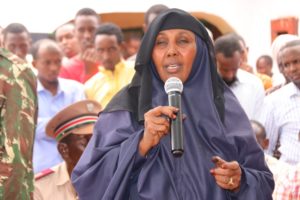
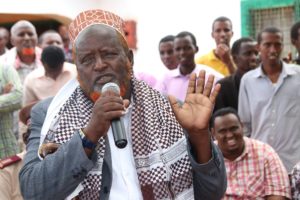
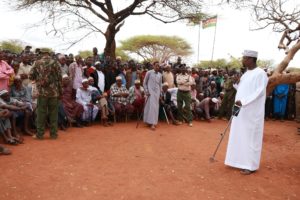
“The NCIC-Interpeace programme funded by the Germany Foreign federal office is a 3-year programme that ends in 2021. We shall continue to support and build capacity of local peace infrastructures so that peace is maintained. The programme will continue to offer more facilitation support to the people of Mandera,” Dr. Sellah added.
Since 2015, the NCIC and Interpeace have carried out research in consultation with communities in Mandera county, identified several impediments to peaceful coexistence and are now helping them to address violent conflict.
Increased tensions between communities have sometimes undermined trust between security forces and the population in conflict-hit regions across Africa. Interpeace is working closely with partners to foster trust and collaboration between the security sector and populations in Kenya and Mali for lasting peace.
Watch Kenya NTV’s news report on the reconciliation meeting in Banisa here.
Kenya’s Elgeyo Marakwet County government has recognized our peacebuilding work and included our intervention on their county profile. You can read more about it on their website here
C’est un matin ensoleillé à Shobtoy Village à Doomal, petite collectivité de la région de Banisa dans le comté de Mandera au nord-est du Kenya. Une brise froide adoucit la chaleur du soleil levant et la population se déplace le sourire aux lèvres. Mais cet environnement n’était pas celui d’il y a quelques semaines lorsque les gens peinaient à éliminer des larmes tenaces et parlaient d’une voix tremblante.
Shobtoy Village était alors attaqué par des milices armées dans des représailles qui a tué au moins 15 personnes. Actuellement, aucun signe distinctif de détresse n’est observé ici, grâce aux efforts récents menés par la Commission nationale kényane pour la cohésion et l’intégration (NCIC) et Interpeace. Cette souffrance ne revient que dans les discussions.
Dans une région aride où l’eau est rare et où de nombreuses personnes puisent leurs revenus dans l’élevage, la compétition pour de maigres ressources signifie souvent des disputes, notamment liées aux terres. Un homme de Banisa, cité par une source locale, a affirmé que « le clan Degodia ne veut plus de cette communauté Garre dans la zone de Malka-ruka » et que « nous croyons que ce message est la raison de ce raid ».
Les attaques de début septembre n’étaient pas les premières. Le comté de Mandera a subi plusieurs tensions mortelles ces dernières années liées aux conflits entre clans sur la répartition des ressources, surtout entre les communautés Degodia et Garre.
Ces violences ont refait surface dans cette zone près de la frontière éthiopienne. Des vengeances les ont alimentées des deux côtés de cette séparation. Et la dernière vague a été lancée par une malice locale qui serait membre du clan Degodia et qui s’en est pris à Shobtoy Village, habité par les Garre.
Jusqu’à récemment, l’augmentation des attaques entre ces deux populations n’avait laissé que peu de perspective d’une possible limitation des violences malgré un cessez-le-feu approuvé par les deux clans il y a cinq ans. Mais cette situation semble s’améliorer. La NCIC et Interpeace oeuvrent pour mettre un terme à la violence et contribuer à une paix durable entre les parties en les aidant à se réconcilier et à établir de la confiance.
« Notre programme de consolidation de la paix avec la NCIC a lancé des espaces de dialogue dans les communautés où la population est encouragée à identifier et signaler des personnes responsables d’activités violentes et d’alimenter des dissensions entre clans », affirme le représentant d’Interpeace au Kenya, Hassan Ismail. « Des personnes ont arrêté cinq perpétrateurs des violences de septembre dans la division Malka Mari de Banisa et les ont remis aux forces de sécurité avec un AK47. Le clan Garre de Banisa avait fait la même chose en 2018. Ils ne cachent plus les responsables », ajoute-t-il.
Banisa, Kenya. Photo credit: NCIC
Après les représailles mortelles de septembre dernier, la NCIC, soutenue par Interpeace, a mené une réunion de dialogue dans la ville de Banisa. Du 17 au 19 octobre, des anciens des communautés, des dirigeants religieux, des élus, des représentants des parties au conflit et différents acteurs de paix se sont rassemblés et ont accepté de mettre un terme aux violences entre les deux communautés et d’œuvrer ensemble à une paix durable après des années de conflit.
C’est la première fois après le cessez-le-feu d’il y a cinq ans, arraché par la NCIC, que tous les acteurs se sont assis en semble, ont dialogué et ont trouvé un compromis, explique M. Ismail. La réunion a désamorcé les tensions grandissantes et a abouti pour la première fois à un engagement par écrit à une coexistence pacifique. Une plateforme prometteuse pour une paix durable dans la zone troublée de Mandera, à la rencontre du Kenya, de l’Ethiopie et de la Somalie.
Banisa, Kenya. Photo credit: NCIC
« De nombreuses vies ont été perdues. Mais la Vitesse à laquelle le conflit a été limité montre la résilience grandissante des communautés et un important changement de la culture de représailles et de vengeance », selon le sous-directeur de la recherche, de la politique et de la planification à la NCIC, Sellah King’oro. « Nous remercions la population de Banisa d’avoir pris la direction de l’établissement de leur propre paix. Notre rôle principal comme NCIC est d’apporter un soutien en termes de facilitation ».
Cette institution et Interpeace restent engagés pour accompagner ces clans vers une paix durable. Ce programme de trois ans, financé par le ministère allemand des Affaires étrangères, est prévu jusqu’en 2021. « Nous allons continuer de soutenir et d’établir des capacités d’infrastructures de paix locales », insiste Mme. Sellah.
Depuis quatre ans, les deux organisations ont mené des consultations dans les communautés, ont identifié plusieurs obstacles à une coexistence pacifique et ont assisté la population pour aborder la question des violences. L’augmentation des tensions entre communautés ont parfois sapé la confiance entre les forces de sécurité et les citoyens dans les régions affectées par des conflits en Afrique. Interpeace oeuvre avec des partenaires notamment au Kenya et au Mali pour améliorer le lien entre ces acteurs.
Vous trouverez sur ce lien le reportage en anglais de la chaîne de télévision kényane NTV.
Le gouvernement du comté d’Elgeyo Marakwet mentionne le travail conjoint de la NCIC et d’Interpeace dans leur profil du comté disponible sur ce lien.
Le français suit
While only a fraction of young people in Côte d'Ivoire contribute to violence, the common stigma of youth as perpetrators of violence remains a shield to the potential of the majority driving substantial positive change in the country. The Abidjan Peace Talks have recognized youth as key players who can bring positive change and stability to societies in Côte d'Ivoire.
On Friday, 11 October 2019, more than 400 people gathered at the French Institute of Côte d'Ivoire in the main city Abidjan and listened to 10 young peacebuilders share their personal stories and experiences building peace in their communities across the West African state.
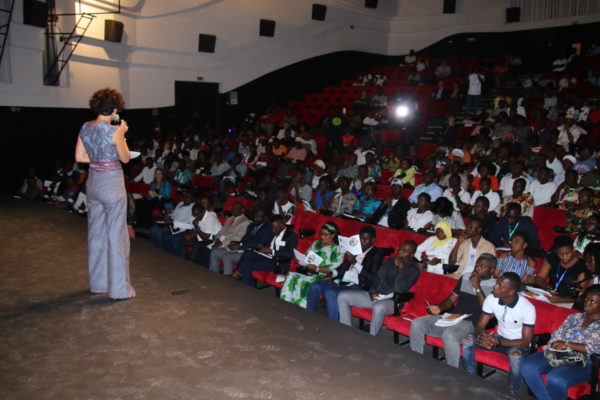
Photo credit: Indigo Côte d’Ivoire
“My participation at Abidjan Peace Talks has comforted me in my convictions to take more action because there is a lot to do to bring about lasting peace in my country,” said one participant, Richmond Koné.
It was the first time that the Peace Talks, a global initiative which builds on the idea that everyone can play a part in building peace, travelled to Côte d'Ivoire and the second time it was hosted in Africa, after the Nairobi Peace Talks in 2015.
Abidjan Peace Talks was part of a three-day public event named “Youth for Peace Côte d'Ivoire” that aimed to create an inclusive platform for young Ivorians to dialogue with decision makers and share innovative ideas that contribute to sustainable peace in the country.
“Youth for Peace re-awakened us on our responsibility in the peace process in Côte d'Ivoire. It gathered Ivorian youths and gave them the floor to speak. We have a lot to say but do not find platforms of this scale to express ourselves. Some of us want to act, but do not know how. The Abidjan Peace Talks and all its inspiring stories, I’m sure, has inspired many youths in one way or the other to act and be useful to our country,” said Michèle Gnokile, one of the speakers of Abidjan Peace Talks.
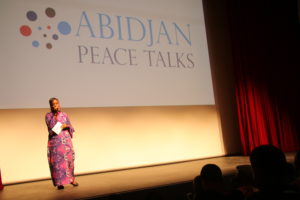
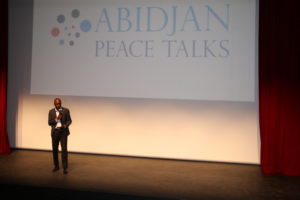
Abidjan Peace Talks held under the message “I build the peace I want for Côte d'Ivoire, and you?”, inspired by the Youth for Peace Côte d'Ivoire theme “Contribution of Youth to Peace in Côte d'Ivoire”
The event was timely as Côte d'Ivoire prepares for elections in 2020, and was jointly organized by N’Zarama Center for Peacebuilding, Indigo Cote d’Ivoire and Interpeace.
Shortly after the Peace Talks on 11 October, the 10 young speakers, who shared their stories about how they contribute to Peace in Côte d'Ivoire, visited the communes of Attecoubé and Abobo in Abidjan to inspire other young people to contribute to peacebuilding in their communities.
The Peace Talks have inspired several young Ivorians who committed to take individual actions for peace in their country, after listening to the inspiring stories of the speakers.
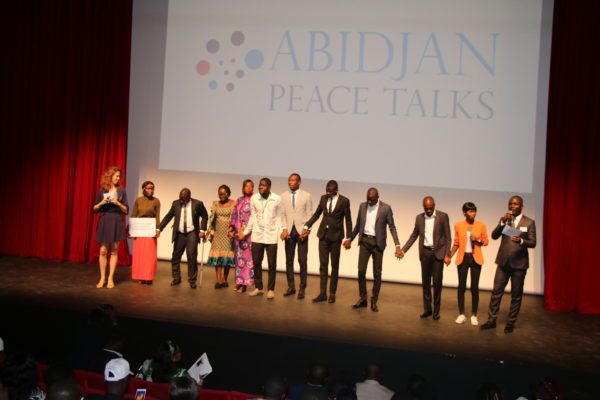
All speakers at the Abidjan Peace Talks. Photo credit: Indigo Côte d’Ivoire
“I feel touched by the story of Issouf Ouattara, when he said no matter how angry one is, he or she should not pick a stone and throw at another person. I felt touched because when we get angry and destroy another person, we destroy ourselves too,” said one young man, after listening to the speakers in Attécoube.
The Abidjan Peace Talks have also inspired Ivorian journalists who now want to produce radio programmes for peacebuilders to share their inspiring stories. The Peace Talks tour continues to other neighbourhoods famous for violent activities in Côte d'Ivoire.
“Abidjan Peace Talks celebrated the personal stories of young Ivorians, both exceptional and ordinary, who show that peace is everyone’s business; that everyone can contribute to peace at his or her own level,” explained Mathilde Boddaert, Interpeace Senior Programme Manager for Côte d'Ivoire.
You can watch the Abidjan Peace Talks videos here in French.
Youth for Peace Côte d'Ivoire was organized by N’Zarama Center for Peacebuilding, Indigo Côte d'Ivoire and Interpeace, with support from the Economic Community of West African States (ECOWAS), the German Agency for International Cooperation (GIZ), the European Union (EU), the African Union (AU), the French Embassy in Côte d'Ivoire, the Swiss Embas/sy in Côte d'Ivoire, the French Institute in Côte d'Ivoire and the United Nations Development Programme (UNDP).
« J’ai été touché parce que lorsque nous nous mettons en colère et détruisons une autre personne, nous nous détruisons nous-mêmes également ». Cette émotion est celle de l’un des spectateurs des récents Abidjan Peace Talks. La rencontre a permis de mettre en valeur 10 expériences de jeunes Ivoiriens qui tentent au quotidien de contribuer à un changement positif et d’apporter une stabilité dans leur pays. Dans une Côte d’Ivoire qui entre dans une période préélectorale importante et où leurs camarades sont souvent stigmatisés comme attiseurs de violence alors que seule une poignée d’entre eux posent problème.
Plus de 400 personnes se sont rassemblées le 11 octobre dernier à l’Institut français de Côte d’Ivoire dans la capitale économique. Toutes réunies pour écouter les histoires personnelles de ces jeunes qui oeuvrent pour consolider la paix dans leurs communautés. « J’ai été conforté dans mes convictions qu’il faut agir davantage parce qu’il y a beaucoup à faire pour atteindre une paix durable dans mon pays », insiste l’une d’entre elles.
Photo credit: Indigo Côte d’Ivoire
Les Peace Talks, une initiative globale qui s’appuie sur l’idée que chacun peut prendre sa part dans la construction de la paix, ont investi pour la première fois la Côte d’Ivoire. Cette discussion était la seconde seulement en Afrique après celle de Nairobi il y a quatre ans. Elle a été organisée dans le cadre de la rencontre plus large « Les jeunes pour la paix en Côte d’Ivoire », prévue sur trois jours, pour établir une plateforme de dialogue entre jeunes Ivoiriens et décideurs et partager des scénarios innovants qui peuvent contribuer à une paix durable dans ce pays.
Ce format des ‘jeunes pour la paix’ « nous a réveillés sur notre responsabilité. Il a donné la parole aux jeunes Ivoiriens. Nous avons beaucoup à dire mais nous ne trouvons pas de plateforme de cette dimension pour nous exprimer », explique l’une des intervenantes des Peace Talks, Michèle Gnokile. Et « je suis certaine » que les Abidjan Peace Talks « ont inspiré de nombreux jeunes d’une manière ou d’une autre pour qu’ils agissent et qu’ils soient utiles », ajoute-t-elle.
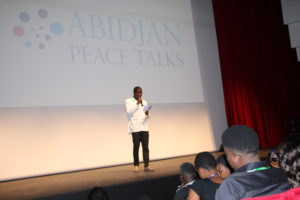
Organisés sous le titre “Je construis la paix que je veux en Côte d’Ivoire, et toi ?”, ceux-ci tombaient à point nommé alors que la Côte d’Ivoire se prépare aux élections générales de 2020. La manifestation pour laquelle se sont alliés le Centre N’Zarama pour la consolidation de la paix, Indigo Côte d’Ivoire et Interpeace ne s’est pas contentée de rester confinée à l’Institut français. Les 10 intervenants sont également allés partager leurs expériences dans les quartiers d’Attecoubé et Abobo.
Pari réussi, plusieurs spectateurs en sont ressortis avec une volonté d’action. Parmi les premières conséquences concrètes de cette séquence, des journalistes ivoiriens souhaitent désormais produire des émissions de radio pour que les consolidateurs de paix puissent relayer leurs témoignages. De son côté, la tournée de ces Peace Talks se poursuit dans d’autres quartiers réputés violents en Côte d’Ivoire. « La paix est l’affaire de tous. Chacun peut contribuer”, relève la responsable des projets d’Interpeace dans ce pays Mathilde Boddaert.
Vous pouvez regarder les vidéos d’Abidjan Peace Talks ici en français.
Photo credit: Indigo Côte d’Ivoire
Youth for Peace Côte d'Ivoire était organisé par le Centre N’Zarama pour la consolidation de la paix, Indigo Côte d’Ivoire et Interpeace avec le soutien de la Communauté économique des Etats d’Afrique de l’Ouest (CEDEAO), l’Agence allemande pour la coopération internationale (GIZ), l’Union européenne (UE), l’Union africaine (UA), l'ambassade de Suisse en Côte d'Ivoire, l’ambassade de France en Côte d’Ivoire, l’Institut français en Côte d’Ivoire et le Programme des Nations Unis pour le développement (PNUD).