Addis Ababa/Geneva, 2 September 2022. The African Union (AU) and Interpeace, an international organization for peacebuilding based in Geneva, signed a Memorandum of Understanding (MoU) confirming their mutual commitment to promote nationally-led peace processes to achieve sustainable peace, prevent violent conflict, and enhance resilient capacities for peace and development.
The signing ceremony took place on Friday, 2 September, at the African Union Headquarters in Addis Ababa. The MoU was signed by the Commissioner for Political Affairs, Peace and Security of the African Union, H.E. Amb. Bankole Adeoye and by the Vice -President of Interpeace, Simon Gimson.
Aligned with the AU’s priorities and strategies, the MoU aims to support more inclusive and participatory peacebuilding approaches that are gender and youth responsive, as well as to promote the opportunity and potential of societies as agents of positive change to achieve stronger social cohesion and sustainable growth and development.
Within the framework of their shared mandates to advance conflict prevention and resolution, the AU and Interpeace will support each other particularly through political dialogues, joint programmatic activities and joint policy and advocacy initiatives. Interpeace will provide technical support on conflict sensitivity and peace responsiveness and will help to sustain the AU in its conflict prevention capabilities to help member states mitigate the root causes of conflict.
Anchored in Interpeace’s Peace Responsive approach, this joint programming aims to increase member states’ capacities to implement bottom-up, community-centred peacebuilding infrastructure, as well as inform their development programmes to contribute to peace.
The AU and Interpeace will also work together to strengthen evidence-based programming to increase the effectiveness of the AU’s coordination with member states and regional bodies and the AU’s peacebuilding capacities. More concretely, the two will seek to carry out peace indexes and analyse findings to identify relevant programming approaches with a focus on mental health and psychosocial support as well as sustainable livelihoods.
This partnership reaffirms the direction taken by the AU through its African Peace and Security Architecture, the AU Master Roadmap on Practical Steps for Silencing Guns by 2020, the Structural Conflict Prevention Framework, the AU Transitional Justice Policy and AU Post-Conflict Reconstruction Policy as the bedrock of the African Union’s approach.
“We are delighted to formalise and deepen our engagement with the African Union through this MoU,” said Interpeace Vice - President Simon Gimson. “The MoU affirms our joint commitment to increase AU member states’ capacity to foster more bottom-up, community-led approaches to peace.”
Interpeace
Interpeace is an international organization for peacebuilding. With over 25 years of experience, it has implemented a broad range of peacebuilding programmes in Africa, the Middle East, Asia, Europe, and Latin America. Interpeace tailors its approach to each society and ensures that its work is locally designed and driven. Interpeace also assists the international community – especially the United Nations – to play a more effective role in peacebuilding, based on Interpeace’s expertise in field-based work at grassroots level. Interpeace is headquartered in Geneva, Switzerland, and has offices around the world. For more information, please visit our website: www.interpeace.org
Press contact
Luvini Ranasinghe
Head of Communications
+41 79 475 64 95
ranasinghe@interpeace.org
Interpeace
Maison de la Paix
2E Chemin Eugène-Rigot
1202 Geneva, Switzerland
We are delighted to share our 2021 Annual Report titled, “A blueprint for peace in an era of disruption and conflict.”
With conflict being the single greatest barrier to achieving the Sustainable Development Goals by 2030, the traditional blueprints for achieving peace evidently require adaptation, and new approaches must be developed to address today’s challenges. Peacebuilders have an opportunity to act creatively and assertively to strengthen multilateralism, and to reinforce positive linkages between national leaders and the communities whom they represent and serve.
Our report illustrates examples of Interpeace’s focus in our current five-year Strategy on building trust, strengthening social cohesion and resilience, and promoting inclusive and participatory approaches. All are critical to preventing violence, managing conflict, and fostering sustainable peace and development. We highlight key achievements both within communities and at the highest levels of policymaking – from successfully brokering a truce between groups in Kenya’s North Rift region to driving efforts to create the first-ever financial asset class of peace bonds.
In 2021 alone, we worked on 805 locally designed and led initiatives that contributed to the transformation of 162 conflicts. We supported six security reform initiatives and launched two new country programmes – in Yemen and Ethiopia. Through the ‘Principles for Peace’ initiative, which was conceived and continues to be incubated and hosted at Interpeace, we supported the creation and adoption in the year ahead, of principles that will reshape how peace processes are designed, implemented, and monitored. We established seven partnerships for human rights and peacebuilding work; deepened institutional partnerships with WHO, UNFPA, ILO, FAO, and IOM to strengthen the peace outcomes of their own technical interventions; and brought together champions from across seven UN agencies to further operationalise the Sustaining Peace Agenda and the humanitarian-development-peace (HDP) nexus.
Despite exceptional challenges in 2021, including the continuing Covid-19 pandemic, which disrupted the lives of millions and many of Interpeace’s face-to-face activities, we have made tangible progress and will continue to make the adjustments required to operate in a post-Covid-19 world.
We hope you enjoy reading our report. It is a taste of the great work recently undertaken by the Interpeace team with thanks to all those who support us; an insight into the way in which we are committed to changing positively the lives and communities worldwide of those whom we serve as peacebuilders; and a pointer to the challenges and work that we see ahead.
"Young people around the world are advancing peace and justice and seeking to transform societies grappling with the legacies of both short- term and multi-generational conflict in exciting and powerful ways.”
Anjli Parrin, Advancing Peace Through a Youth-Centered Approach to Transitional Justice
Seven years ago, Resolution 2250 of the UN Security Council on Youth, Peace and Security (YPS) recognized the positive contribution of young people to the maintenance and promotion of peace and security; and urged Member States to increase the representation and meaningful participation of youth in conflict prevention and peacebuilding efforts. In implementation, however, the YPS agenda has faced a number of challenges in terms of access, resources and representation. Youth participation and their capacity to influence decision-making are often limited by structural barriers and insufficient investment in facilitating their inclusion and empowerment. As a result, youth participation has sometimes been neglected or manipulated. One of the objectives of this year’s International Youth Day, on August 12th, is to raise awareness on age-related barriers in various spheres where the life of young people are impacted, such as employment, political participation, health and justice.
Interpeace has worked and partnered with youth for over 28 years in Africa, Latin America, Europe, the Middle East and Asia; in countries where young people are affected by the cycles of protracted conflict and face physical violence, forced recruitment into armed groups, intergenerational transmission of trauma, forced displacement and have lost access to schooling, jobs and livelihood opportunities. From its inception, Interpeace has strived to ensure that the work is driven, owned and lead by young people at the country level, because we believe that investing in their voices, agency and leadership will have a profound impact in building sustainable peace. A key goal of our programmes is therefore to strengthen the resilience capacities of youth and prioritize their participation in building social and political resilience, particularly in areas where their involvement is critical: climate change, transitional justice and mental health, to name a few.
Currently Interpeace’s youth, peace and security work spans most of its country programmes, including Côte d’Ivoire, Burundi, Yemen, Burkina Faso, Rwanda, Somalia, as well as our regional programme in Africa’s Great Lakes; and through our recently launched “Outside the Box” digital platform we are providing a space for young men and women to amplify their voices and leadership at a global level.
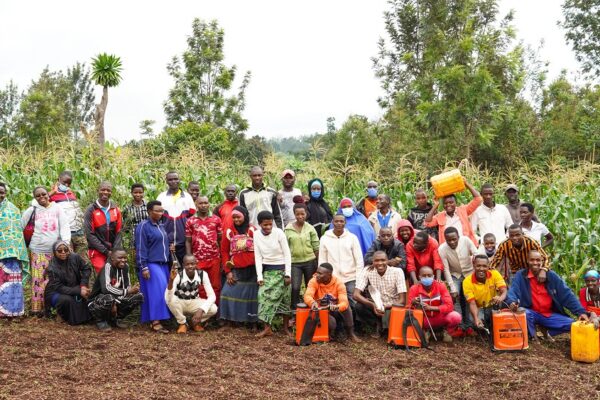
Youth Peace and Security in practice
"I realised that I can be the problem if I don't engage, if I don't take the first step. But I also understood that I can be the solution by bringing young people together." Idriss Ouattara, member of Association Génération Consciente de Côte d'Ivoire in Bocabo (GCCI)
In Côte d’Ivoire, Interpeace and local partner Indigo Côte d’Ivoire, aimed to return to the core principle of the YPS agenda by making youth the architects of peacebuilding in their communities; by supporting and working with existing youth-led initiatives and ensuring youth were responsible for the design and the implementation of key components of the project.
Youth in Côte d’Ivoire are commonly seen as key actors of political violence, being the victims of political instrumentalization and violent mobilization, particularly in electoral contexts. With the support and guidance of Interpeace and Indigo, youth groups carried out a Participatory Action Research (PAR) on the role of youth in political violence. From the results gathered, they proceeded to design new political violence prevention actions, putting YPS tools into practice in their context. Furthermore, the youth groups developed and implemented advocacy and communication campaigns based on these results.
This exchange reinforced the capacities of the youth groups to make their initiative on violence prevention and social cohesion more strategic, efficient, impactful, inclusive and sustainable. The publication: Putting the Youth, Peace and Security Agenda into practice: Youth as peace agents in Côte d’Ivoire captures key lessons and good practices from the initiative. It helps tackle the challenge of implementing the Youth, Peace and Security agenda, both nationally and locally, as well as provides a practical guide to governments, agencies, international organizations, NGOs and the private sector who wish to strengthen the participation of young people and their contribution to peace and security efforts.
Political and economic empowerment of youth collectives
“Undertaking a development project together has made us realise that our political diversity is more of an asset than an obstacle” Youth from Gasorwe Commune, Muyinga Province, Burundi
In Burundi, where youth make up the majority of the population (65%), Interpeace and local partner the Centre d’Alerte et Prevention des Conflits (CENAP), work with youth affiliated with different political parties to prevent violence and promote peaceful electoral processes. By engaging on trainings, debates and establishing collectives, the programme has witnessed youth crossing party lines to combat stereotyping and rumours, as well as has helped stop potential conflicts before they even start.
Moreover, young people have created joint projects and networks of their own initiative, like the creation of a Youth United Cooperative for Integral Development (CJUDI) which brings together young people from different political parties. The youth collectives work together on community and entrepreneurial initiatives, fostering social cohesion and building trust.
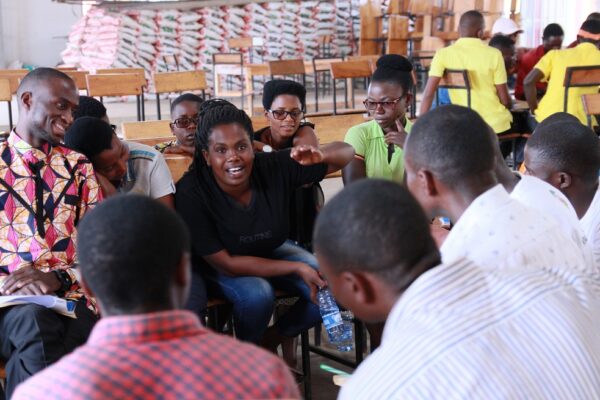
Strengthening peacebuilding infrastructure to improve resilience for peace
In Yemen, Interpeace has partnered with Youth Without Borders for Development (YWBOD), a Yemeni peacebuilding organization working on empowering youth to play significant and effective roles to bring about positive change. The project focuses on fostering the potential of young people to influence conflict resolution in positive and practical ways, and connecting this knowledge to decision-makers. It aims to inform and train a range of community-level actors to participate in local peacebuilding processes, as a way to strengthen resilience to peace, focusing on what works rather than on issues that create divisions.
Through participatory approaches, Interpeace and YWBOD are conducting capacity-building courses with Civil Society Organizations and Yemeni youth initiatives, such as Youth, Peace and Security Pact - Yemen. Youth initiatives are now conducting evidence-based research and implementing community resilience activities in Aden and Taiz, with young people having a central role in evidence collection.
Empowering youth in the Great Lakes region
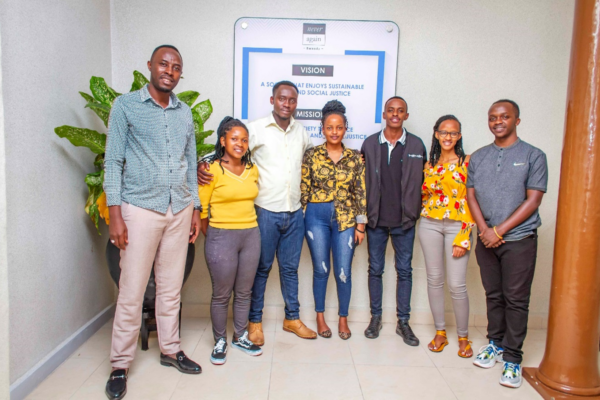
Through a new regional initiative, Interpeace and local partners are providing young people in Burundi, DR Congo, Rwanda and Uganda with the skills and knowledge they need for a more effective leadership role in regional peace processes. The Great Lakes Youth Innovation Lab for Peace (YouthLab) is a 30-month initiative, launched in January 2021, implemented in partnership with Never Again Rwanda (NAR), the Pole Institute, the Centre d’Alerte et Prevention des Conflits (CENAP) and the Refugee Law Project.
According to one of the young people participating in the workshop: “Before this activity, we did not know each other. Now, we have just created a Whatsapp group to facilitate contacts between us.”
The YouthLab will provide a platform to provide young people in the Great Lakes with the necessary tools and capacities to engage in dialogue with policy makers, and to articulate their vision for peace in the region. The project also offers opportunities for horizontal learning and network building, as it is bringing together young people from across the region. Young people will not only learn but actively participate and lead initiatives that can contribute to governance, peacebuilding, and development initiatives at the local, national and regional levels.
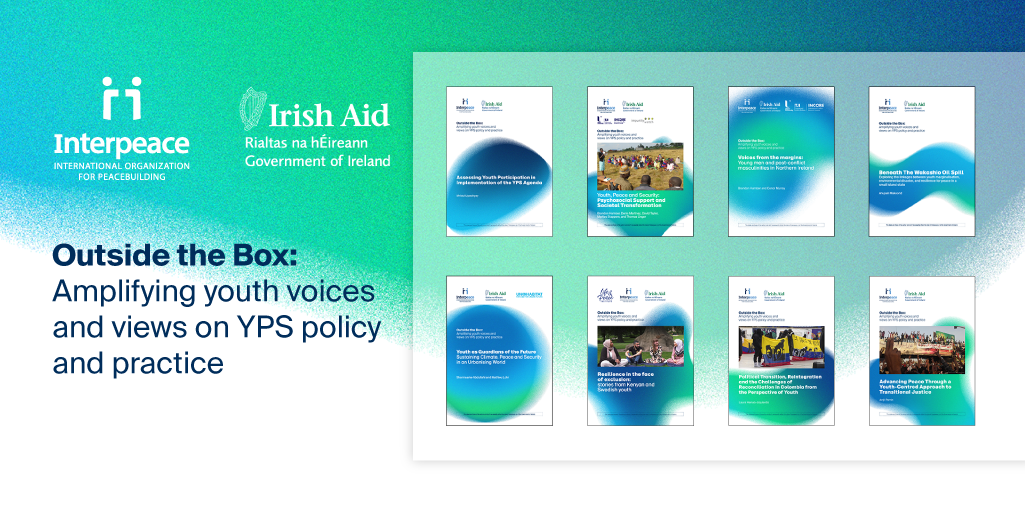
Outside the Box
"What if we found a way to consistently and regularly include more youth priorities, such as environmental protection and technology, in policy? Could we better anticipate future ecological disasters? Could we become even more resilient for peace?"
Anupah Makoond, Beneath the Wakashio Oil Spill: Exploring the linkages between youth marginalisation, environmental disaster, and resilience for peace in a small island state.
At the global level, Interpeace is proud to have facilitated the completion in 2021 of nine youth-authored or YPS-focused policy briefs. Each addresses issues of policy or practice that are important to young women and men, but which have not received sufficient attention in the YPS agenda or its implementation. The briefs address: youth, climate and conflict; alternative non-violent masculinities; the role of youth in transitional justice; assessments of YPS action plans and national YPS coalitions; expressions of youth resilience for peace; mental health and psychosocial services in the YPS arena; youth-centered DDR processes; and the dangers of securitisation of YPS agenda. A dedicated webpage and platform have been launched on the Interpeace website: Outside the Box: Amplifying Youth voices and Views on YPS Policy and Practice.
The Interpeace Outside the Box Platform will soon feature new youth authored and YPS focused policy briefs and other forms of media, set to be published in 2022 and 2023.
Justin Mambo (this is a pseudo), 46, is a retired military officer and a father of four. He resides in Bugesera District, in the Eastern Province of Rwanda. He recognises having mental health issues, including chronic headaches, anger issues and depression stemming from his military career.
“I sometimes wake up with too much anger and rage. In some cases, I emotionally and physically harm my family members unwillingly because of my mental health problems,” said Mambo, adding that he has difficulty in getting along with his neighbors due to his illness.
Mambo is one of many Rwandans who continue to face very high levels of trauma and other psycho-social problems. The recent Rwanda Mental Health Survey (RMHS) conducted in 2018 revealed that the prevalence of several mental disorders is higher than the global average and is particularly elevated among the survivors of the 1994 genocide against the Tutsi. Roughly 25% of Rwandan citizens struggle with posttraumatic stress disorder (PTSD), and one in six people suffer from depression.
On 18 May 2022, Interpeace and the Government of Rwanda launched a Mental Health Mobile Clinic to support national efforts to strengthen a decentralised mental health system.
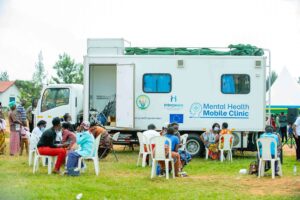
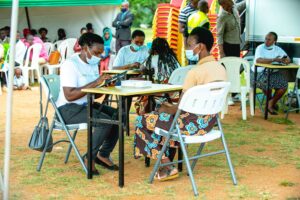
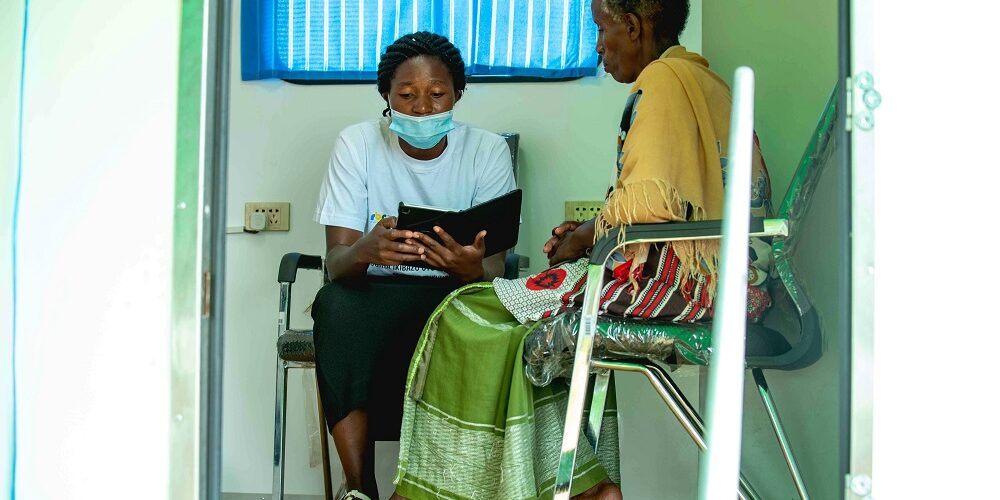
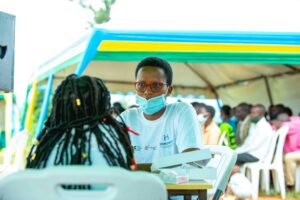
A customized and well-equipped clinic was handed over to ADEPR -Nyamata District Hospital and will be used across the Bugesera district to conduct regular screenings of individuals or groups in communities, health centers or public places such as markets and do referrals of special cases to Bugesera Referral Hospital. It will also help mental health professionals provide home-based care to patients.
“We have been facing two serious challenges. Not only is Bugesera Hospital located far from our home, but we also lack financial means to take my sister to a psychologist. Now that we have a mental health mobile clinic in Bugesera, it has renewed my hope that she will receive adequate treatment, “said Jeanne Uwayezu(this is a pseudo), a resident of Bugesera District whose sister has been struggling with mental health problems.
The RMHS indicates that the level of awareness toward mental health services offered stands at 61.7%, versus a 5.3% utilisation rate. The clinic will also be used to carry out mental health awareness campaigns across Bugesera District.
The launch of the clinic is in line with Interpeace’s programme entitled: ‘’Reinforcing community capacity for social cohesion and reconciliation through Societal Trauma Healing’’ in Bugesera District. Funded by the European Union (EU), the programme offers a holistic approach to simultaneously address mental health issues while promoting social cohesion and fostering sustainable livelihoods in this district.
With the support from Swedish International Development Cooperation Agency (Sida), the programme has been expanded to five more districts in Rwanda, namely: Nyamagabe, Musanze, Nyabihu, Ngoma and Nyagatare. This clinic responds to the needs expressed by communities in Bugesera during the regular monitoring and evaluation process of the programme in the district.
“We have learned that mental health is an important aspect of social cohesion and reconciliation— trauma healing is an essential element in preparing communities to get together. We are happy that with this mobile clinic, it will be much easier for mental health professionals to reach the communities and do their work in a very professional manner,” said Ben Napnau, the Deputy Head of Mission of the European Union Delegation to Rwanda who added “This is one of our flagship projects that has proven to be highly relevant and effective. It is a model in a sense that we work with Interpeace, as an international organization but at the same time we build partnership with Rwandan organizations to be closer to communities. This is an essential element of a good cooperation.”
Dr Theodorus Hollander, Interpeace’s Senior Regional Representative for the East and Central Africa, highlighted the intrinsic link between peace and mental health. “Peace is not only about absence of violence, but peace is also about a sense of inner peace, it’s about mental resilience, it’s about the capacity of communities to interact with one other and the capacity to reconcile,” he said.
Hollander also appreciated how local authorities and the EU contributed to an initiative that strengthens long-term mental health resilience in the country.
The mental health mobile clinic is an innovative and unique solution that will support the implementation of the 2020-2024 National Mental Health Strategic Plan and contribute to the achievement of the National Strategy for Transformation (NST1) and Rwanda’s Development Vision 2050, which considers good health and well-being of the population as a national priority.
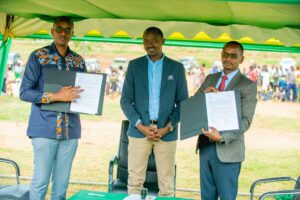
“After the 1994 Genocide against the Tutsi, we made one choice. The choice to live together as Rwandans and to reconcile. Interpeace’s trauma healing programme is helping us to strengthen that choice. We really appreciate this mobile clinic as it will help to strengthen mental health resilience as well as foster reconciliation process and socio-economic status of communities in Bugesera,” noted Commissioner General Emmanuel Gasana, the Governor of Eastern Province, and Guest of Honor at the launch of the mobile clinic.
The vehicle is equipped with a fixed workstation for at least one Doctor and one Nurse (seats and fixed tables), two fixed passenger seats, Wi-Fi internet connection, one foldable bed for use in emergencies (as an ambulance), two large waterproof tent extensions attached to the body of the vehicle, built-in silent generator for lighting and heating in case of power outage, solar panels for power backup in case it is operating in areas without access to power, as well as a built-in washroom.
Governor CG Gasana encouraged Bugesera District authorities, the management of ADEPR-Nyamata Hospital and the community members to ensure proper management and effective use of this mobile clinic.
Interpeace is proud to co-host four events at this year’s Stockholm Forum on Peace and Development on the theme “From a Human Security Crisis Towards an Environment of Peace.” From 23-25 May, the Forum will combine high-level policy debates, workshops, roundtables and debates in a hybrid format, with sessions held online and in person.
Sessions co-organized by Interpeace will highlight four areas of our global work: Youth Peace and Security (YPS), Peace Responsiveness, the Finance for Peace Initiative and the Principles for Peace initiative.
Food security, migration and conflict in a climate of change
With our partners, the International Organization for Migration (IOM) and the Food and Agriculture Organization (FAO), we will discuss the impacts of climate change at the local level (natural resources, livelihoods, migration/displacement) and how these can impact peace. Using Kenya as a case study, the session will provide local insights, on how working together more effectively can strengthen technical responses that mitigate climate impacts and contribute to peace.
What’s the password? Language and the inclusion of young people in policy spaces
Co-organized with the Life & Peace Institute and the Dag Hammarskjold Foundation, we will discuss how language and practices in policy spaces affect youth-led climate, peace and conflict efforts. Young people, civil society and policy actors will come together to reflect on their experiences of exclusion and inclusion through language. This session provides an opportunity to review the language that is often used and develop practical guidance as to how practitioners approaching the climate, peace and security space, can aim for more inclusive language and therefore achieve more effective policy and practice.
A 21st Century Approach to Peace
The Principles for Peace Initiative will bring together speakers from academia, policymaking, civil society and government to explore the current conflict and peace landscape. The session is designed to be an interactive, fast-paced dialogue, where members of the International Commission on Inclusive Peace will share key findings from the global participatory process of the Principles for Peace.
Climate finance for sustaining peace
Co-organized with UNDP, two consecutive roundtables will aim to engage practitioners and decisionmakers to examine recent trends in access to climate finance in conflict-affected and fragile contexts. Climate finance refers to diverse sources of financing, including national, bilateral, private sector and international, which support climate change mitigation and adaptation interventions. The sessions will explore the mechanisms and standards that are required to support the necessary changes to increase financing that simultaneously promotes climate action and peace.
We are honoured to welcome Ambassador Francisca Elizabeth Méndez Escobar, Permanent Representative of Mexico to the United Nations Office at Geneva, to our Advisory Council. Ambassador Méndez Escobar was officially welcomed at the Advisory Council meeting held on Tuesday, 10 May 2022, during which Council members discussed how lessons learned from other conflict-affected contexts can be of relevance to the crisis in Ukraine.
Selected governmental and intergovernmental representatives from Europe, Asia, the Middle East, North America and Latin America are part of Interpeace’s Advisory Council. Ambassador Méndez Escobar fills the seat of the Government of Mexico, which had remained vacant after the departure of previous Ambassador María del Socorro Flores Liera.
Interpeace is grateful to Ambassador Flores Liera for her valuable contributions during her tenure and is delighted that the Government of Mexico is continuing its membership in the Advisory Council.
Ambassador Francisca Elizabeth Méndez Escobar is the Permanent Representative of Mexico to the United Nations Office at Geneva. She brings with her a wealth of experience in diplomacy and international affairs. She joined the Mexican Foreign Service in 1991. Ms. Méndez’s previous assignments include postings in the United Arab Emirates, Belgium, Romania, Costa Rica, Spain, and Italy. She has been Director General for American Regional Organizations, and Mexico's National Coordinator for the Pacific Alliance, the Ibero-American Summit and the Community of Latin American and Caribbean States.
About the Interpeace’s Advisory Council
The Advisory Council is a high-level statutory body that provides the organization with key strategic advice and guidance on peacebuilding policy and practice. It has played a crucial role in helping Interpeace strengthen its positioning on key international policy agendas as well as our transformative work of assisting humanitarian and development agencies to become more conflict sensitive and peace responsive.