While the August 2022 elections in Kenya passed without significant disruption, addressing inter-community tensions after the campaigns and resolving long-standing concerns in areas identified as hot spots requires continuous support and community mediation.
In the semi-arid and arid regions of northern and eastern Kenya, intercommunal tensions and disputes over scarce resources are common, especially during and immediately following election periods. Political and economic marginalisation, exclusion, and inequality are pervasive problems in the Northeast and have a disproportionately negative impact on the region. Because of the complicated interplay between intercommunal tensions, anxiety about electoral competition, and post-election resource allocation, ongoing mediation is required to promote political reconciliation, address intercommunal tension that arose during political campaigns and grievances over long-standing issues in conflict hot spots.
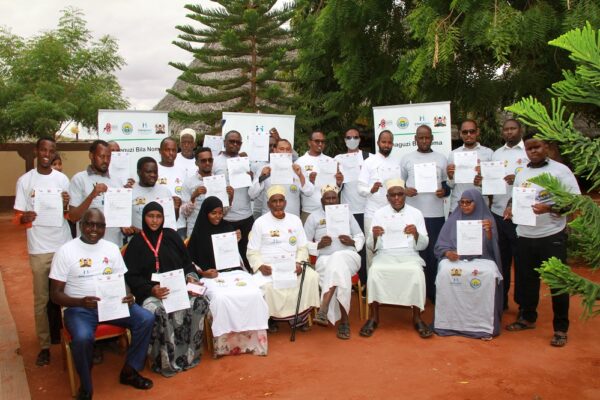
Supported by the United Nations Resident Coordination Office (RCO), Interpeace and the Frontier Counties Development Council (FCDC) Peace Sector Forum, whose Independent Panel of Eminent Persons (IPEP) includes members of the National Peace and Mediation Team; UWIANO, the Women Mediation Network, the National Cohesion and Integration Commission (NCIC) collaborated to organise a two-day workshop mediator training. More than 100 mediators from Lamu, Wajir, and Isiolo, three counties identified as conflict hot spots before, during, and after elections, participated in the training. The mediators will oversee the practical aspects of community engagement in close collaboration with FCDC members in the target counties.
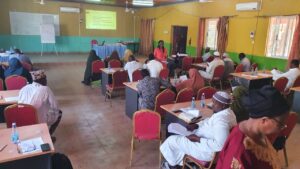
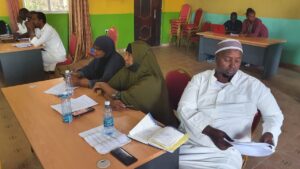
Mediating conflicts is becoming increasingly common. This is due to the fact that agreements can be reached on a wide range of dispute resolutions that previously would have been unresolvable.
Although the mediators are respected members of their communities, several are unfamiliar with mediation principles and have limited capacity to facilitate community-level dialogue processes that adhere to international standards. The training sessions will impart skills on deepening understanding of mediation, its processes, and universal ; strengthening mediators' capacity for conflict analysis; political economy analysis; and stakeholder mapping for effective intervention in hotspot counties; increasing knowledge and awareness of gender sensitivity and inclusion in mediation processes (e.g., gender, UNSCR 1325, Leave No One Behind); and discussing the key elements of community dialogue to a community-level audience.
Interpeace has found community mediation to be an effective tool for sustaining peace through locally led peace infrastructure. That approach has been successful in the villages along the North Rift's Kapedo-Lokori corridor, which had become notorious for violent conflict and loss of life and property. Even though the assumptions and values that guide the process vary a lot from place to place, mediation has been used successfully to promote peace in many different cultural settings.

"Peace is such a fragile product that you can spend years nurturing it, only for it to be brought down overnight like a building demolished by excavators. You can only wake up to the debris. If there is a time when such a thing is susceptible to occur, it's during the general elections held every five years in our country." Mohamed Harun, County Chief Officer, Youth Affairs, County Government of Mandera.
In the past, there has been a lot of violence during elections, which has caused the loss of lives, displaced many Kenyans, destroyed property, and led to loss of livelihoods. “Communities turn their backs on each other; voters are transported in mass from one place to a different place to vote for 'their person'; the elderly are dethroned and dehorned, and all the functioning structures of the communities are suspended. Unfortunately, this often leads to evil people in our midst taking advantage of such a situation by starting conflicts,” observes Harun.
These polling-related incidents are oftentimes an expression of existing and overlapping conflicts, which are frequently influenced by past skirmishes whose wounds haven't healed. In turn, the drivers of these various conflicts are linked to Kenya's deep and persistent fault lines, themselves related to historical, socio-political marginalization and grievances and elite manipulation of identities for political mobilization. However, the collaborative efforts by various peacebuilding actors have played a key role in mitigating skirmishes to address the drivers of violent conflict and strengthen social resilience for peace.
On the 9th of August 2022, Kenyans went to the polls and voted in a largely peaceful manner. On the 15th of August 2022, William Samoei Ruto, Chief of the Order of the Golden Heart (C.G.H.), was announced as president elect. However no larger-scale electoral violence occurred, despite the hotly contested poll, high tensions at the tallying center and the subsequent legal challenge by veteran politician Raila Odinga and his Azimio La Umoja coalition. There were isolated incidents. Voting was suspended in the Eldas constituency of Wajir County due to security concerns following a gunfire incident that halted the transportation of ballot materials. Political differences in counties like Lodwar Town and West Pokot were associated with fighting and public confrontation as the North Rift region has experienced tensions and violence during past elections.
The largely peaceful conclusion of the elections is a big success resulting from enormous efforts by Kenyan authorities, civil society, and international partners. Supported by the German Federal Foreign Office, Interpeace and its partners, the National Cohesion and Commission (NCIC) and the Network for Peace, Cohesion and Heritage (NEPCOH) Trust, supported in-country actors in their efforts to build peace and prevent violent conflicts through their Election Violence Prevention Project in several regions. Active in the counties of Mandera, Wajir, Turkana, West Pokot, Elgeyo Marakwet, Baringo, Samburu and Laikipia, the ongoing project focuses on the establishment of an early warning and rapid response mechanism and on peace sensitization for the public and electoral stakeholders.
Early warning and rapid response to electioneering incidences
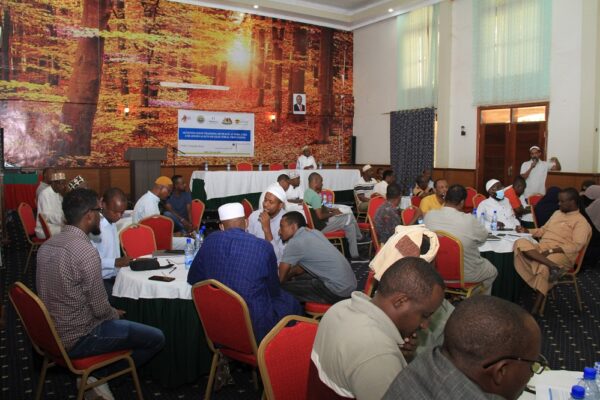
These structures were established across all the project’s counties and its members trained on electoral processes, mediation, and peacebuilding, enhancing their capacity to prevent, mitigate, and manage electoral violence. In total, 106 election and cohesion monitors were deployed to all sub-counties, continuously collecting information and passing it on to three situation rooms. Set up specifically for the electioneering period, these situation rooms processed all reports from the field and forwarded them to an integrated referral and response unit, consisting of government officials, security agencies, civil society leaders and members of local peace infrastructures, for follow-up actions.
Despite the overall peaceful nature of the elections, 21 incidents were picked up by the early warning and rapid response mechanisms. The project enabled rapid response to ten of those, while all others continue to be followed up on. For example, in the town of Konton on the border of Wajir and Mandera counties, a conflict between two Somali clans, the Garre and Degodia, broke out on August 6th, resulting in one death and five injured. Due to contested gubernatorial races in both counties and a history of inter-communal clashes between the two groups, fears were heightened that the upcoming elections would lead to an escalation of violence. However, the local peace infrastructures established in the previous phase were able to mediate the conflict with the support of the project. First, the communities agreed to table their differences until election-related tensions calmed down. The peace infrastructure then facilitated an agreement that entailed compensation payments and formal apologies, initiating a reconciliation process between the two groups.
Meetings were held to prepare the community for the elections and to train election monitors, who helped keep an eye in case of political violence. During the campaign period the county ceasefire monitoring committees (CMCs) were used to set up an early warning system for conflicts and a quick response system. The importance of the local peacebuilding infrastructures, in the elections and beyond, was emphasized by various stakeholders. Speaking during a training session, Chief Biashar, CMC Chairman highlighted the need to build on peace structures.
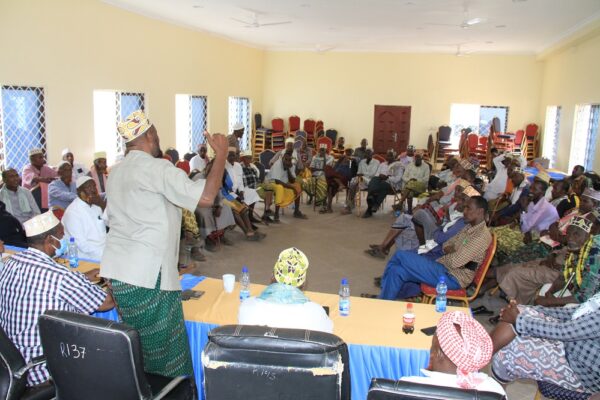
"We talk of addressing development in our communities, yet we overlook peace and its importance. What kind of development can we achieve without peace? I would suggest we focus all our energies and resources on building peace structures like CMCs and making them a fully functional peacebuilding body of their own, rather than investing resources in other unimportant development projects by our government. Peace should be prioritized above all. Once consensus is established, and its structures are in place, we can only discuss development.: said Chief , Ceasefire Monitoring Committees Chairman, Banisa
Training and advocacy for peaceful elections
In the run-up to the elections, NCIC, NEPCOH Trust and Interpeace planned and coordinated sensitization workshops, disseminated peace messages in local areas using branded materials, ran peace caravans, and advocated with political candidates to sign peace charters. All these efforts were geared towards garnering and sustaining commitment to peaceful elections by stakeholders across all levels of society.
In Mandera and Wajir counties, numerous stakeholders, who included local media houses and the youth, were trained on topics covering pro-peace messaging around the ‘Elections Bila Noma’ (“Elections without problems”) slogan, conflict-sensitive reporting, management of hate speech, and electoral alternative dispute resolution (EADR) mechanisms.

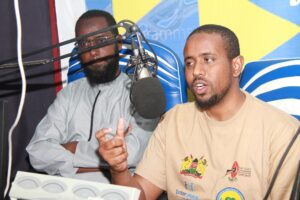
Following previous years where ‘boda boda’ (motorbike) operators instigated skirmishes in urban centers, a peace roadshow in Kapenguria and West Pokot under the ‘Elections Bila Noma’ theme was organized. Hussein Yussuf, the Mandera Chief Officer for the Department of Conflict Management, Cohesion, and Integration talked about the need for peace during the election period during a road show in Mandera.
"Peace is a very vital organ in our community. Like the heart organ in the body, peace is the kernel of our existence. Without it, all the other aspects of our lives are doomed! We must work extra hard during this electioneering period to make sure our communities will have peaceful elections and smooth transition of power to the new administrations," said Mr Hussein.
In prioritizing peace for all and in building structures to maintain stability, a particular focus on youth, women and marginalized groups is necessary for ensuring viability and sustainability. To effectively prevent, mitigate, and manage electoral violence and disputes, and decreasing the chance of escalation, women were therefore specifically targeted in various pieces of training and engagement. For example, they were often called to participate in numerous radio talk shows as key opinion leaders.
In addition, county prayer days, bringing together religious leaders and political candidates were facilitated. In a move to hold leaders accountable for their conduct during the general elections, political candidates, county commissioners, and the representatives of peace stakeholders signed peace charters across the . Chief Abey, a member of the CMC in Banisa reflected on the significance of collaborative peacebuilding efforts by stating, “Electioneering periods have always spelled doom for our people, especially along the Mandera North-Banisa corridor due to the memories of the past that the elections unearth. We have lost lives, properties, and livelihoods in elections due to the perennial clan conflicts between Garre and Degodia living along this corridor. Although this election is all about party politics and individual interest than clan affairs, we pray that we won’t have the repeat of what we had in the past. Our county and its people will blossom once we prioritize peace over everything.”
In Kenya, the focus of Interpeace’s work historically has been on peacebuilding at the community level in the north-eastern part of the country (Mandera and Wajir Counties) and, more recently, the North Rift Region. Its efforts to build peace are aimed at fostering equitable solutions to share power and resources; increasing and maintaining social cohesion among communities with long-standing and ongoing grievances; improving trust and cooperation between security actors and Kenya's public and helping to create new opportunities as ways to keep peace in Kenya after the elections.
Mogadishu Somalia, 28 September 2022. The Ministry of Youth and Sports, Federal Government of Somalia and Interpeace, an international organization for peacebuilding based in Geneva, signed a Memorandum of Understanding (MoU) to partner in empowering Somali youth to be agents of transformative change and actively participate in the state-building process. The signing ceremony took place on Wednesday, 28 September, at the Ministry of Youth and Sports in Mogadishu. The MoU was signed by the Minister of Youth and Sports, H.E Mohamed Bare Mohamud, and Interpeace’s Somalia Country Representative, Ahmed Abdurrahman Abdullahi.
The collaboration will foster youth, peace and security resolutions through a mutual commitment to promote nationally-led peace processes to achieve sustainable peace, prevent violent conflict and enhance resilient capacities for peace in accordance to the partnership on UN Security Council Resolution 2250 on Youth, Peace and Security.
Speaking during the signing Ahmed Abdullahi, Somalia Country Representative, Interpeace said, “Interpeace is delighted to partner with the Ministry of Youth and Sports of Somalia. This partnership will foster youth-centered peacebuilding and harness the innovation and creativity of young women and men in the state-building process of Somalia.”
The partnership is anchored on fostering an institutional relationship of cooperation focused on sharing knowledge, expertise and experiences additionally collaborating in advancing youth representation and participation in the peacebuilding process across Somalia.
“This MoU solidifies our commitment to advancing youth leadership and participation in Somalia’s peacebuilding process and to strengthen resilient capacities for peace.” Said H.E Mohamed Bare Mohamud, the Minister of Youth and Sports. “We are pleased that Interpeace is a strategic partner in the youth, peace and security agenda in Somalia.”
A critical component of empowering young people is ensuring their right to participate in decision-making and economic development. The MoU will strengthen efforts to advance Somalia's youth, peace, and security agenda through joint policy development and programme implementation.
Interpeace
Interpeace is an international organization for peacebuilding. With over 25 years of experience, it has implemented a broad range of peacebuilding programmes in Africa, the Middle East, Asia, Europe, and Latin America. Interpeace tailors its approach to each society and ensures that its work is locally designed and driven. Interpeace also assists the international community – especially the United Nations – to play a more effective role in peacebuilding, based on Interpeace’s expertise in field-based work at the grassroots level. Interpeace is headquartered in Geneva, Switzerland, and has offices around the world. For more information, please visit our website: www.interpeace.org
Press Contact
Muthoni Ngure
+254751275530
Interpeace Eastern and Central Africa
5th Floor Priory Place,
Argwings Kodhek Road
The Bled Strategic Forum (BSF) and partners, having convened from 29-30 August 2022, urge the 2023 UN Water Conference co-hosts and organizers to reinforce the linkages between water and peace, and thereby enable a more habitable, peaceful planet for future generations.
Gathering five years after the launch of the 2017 Report of the Global High-Level Panel on Water and Peace, A Matter of Survival, we remain concerned that the Report’s powerful call for water to be recognized as a “fundamental condition of human survival and dignity”, and “the basis for the resilience of society and of the natural environment” – has gone largely unheeded. This presents a grave threat to the stability of societies and of our planet, which face increasingly precarious and unpredictable water-related events.
In recent decades, climate change, drought conditions, and governance failures have exacerbated challenges to water access and affordability, leading to an alarming rise in water-related conflicts. Today, none of the world’s conflict-affected nations are on track to meet the Sustainable Development Goals (SDGs), including on clean water and sanitation. At least 48 water-related conflicts rage globally[1], causing immense human suffering and further undermining social and economic progress for communities.
This year, the devastating droughts in southern Europe and parts of China, record-breaking heatwaves on the Indian subcontinent, and disastrous floods in Pakistan are simply the latest reminders of the fragility of our water systems and societies’ interdependence on them and on one other.
We therefore call upon the Kingdom of the Netherlands, Republic of Tajikistan, and the United Nations as co-hosts of the UN Water Conference in particular to:
One unquestionable truth from the 2017 report prevails - there is no substitute for water. New forms of governance, partnership, and decision-making are required to adapt and respond to these threats and changing realities. Just as inclusive and participatory water resource management can yield peace dividends, diplomatic efforts to broker peace can enhance access to safe and clean water in conflict-affected societies. With global freshwater supplies acutely under threat, we can no longer afford to tackle issues of water and of peace in siloes.
The Ministry of Foreign Affairs of the Republic of Slovenia endorses this statement.
[1] Climate Diplomacy Initiative's Conflict Factbook: www.climatediplomacy.org
Rehabilitating and reintegrating prisoners remains a struggle in many countries and communities around the world, including Rwanda. In recent years, many Rwandan prisoners, especially those convicted of crimes related to the 1994 genocide against the Tutsi, have finished their terms and returned to their communities. Most individuals convicted of the most heinous genocide-related crimes and sentenced to between 20 and 30 years in jail are expected to be released within the next four to five years. According to Rwanda Correctional Service (RCS) statistics, this number exceeds 20,000 people.
RCS has made remarkable efforts over the past several decades to improve the well-being of convicts, including the implementation of numerous rehabilitation and reintegration programmes. However, serious issues persisted. For instance, there was a lack of a national curriculum, particularly regarding the psychosocial preparation of soon-to-be-released inmates, as well as a strong coordination structure between the many actors involved in the rehabilitation process.
On July 20, 2022, RCS and Interpeace launched a comprehensive curriculum which is a 6-month certificate programme divided into eight key modules and each module focuses on the different themes. Those modules include interpersonal skills and conflict management; physical and mental wellness; career development and entrepreneurship; drug and substances abuse education; human rights and legal awareness; family dynamics; civic education and genocide ideology, and safe return and connection with family and society. It will be implemented in all 13 prisons across the country by RCS staff members in collaboration with RCS stakeholders. The curriculum was developed with technical assistance from Interpeace as part of the European Union-funded programme "Reinforcing community capacity for social cohesion and reconciliation through Societal Trauma Healing in Bugesera District." It will serve as guiding tool to correctional officers and partners to ensure effective psychosocial rehabilitation and reintegration of inmates into their families and communities.
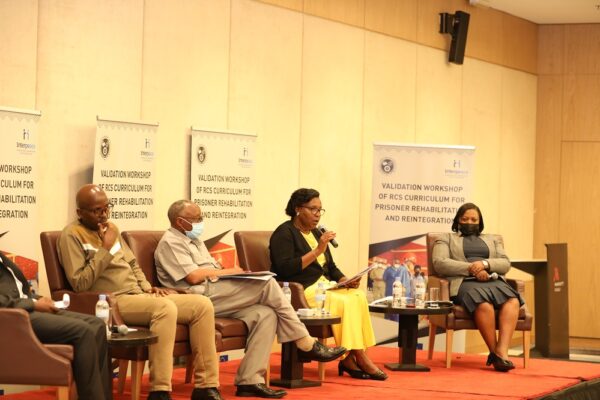
Studies have indicated that without an appropriate psychosocial rehabilitation and reintegration programme, released convicts may continue to experience feelings of humiliation, worthlessness, guilt, sadness, and a skewed self-image, all of which may impact their social lives in the community. In most cases, ex-prisoners face rejection by their families and communities, especially by community members who are not ready to receive them due to their crimes. The dismissal and lack of community support drive some to relocate to other places where they are not known. This may exacerbate social tensions by triggering fear and anxiety, particularly among genocide survivors.
According to the baseline research conducted prior to the development of this curriculum, the existing programmes are predominantly informal and not uniformly implemented in all prisons. They are provided by a range of non-governmental organisations (NGOs) and some governmental institutions rather than by RCS employed staff. The new curriculum consolidates and harmonizes existing initiatives and programmes and incorporates elements of relevant good practices identified from other contexts.
Frank Kayitare, the Country Representative of Interpeace in Rwanda, indicated that the research revealed the urgency of having a harmonized approach to prisoner rehabilitation and reintegration as part of trauma healing in the country.
"Re-integrating ex-prisoners for genocide-related crimes ranked among the highest challenges identified by families and communities in the survey. Difficulties for ex-prisoners and their immediate families to sufficiently reconnect, worsening anxiety among genocide survivors in the communities where these ex-genocide perpetrators are reintegrated; and the challenge of ex-prisoners adapting to a fundamentally changed society in many respects, including gender norms and family dynamics, are among the main issues that this curriculum is intended to help contribute to solve," said Kayitare.
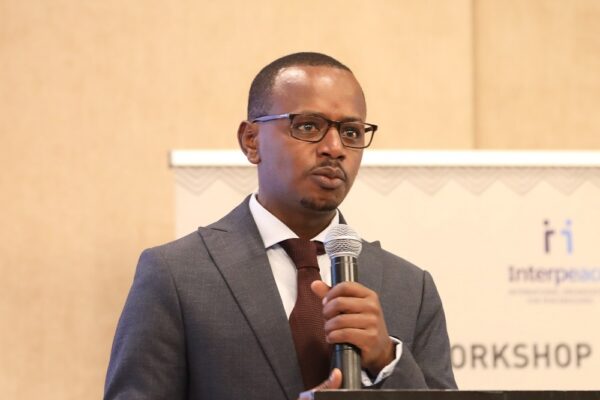
The new curriculum combines and harmonizes existing initiatives and programmes with elements of relevant good practices identified in other contexts. It has also considered the psychological aspect of prisoner rehabilitation, which was lacking in existing initiatives. As a result, it will not only equip inmates with socio-emotional skills such as self-management and dealing with trauma stemming from a long life in prison, but also develop vocational and livelihood skills to make an independent living in the community after release.
During the curriculum’s validation, the Commissioner General of RCS, ACP Alex Bahizi Kimenyi, recognized the added value of the curriculum as it offers a well-structured and holistic approach to tackling challenges his institution has been facing on this matter. He called upon all actors to lend their hand in ensuring effective and efficient curriculum implementation.
"This curriculum will enable us to work in a well-harmonized and coordinated manner, which will improve the quality of our work. However, adopting this curriculum is not the end of the journey; it is rather the beginning. I call upon all our partners, including donors, government institutions, and communities, to support this initiative so its implementation can be fully effective."
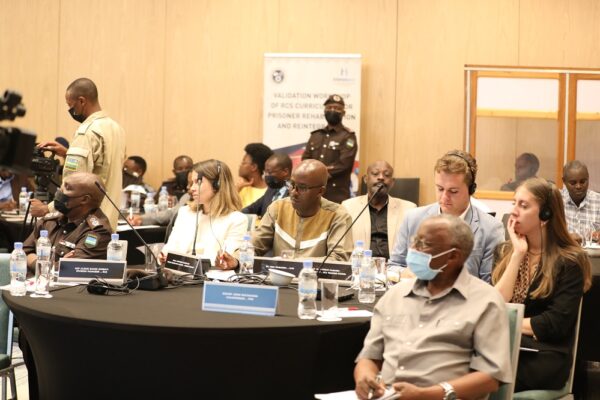
Thibaut Moyer, Head of Cooperation at the Delegation of the EU to Rwanda, appreciates the partnership with Interpeace that has led to the development of this curriculum. He reiterates the EU’s commitment to support its effective implementation.
"With the anticipated tens of thousands of prisoners to be released in the upcoming years, the EU has set aside 7 million Euros that will be used to work with local organizations, the government and other stakeholders to ensure a peaceful transition back into the communities for these prisoners and continue to foster peace in Rwanda."
The curriculum will contribute content to the "Halfway Home" initiative, where prisoners about to be released will be transited. From there, they will be offered opportunities to meet their respective communities and have an open discussion with family and community members. The move aims to facilitate the reestablishment of relationships, acceptance, tolerance, and trust between prisoners and community members and foster social cohesion.
Since the 1990s, the universities in Côte d’Ivoire have been greatly impacted by violence, particularly during electoral periods. This has created conflicts and tensions, which have influenced the dynamics of young people attending different schools. A joint initiative by the United Nations Population Fund (UNFPA), United Nations Development Programme (UNDP) and Interpeace, in partnership with Indigo Côte d’Ivoire, aims to help prevent and better manage conflicts in the university environments through participatory mechanisms that would develop a model of positive leadership, which will ultimately influence social peace and governance.
The initiative is funded by the United Nations Peacebuilding Fund (UNPBF) and is being piloted in three universities in Abidjan: Félix Houphouët-Boigny University, Nangui Abrogoua University and Alassane Ouattara University.

To better understand the sources of conflict and the dynamics of violence in these university spaces, Interpeace and Indigo Côte d’Ivoire facilitated a Participatory Action Research (PAR) process in 2021 with 1,366 students, teachers, members of administrative and technical staff from these universities. The consultations and dialogue sessions highlighted the resilience factors that can be collectively used to prevent and mitigate conflicts. Furthermore, the conclusions and recommendations from this participatory research process were used as a basis for the development of an action plan per university, which entails peace initiatives and the creation of a framework for inclusive exchange and dialogue between all university members.
In the beginning of August, a three-day workshop took place, where teachers, students and staff of the three universities came together to create a specific "road map" for the implementation of these initiatives that will foster safer and healthier environments on university campuses and strengthen the political elite of tomorrow. By supporting and strengthening students’ capacities to improve the prevention and management of conflict, the initiative will also contribute to reducing the factors that allow political parties to mobilize students for the purpose of political violence during electoral periods.
One of the student representatives at Alassane Ouattara University highlighted that the project had enabled participants to “improve consideration for certain actors”, who had previously been viewed negatively by students. A participant from Nangui Abrogoua University reflected on the significance of the project stating, "We are using words more than muscles". On the issue of strengthening ties and improving communication between university stakeholders, a professor highlighted the necessity for “collaboration between groups [stakeholders] that, so far, have not been speaking to one another”.
Indigo Côte d’Ivoire highlighted that this workshop “marked the first coming together of different university members from all three universities to collaborate and work towards a common goal”. UNFPA’s representative underlined that “the workshop was a significant step towards building and strengthening peace and cohesion on campuses through jointly designed and led actions”. Overall, participants warmly welcomed this opportunity and expressed their hopes to see considerable change take root on their campuses in the near future.
In order to build on the results of this workshop, Interpeace and Indigo Côte d’Ivoire will share the universities’ “road map” and detailed action plans with Côte d’Ivoire’s Ministry for Higher Education and Scientific Research, and will strive to provide support at the highest level to ensure that these efforts help pave the way forward so that the universities’ can become a peaceful haven of research, innovation and excellence.