Interpeace has been creating spaces of dialogue to ensure lasting peace in Aceh, Indonesia. From 2006 to 2009 the programme made a significant contribution to the consolidation of peace in Aceh.
The peacebuilding strategy had two components: one focused on the formal political process for which the key reference was direct dialogue between the parties who signed an initial peace agreement and the other focused on reconciliation, problem solving and trust building at the local level.
The programme helped local society reach consensus-based solutions to key problems and challenges based on inputs from within their communities and the inclusion and participation of all sectors of society. A range of methodological tools were used, including participatory-action research, individual interviews, focus group discussions, open public debates, thematic working groups, working seminars, conferences, video footage and radio broadcasts, and press statements. All of this was intended to ensure strong local ownership and legitimacy of decisions taken or solutions reached.
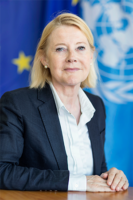
Lotte Knudsen Ambassador, European Union to the United Nations in Geneva
Lotte Knudsen was previously the Managing Director in the European Union’s External Action service, in charge of global and multilateral issues, as well as human rights. She also served in the European Commission in a number of different posts. She was in charge of developing international relations in DG Justice and Home Affairs, before becoming Director, first on Security, including counter-terrorism issues; then on Justice issues, including legislative negotiations, in DG Justice; and in DG development dealing with thematic issues from migration, to health and human development. Earlier she also worked in the Relex DGs on EU/US relations and the EU Accession negotiations; in the Commission Secretariat General as well as in the Foreign Office in London, on a two-year secondment. She studied at the Ecole National d’Administration in Paris and the College of Europe in Bruges.
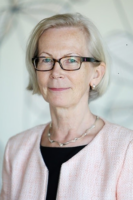
Kirsti Kauppi Ambassador, Permanent Representative of Finland to United Nations in Geneva
H.E. Kirsti Kauppi, Ambassador, Permanent Representative of Finland. Before Geneva, Ms. Kauppi served as Ambassador of Finland to the United States (2015 – 2020). She was Director General for Political Affairs (2012 – 2015) and Director General for Africa and the Middle East (2009 – 2012) at the MFA in Helsinki. She served as Ambassador to Austria and Permanent Representative to the UN-related international organizations in Vienna (2005 – 2009), where she also served as the Finnish Governor in the IAEA Board of Governors, including vice chair of the Board. Since joining the MFA in 1983, Ambassador Kauppi has served in the Finnish Embassies in Berlin, Washington and Bangkok and at the Permanent Mission of Finland to the EU. In the MFA, her positions have included heading the EU's Common Foreign and Security Policy Coordination Unit and serving as advisor to the State Secretary. Ambassador Kauppi holds Master ́s degree in Economics from the Helsinki School of Economics and Business Administration. In addition to her native Finnish, Ambassador Kauppi speaks English, Swedish, German and French.
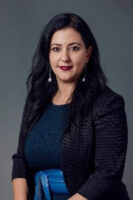
Hiba Qasas Director, Principles for Peace Secretariat
Hiba Qasas served at the United Nations for 16 years in various leadership and expert roles at headquarters and in Arab States. Former Chief of the Crisis Prevention and Response Office in Geneva. Former UN Women Country Representative in Iraq. Coordinated Crisis Prevention and Response with UNDP’s Crisis Bureau at headquarters and led programmes at UNDP office in Jerusalem. Ms. Qasas has 18 years of experience in policy, programming and partnerships in development, peace and humanitarian contexts. Ms Qasas is a Palestinian national and holds a Master of Sciences in International Cooperation for Development from the European School for Advanced Studies, University of Pavia, Italy.
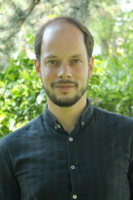
Sacha Meuter Head of Policy and Research, and Legal Advisor, Fondation Hirondelle
Sacha Meuter is Head of Research and Policy, and Legal Advisor at Fondation Hirondelle. Sacha has been researching and working with media in fragile contexts for more than 15 years. At Fondation Hirondelle, he develops partnerships with academic actors, think tanks and international organizations to design and implement media impact assessment studies, to elaborate online and offline media monitoring tools and to improve media support policies. His work includes regular field missions, including in the Sahel and Central Africa. Sacha also seats on the boards of The New Humanitarian and Trial International.

Anne-Marie Buzatu Vice President & Chief Operations Officer, ICT4Peace Foundation
Anne-Marie Buzatu is the Vice President and Chief Operations Officer of ICT4Peace Foundation. An international lawyer by training, she also worked for several years in the information technology sector as a web developer and database administrator. Anne-Marie consults with governments and international organizations and develops and delivers capacity building in the areas of cyber (human) security policy, multistakeholder approaches to governance and impacts of private commercial actors on human rights. She has also published several policy papers and articles in the areas of private security and cybersecurity.
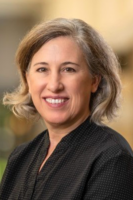
Lisa Schirch Richard G. Starmann Sr. Professorship Chair in Peace Studies, Kroc Institute for International Peace Studies, University of Notre Dame
Dr. Lisa Schirch is Richard G. Starmann Sr. Chair and Professor of the Practice of Peacebuilding at the University of Notre Dame’s Kroc Institute for International Peace Studies. Schirch is also a Research Fellow for the Social Media, Technology, and Peacebuilding program for the Toda Peace Institute. Schirch is the author of eleven books including most recently Social Media Impacts on Conflict and Democracy (2021).
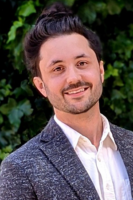
Alex Krasodomski-Jones Digital Policy Researcher, Chatham House
Alex is in charge of Digital Policy at Chatam House since August 2022. Before that, he used to be researcher and Director of the Center for the Analysis of Social Media at the UK think-tank DEMOS. He has authored more than a dozen major reports on digital election integrity, content moderation practices, digital regulation and the intersection between tech and politics. He led the centre’s visual analytics practice, and provided written and televised comment for the BBC, CNN, Wired, the Spectator and other outlets.

Annika Erickson-Pearson Head of Community Management, Geneva Peacebuilding Platform
Annika Erickson-Pearson is a facilitator, event manager and researcher, currently heading community management at GPP. She works to build connections, community, and collaboration between various peacebuilding actors in and out Geneva on a variety of topics, including environmental peacebuilding. Annika is an experienced community organizer, political advocate and event manager, working with nearly a dozen NGOs over the past nine years, including the Conference on World Affairs, Represent.Us, Run for Something, StartingBloc, and the Global Campaign for Education.
She holds a Master's degree from the Graduate Institute of International and Development Studies in Geneva where her research focused on urban violence and gang desistance policies in the U.S.
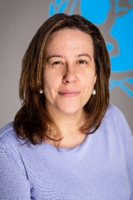
Cecilia Sanchez-Bodas Programme Specialist, UNICEF
Cecilia Sanchez-Bodas is currently part of the team in UNICEF Headquarters that coordinates and supports the humanitarian response for major current emergencies and leads on the efforts to implement the triple nexus in both humanitarian and development UNICEF programmes. Cecilia is a certified nurse holding a Master’s degree in Social and Cultural Anthropology from the Universidad Autonoma de Madrid and a Master’s in Public Administration from the Harvard Kennedy School of Government. She has worked in humanitarian and development contexts with iNGOs, the Red Cross and the UN in Africa, Middle East, Latin America and the Caribbean regions.

Julius Jackson Technical Officer, UN Food and Agriculture Organization (FAO)
Julius Jackson is a Technical Officer (Protracted Crises), working for the UN Food and Agriculture Organization (FAO) based in Rome. He has held a variety of positions with FAO since 2002, including managing development projects, and leading the large-scale emergency flood response in Pakistan from 2010-2012. Between 2013-2015 he coordinated technical support to develop the Committee on World Food Security’s global policy for food security and nutrition in protracted crises. He created and leads the Conflict and Peace Unit under the Office for Emergencies and Resilience, supporting context analyses, conflict-sensitive programme design and how FAO’s work can contribute to peace. This underpins FAO’s work across the Humanitarian-Development-Peace Nexus, and how this can be better operationalised. He holds a BSc in politics from Plymouth University and an MA in international conflict analysis from the University of Canterbury.
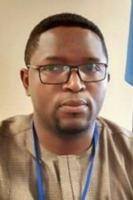
Kevin Babila Ousman Interim lead of the Interagency Policy for Emergency Unit, World Health Organization (WHO)
Kevin Ousman is a Cameroonian/American with over 15 years of public health experience (clinical, field/field and academia). He is interim lead of the Interagency Policy for Emergency (IPE) unit in WHO’s health emergency program in Geneva. The IPE unit manages humanitarian policy issues and serves as the liaison office with other humanitarian UN agencies. Prior to this role, he coordinated the Infection Prevention and Control unit in the WHO Health Emergencies program for the Africa Region. Mr. Ousman holds a Bachelor of Science in Nursing from the University of North Carolina at Greensboro and an Masters of Science with a Health Systems Management concentration from the Johns Hopkins University in Baltimore. Mr Ousman has published extensively covering health systems issues and practical public health interventions (mainly in infection prevention and control interventions in health emergency response in humanitarian settings).
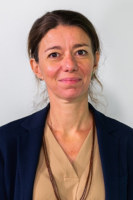
Nieves Thomet Employment for Peace Specialist, International Labour Organization (ILO)
Nieves Thomet joined the ILO in 2001, as a partnership officer. From 2004 to 2008, she coordinated an ILO Local Economic Development program based in Maputo, Mozambique, and later a Social Dialogue for Peace program covering Sahel and Western Africa based in Dakar, Senegal. From 2008 to 2018, Nieves worked as an international consultant for different organizations in many fragile contexts, such as Haiti, Lebanon, Colombia, the Sahel as a specialist on knowledge management and program development related to livelihoods and decent work promotion in fragile settings. In September 2018, Nieves joined ILO’s Coordination Support Unit for Peace and Resilience as decent work for peace specialist. Her work in the ILO focuses on enhancing conflict sensitivity and peace responsiveness across employment and decent work programs in fragile settings. Nieves holds a BA from McGill University (Montreal, Canada) and a Master degree from the Graduate Institute of International and Development Studies of Geneva. She is French and Spanish, and grew up in Brazil.
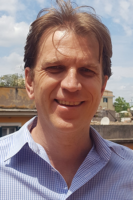
Peter Läderach Principal Scientist, CGIAR
Principal Scientist at CGIAR and Co-lead CGIAR Climate Security, based in Dakar, Senegal. Led the expansion of CIAT's Climate Action program to Central America, Africa and Asia, with extensive work experience in more than 15 countries. Twenty years of research experience in food systems transformation to support developing countries in alleviating poverty, adapting to and mitigating climate change, building resilience and peace. Peter holds an MSc in Geography and a PhD in Tropical Agriculture, he published over 60 peer-reviewed articles, book chapters and books.
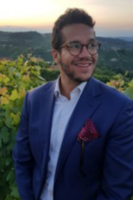
Albert Souza Mülli Peace Responsiveness Advisor, Interpeace
Albert joined Interpeace in May 2022 as Peace Responsiveness Advisor after nearly eight years as a Governance and Conflict Adviser with the UK Department for International Development (DFID)/Foreign, Commonwealth, and Development Officer (FCDO). With DFID/FCDO, Albert worked in Pakistan, Myanmar, Libya, and South Sudan, advising UK Ambassadors and Ministers, national governments, and UN officers on issues including police reform (Pakistan), ceasefire negotiations (Libya), and local- level peacebuilding (Libya/South Sudan). Prior to joining DFID, Albert worked as a camp manager in South Sudan and a peacebuilding programme manager in Kenya/Uganda. Albert has a MA in International Affairs from the Graduate Institute in Geneva.
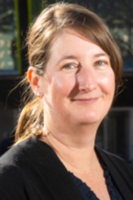
Caroline Pellaton Corporate Operations Manager, Geneva Water Hub
Caroline Pellaton holds a PhD in Earth Sciences from the University of Geneva. She joined the Geneva Water Hub in June 2018 as Corporate Operations Administrator and member of the direction committee. She contributes to define the strategies and orientations of the GWH as well as linking with the major donors. Her work consists also of monitoring the achievements and implementation of the activities. She contributes to the work on shaping the legal framework on water in armed conflicts as well as some other operational activities. Previous to the Geneva Water Hub, she worked over 10 years as a country level program manager in the Water and Habitat Unit of the International Committee of the Red Cross in emergencies and post conflict environments in various contexts such as Sri Lanka, Niger, Republic of South Sudan, Central African Republic, Yemen and Jordan.
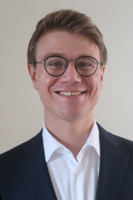
Leonard Fried Strategic Partnerships Advisor at Interpeace.
Based in Brussels, he manages the political relations with EU member states and other governments. He has previously worked at the European Parliament and at Friedrich-Ebert-Stiftung (FES). Leonard holds a Master of Science in Conflict Studies from the London School of Economics and Political Science (LSE), a Master of Arts in EU International Relations and Diplomacy Studies from the College of Europe in Bruges, and a Bachelor of Arts in European Studies from Maastricht University.
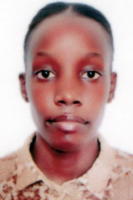
Julian Arach Youth advocate from Uganda, Youth Lab Great Lakes programme
Julian Arach is a 22-year-old Ugandan pursuing a bachelor’s degree of Arts in Economics at Makerere University in her final year. She is passionate about peacebuilding. As a recognition of her unwavering commitment to peacebuilding, Julian has been selected as a member of the YouthLab project—an Interpeace-led project in partnership with 6 civil society organizations in Burundi, DRC, Rwanda, and Uganda—that aims to position the youth in the African Great Lakes region at the forefront of peacebuilding initiatives and processes. She is serving as a one of the six Young Innovators in Uganda, a group of young people who constitute the cornerstone of the program.
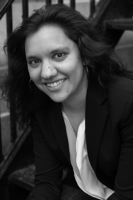
Anjli Parrin Associate Director of the Project on War Crimes and Mass Graves, Human Rights Clinic and Institute, Kenya
Anjli Parrin is a Kenyan human rights advocate and lawyer. She is currently a visiting clinician at the University of Chicago Law School where she directs the Global Human Rights Clinic, which works alongside partners and communities to advance justice and address the inequalities and structural disparities that lead to human rights violations worldwide. She is visiting from Columbia Law School. Anjli conducts human rights factfinding, investigations, and advocacy around the world. Her practice and research focuses on the areas of armed conflict, international criminal law, transitional justice, forensic science and human rights, discrimination and inequality, decolonizing human rights, and the right to health. She has worked alongside forensic scientists to carry out complex war crime investigations, including for the International Criminal Court; successfully proposed new law on exhumations for hybrid courts; and provided trainings to judges, lawyers, police, gendarmerie, NGOs and victims associations on the law and science of suspicious death investigations. She has also developed programs to advance peer support for human rights advocates around the world, and advocated for action to address racial injustice in the child welfare system in the US. Anjli holds a Juris Doctor from Columbia Law School, a master's degree from Columbia’s Graduate School of Journalism, and a bachelor’s degree from the London School of Economics. She is admitted to practice law in New York.
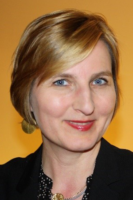
Anita Ernstorfer Principal and Owner, Untangle (LLC)
Anita Ernstorfer works globally through her advisory and research firm Untangle. Her main substantive expertise is in the areas of systems change and complexity approaches, peacebuilding, dialogue and mediation initiatives and conflict sensitivity/Do No Harm. For the past 20 years Anita has worked in a range of contexts across the Middle East, Africa, Asia, Europe, and Latin America. She accompanies strategy, program and change processes with multi-mandate organizations, facilitates collaborative learning engagements and collective impact efforts. Anita supports and advises leadership and program teams to help their organizations work more effectively in transitional and conflict-affected settings. Previously, Anita was the director of the peacebuilding effectiveness practice at CDA Collaborative Learning, and a peacebuilding, conflict prevention, and conflict sensitivity adviser with UNDP and UNICEF. She is a Senior Associate with Interpeace, directs the ‘effective advising in complex contexts’ professional development course, and supports Interpeace’s global initiative on peace responsiveness. Contact: anita@untangle.world
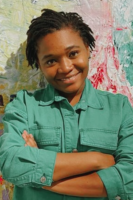
Martine Kessy Ekomo-Soignet Founder, URU and Peace & Development Watch, Central African Republic (CAR)
Martine Kessy Ekomo-Soignet graduated with an Master 2 in Geo-Politic, International Security and Sociology (Catholic Institute of Paris),and today has 10 years of experience in the field of development and research on issues of peace and security and more specifically on youth and civil society in Central African Republic. She is a community leader and founder of the national NGO URU, which works for the effective participation of young people in the peace and recovery process in the Central African Republic. The organization now covers 14 of the country's 16 prefectures. At the same time, she represents PeaceDirect in the Central African Republic, a British NGO working primarily to promote peace efforts by civil society organizations in conflict zones. In 2016, she was appointed by the Secretary General of the United Nations (Ban Ki-moon) as an expert on the Study on Youth, Peace and Security Agenda, in accordance with UN Security Council Resolution 2250 (Youth, Peace and Security). She has since been a member of the Global Coalition on Youth, Peace and Security. Through its commitment, it becomes the focal point of the United Nations Headquarters for the implementation of Agenda 2250 in the Central African Republic and briefed, in plenary session, the Security Council on the urgency of strengthening efforts to help young people contribute effectively to the resolution and prevention of conflicts around the world. In 2019, she was selected to participate in the USIP Generation Change Fellows Program. She worked as a national consultant to the government of the Central African Republic in the development of its first national strategy for the prevention of Radicalization and Violent Extremism. In 2021, she is appointed as member of the Board of Trustees of PEACEDIRECT U.K. and was appointed as member of the group of experts of UNDP in charge of the review of the continental (Africa) strategy on Governance and Peacebuilding. On a global scale, Kessy contributes to various journals and research dealing primarily with issues of youth, peace, security, and development.
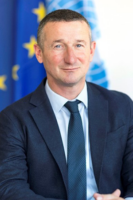
Thomas Wagner Ambassador, Deputy permanent observer of the EU to the United Nations in Geneva
September 2020 Ambassador, Deputy permanent observer of the EU to the United Nations in Geneva; 2017 - 2020 Director of the French Institute in Copenhagen; 2013 - 2017 Deputy Permanent Representative of France to the United Nations in Geneva; 2011 – 2013 Diplomatic Counsellor at the French Ministry of Interior; 2007 - 2010 Deputy Head of Mission, French Embassy in Copenhagen; 2002-2003 Counsellor at the Permanent Representation of France to NATO; 1999-2002 First Secretary at the Permanent Representation of France to the Disarmament Conference; 1996-1999 Ministry of Foreign Affairs (Strategic affairs, security and disarmament directorate), Paris; 1995-1996 Third secretary, French Embassy in Ndjamena; 1994 Ministry of Foreign Affairs (Strategic affairs, security and disarmament directorate), Paris;

Camilla Ojala Chair of the UN Youth of Finland and the Finnish UNESCO Youth Delegate
Camilla Ojala is the chair of the UN Youth of Finland and the Finnish UNESCO Youth Delegate. She has also actively taken part in the drafting process of Finland's recently published National Action Plan on the UNSCR2250: Youth, Peace and Security through the 2250-network that has brought together different youth associations and interested youth to collaborate with the Ministry for Foreign Affairs of Finland in the NAP-process. Camilla continues to be an enthusiastic advocate for youth participation and the YPS-agenda nationally through the UN Youth of Finland and the National Youth Council Allianssi, as well as internationally through the European Youth Forum's Youth, Peace and Security Coordination Network and in her work as the UNESCO Youth Delegate. She studies International Encounters at the University of Helsinki with a focus on peace and conflict studies.
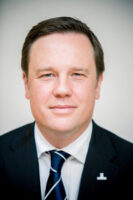
Scott M. Weber President of Interpeace
Scott M. Weber is a French and American specialist in peacebuilding and conflict prevention and is the President of Interpeace, an international organization for peacebuilding.
Initially created by the United Nations in 1994 and headquartered in Geneva, Switzerland, Interpeace, supports locally-led peacebuilding initiatives in more than 21 countries in Central America, Africa, Europe, the Middle East and Asia. In January 2018, Interpeace was officially recognized as an international entity by the Swiss Federal Council of Government Ministers. This acknowledgement reaffirms the important role played by the organization in peace processes worldwide.
Prior to his appointment to the role of President on 1 July 2018, Scott served as Director-General of the organization from 2005-2018, providing direction to the organization and overseeing its operations, partnerships and budget. As President, Scott is responsible for strategy, positioning and resource mobilization to grow the organization’s impact, influence and reach.
Prior to joining Interpeace, Scott worked at the United Nations, in the Office of the United Nations Director-General in Geneva (UNOG) and in disaster preparedness
Scott believes strongly in education as a means to shape young generations of global citizens and a more peaceful and inclusive world. In his spare time, he works with schools and universities to integrate Peace Education into their teaching practices and curricula. He is committed to diversity and inclusion and is a member of the International Gender Champions.
In recognition of his record of professional accomplishments, his commitment to society and his potential to contribute to shaping the future of the world through his leadership, Scott was selected as a Young Global Leader by the World Economic Forum (WEF) in 2009. Each year the Forum recognizes “the 200 most distinguished young leaders below the age of 40 from around the world.”
He holds a Bachelor of Arts in International Relations, Economics and Russian from Georgetown University and Certificates of Executive Education in Leadership from Harvard University’s JFK School of Government and Oxford University’s Saïd Business School.
