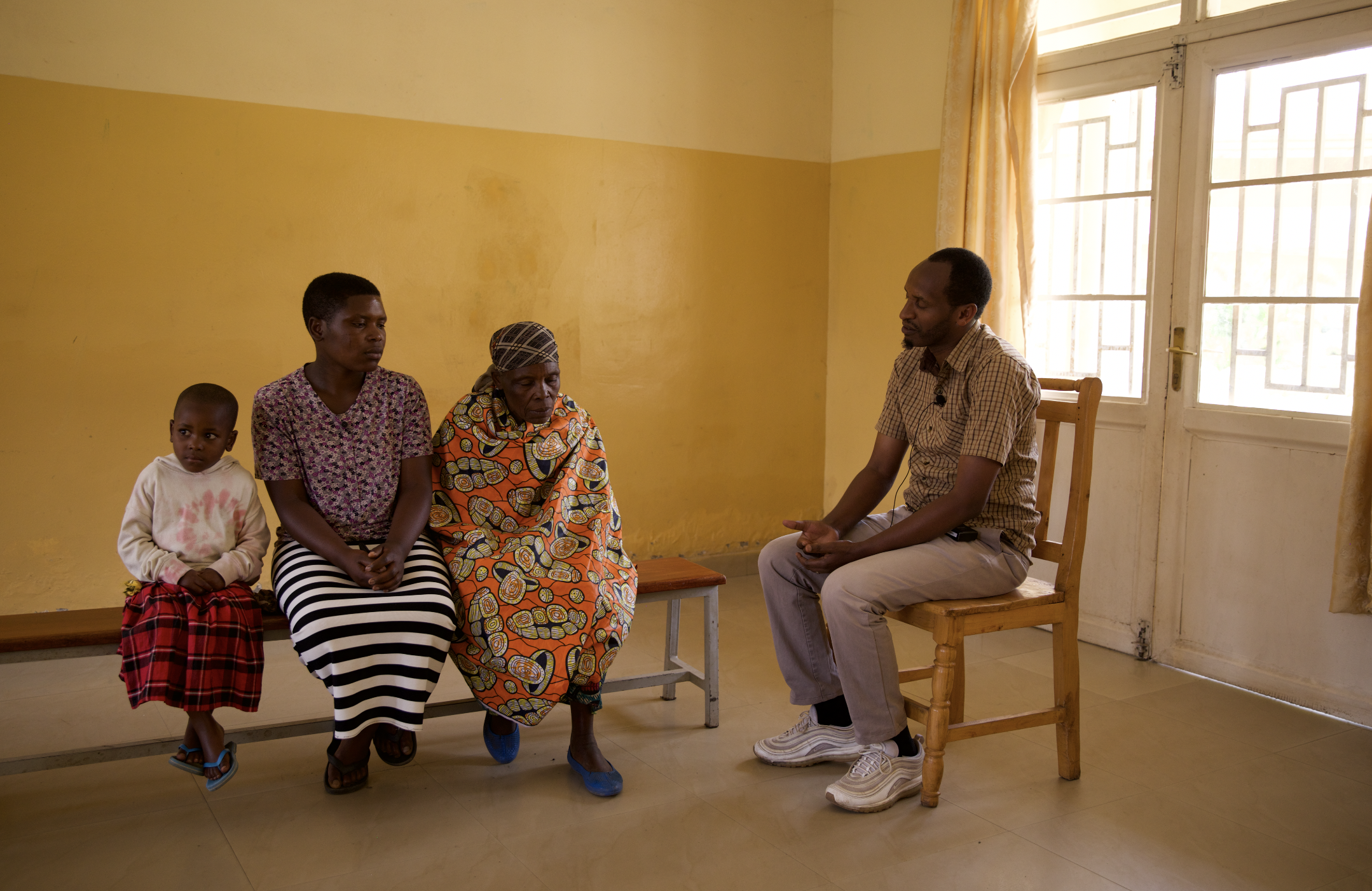
After years of rejection and despair, a young mother named Rosine from Musanze rebuilds her life through Resilience-Oriented Therapy, a community-based psychosocial approach transforming mental health care across Rwanda.
In the misty hills of Gataraga Sector, Musanze District, Rosine walks along a narrow path, holding her little daughter’s hand. To those who meet her today, she seems calm, confident, and full of quiet strength. But just a few months ago, Rosine’s world was shadowed by depression and despair.
As a teenager, she faced challenges that would overwhelm many adults: poverty, rejection, and the crushing loneliness of being a young mother abandoned by those she needed most – her own family and neighbours.
Rosine grew up in a humble home. Her education ended abruptly in fifth grade when her family could no longer afford school fees. Like many girls in similar circumstances, she was left to navigate life without the guidance or opportunities she once hoped for.
When she became pregnant, her already fragile situation collapsed. Her mother, shocked and angry, struggled to accept it. “It really hurt me. I thought about how I struggled to feed her, and she repaid me with an unplanned pregnancy. It felt like an abomination to me,” Rosine’s mother says.
“My mother rejected me. She would openly tell me to go back to the father of my child,” Rosine recalls. “I had to buy my own food and utensils. I was abandoned—helpless and hopeless.”
Her siblings distanced themselves, and her neighbours whispered behind her back. The father of her child, who had once promised marriage, disappeared shortly after the baby was born, cutting off all support — emotional and financial. The burden of depression and isolation became unbearable.
“I wanted to kill my child and myself because I couldn’t leave her alone in that suffering,” Rosine says quietly. “I had lost the taste for life because of the verbal abuse, harassment, bullying, and financial hardships.”
A Lifeline in the Darkness
Rosine’s turning point came when she was invited to join a Resilience-Oriented Therapy (ROT) group at her local health centre - Gataraga. Facilitated by trained psychologists, these sessions provide a safe and supportive environment for individuals experiencing trauma, depression, anxiety, or even suicidal thoughts to share their stories, support one another, and rebuild their confidence.
“Through ROT, I began to accept myself and my circumstances,” she says. “I learned to manage my emotions and respond calmly when insulted. Slowly, I started to believe that my life could change.”
Resilience-Oriented Therapy is a group-based psychosocial intervention introduced in 2023 by Interpeace, in collaboration with Rwanda’s Ministry of Health through the Rwanda Biomedical Centre (RBC). The initiative aims to decentralise mental health care by bringing therapeutic support to community health centres — making help accessible to those who might otherwise never seek it.
Grounded in Rwandan cultural values of solidarity and collective healing, ROT addresses a critical gap in one-on-one therapy, which remains limited and often stigmatised. Instead of focusing only on individual treatment, the sessions encourage participants to draw strength from shared experiences and to rebuild a sense of belonging.
“ROT helps people rediscover who they are,” explains one of the psychologists who facilitates the groups. “It teaches emotional regulation, identity rebuilding, and self-management—essential skills for mental resilience.”
The Broader Picture: Healing a Nation
More than three decades after the 1994 Genocide against the Tutsi, Rwanda continues to deal with its psychological aftermath. While remarkable progress has been made in national reconciliation and socio-economic recovery, the invisible wounds remain deep.
According to the Rwanda Biomedical Centre, one in five Rwandans has faced mental health challenges — a figure that emphasises the urgent need for accessible, community-based care. However, the number of professionals available remains low compared to the scale of demand.
Since its introduction, ROT has reached 621 individuals across five districts — Musanze, Nyabihu, Nyagatare, Ngoma, and Nyamagabe — through 52 healing groups in 32 health centres and seven hospitals. Each group is facilitated by a trained psychologist who guides participants through structured dialogues and exercises to process trauma, strengthen coping mechanisms, and envision positive futures.
Interpeace’s pre- and post-intervention data revealed striking results: cases of severe mental distress dropped from 38% to 19% among participants, marking significant progress toward recovery. Beyond the numbers, however, are hundreds of human stories — each a testament to resilience, empathy, and the possibility of change.
Rebuilding Bonds and Restoring Trust
Rosine’s personal transformation rippled outward. Her renewed confidence began to shift her relationship with her mother, who once rejected her out of shame and frustration.
“As a parent, it was hard to accept, especially because she didn’t tell me early,” her mother says. “I felt humiliated. But when I saw how she was struggling to recover, I began to regain my sense of being a parent and accepted it. I have found peace. Now I treat her equally and support her again.”
Their reconciliation mended more than a family bond; it restored faith within their community. Neighbours who had once gossiped now see Rosine as a symbol of courage and hope.
“Healing doesn’t end with one person,” says a psychologist who facilitates ROT sessions at the Gataraga Health Centre. “When one person heals, their whole family begins to heal—it’s like light spreading from one home to another.”
The psychologist explains that, whenever possible, families are involved in the healing process to prevent relapse due to a lack of family support.
A New Beginning
Today, Rosine, like other participants in ROT sessions, is determined to build a better life for her child. She works casual jobs to earn income and saves money, dreaming of opening a small shop and raising livestock. Each step she takes forward is an act of defiance against the despair that once consumed her.
“I have come out of darkness,” she says with a bright smile. “Now, I am in the light.”
Her story embodies what Resilience-Oriented Therapy stands for — restoring dignity, rebuilding identity, and turning pain into purpose.
Encouraged by the approach's success, Interpeace and the Rwanda Biomedical Centre are working together to scale Resilience-Oriented Therapy across all health centres and hospitals in the country. The goal is to make psychosocial support as routine and accessible as physical health services.
“By addressing mental well-being at the community level, we are not only healing individuals but strengthening Rwanda’s social fabric,” says Frank Kayitare, Interpeace Country Representative in Rwanda. “Every story like Rosine’s shows that resilience is not just a personal journey, it’s a collective transformation.”
Rosine’s journey from darkness to light is more than a personal triumph. It reflects a nation’s ongoing effort to prioritise mental health, rebuild trust, and foster compassion to achieve sustainable peace and development that the country aspires to.
As Rwanda continues its journey toward becoming a middle-income country by 2035, stories like Rosine’s remind us that progress is not measured only in infrastructure or the economy, but also in the emotional resilience of its people. Through initiatives like Resilience-Oriented Therapy, hope is being restored — one story, one family, one community at a time.