International Day of Peace 2021: the Geneva PeaceTalks, 21 September
As we begin to heal from the COVID-19 pandemic, we are inspired to think creatively and collectively about how to help everyone recover better, build resilience, and transform our world into one that is more equal, more just, equitable, inclusive, sustainable, and healthier.
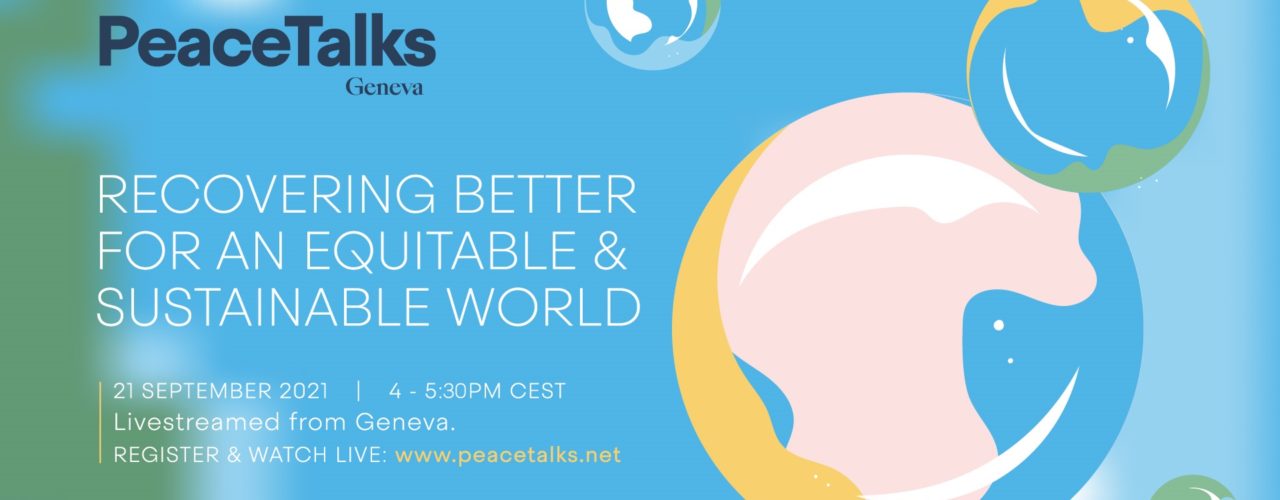
The 9th edition of the Geneva PeaceTalks will be held on Tuesday 21 September 2021. Livestreamed from the Palais des Nations in Geneva, the event is organised under the United Nations’ official theme for the International Day of Peace: “Recovering Better for an Equitable and Sustainable World”.
Register to watch livestream in English
Register to watch livestream in French
Through short talks, eleven speakers from different walks of life and different parts of the globe will tell their stories, sharing their tangible learnings and ideas drawn from their experiences in the fields of climate change, dance, education, health, music and peacebuilding.
The eleven speakers sharing their vision of peace and recovery are:
Opening remarks will be given by António Guterres, ninth Secretary-General of the United Nations and Tatiana Valovaya, 13th Director-General of the United Nations Office at Geneva. The event will be moderated by Sarah Noble, curator of the PeaceTalks, and Karen Chica Gómez, Afro-Ecuadorian activist and student at the Graduate Institute of International and Development Studies in Geneva.
WHAT
The 2021 Geneva PeaceTalks is organised under the theme “Recovering better for an equitable and sustainable world”. Through short 8-10 minutes talks, speakers share their vision, thoughts and experiences of peace with audiences from around the world. This will be the 9th edition of the Geneva PeaceTalks.
Co-founded in 2013, the PeaceTalks is a global platform dedicated to telling and sharing inspirational stories for peace. Harnessing the power of storytelling, the PeaceTalks creates a space encouraging dialogue, reflection and inspiring hope. More information and videos of previous editions at: www.peacetalks.net
WHO
The Geneva PeaceTalks is a public event brought to you by the United Nations Office at Geneva, Interpeace, the Geneva Peacebuilding Platform and the Swiss Government. The event is made possible with the support of Salesforce, Mirabaud, Geneva Water Hub and the International School of Geneva.
WHEN
The event is scheduled on the International Day of Peace, 21 September 2021, 16:00-17:30.
WHERE
Livestreamed online from Room XVIII, Palais des Nations, Geneva. Due to COVID-19 restrictions, spaces to attend are limited. All in-person attendees need to have pre-registered online. Please contact us for more information.
CONTACT:
Sarah Noble, curator of the PeaceTalks / noble@interpeace.org
Tel: 079 551 6132
Brought to you by

Partners

Addressing the immediate needs of people affected by conflict as well as the underlying causes of prolonged crises, requires coherent synergy, effective coordination and a long-term commitment by humanitarian, development and peacebuilding actors.
The recurring and multifaceted nature of conflicts around the world today - and particularly in Burkina Faso - underlines the need for a closer collaboration and deeper coordination by these actors in the humanitarian, development and peacebuilding sector.
Humanitarian and development actors are becoming aware of the need to invest more in interventions that contribute to ending need and enhancing peace at the same time. Recognizing this, the United Nations System in Burkina Faso mandated Interpeace, through UNDP, to conduct a study that maps the capacities of these actors for the operationalization of the humanitarian-development-peace nexus approach.
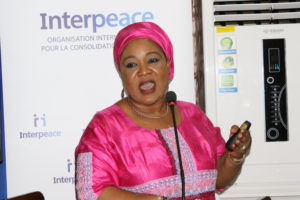
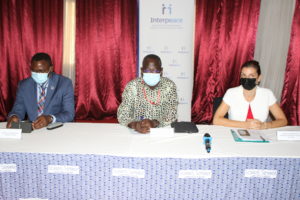
After conducting an analysis of the capacities of actors from these three sectors in Burkina Faso, Interpeace and the United Nations Development Programme (UNDP) have gathered key actors to operationalize a platform for humanitarian-development-peace nexus in the country. The two-day workshop in the capital Ouagadougou, from 01 to 02 July 2021, was attended by nearly one hundred participants representing all relevant stakeholders.
“Despite the present security challenges making actions on the ground difficult, we must not abandon the vulnerable populations. This is the challenge for humanitarian, development and peacebuilding actors, hence the importance of making the nexus operational in Burkina Faso,” explained Metsi Makhetha, Resident Coordinator of the United Nations System in Burkina Faso.
The study carried out by Interpeace for nearly one year focused on the mechanisms for coordinating actions, organisational adaptation, the inclusion of local actors in the project lifecycle, as well as the financing mechanisms of technical and financial partners.
“We must insist on the need for a multidimensional and holistic approach to respond to the multidimensional nature of the challenges facing Burkina Faso,” said Mathieu Ciowela, UNDP’s Resident Representative, who described the Nexus as an accelerator for the United Nation’s agenda 2030.
One of the key recommendations made by the populations themselves was the need to involve them more throughout the process from assessing their needs through implementation to monitoring and evaluation of projects.
“The nexus will be operationalized in the Centre-North [region] because the actors are now aware of the approach. There are organisations that have already integrated the approach into the planning of their activities. We will play our part to strengthen the synergy of actions among all stakeholders in the region,” explained Adama Sawago, the regional council president for Burkina Faso’s Centre-North region.
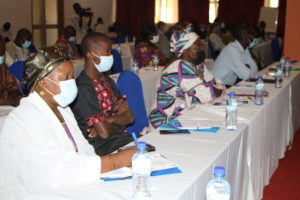
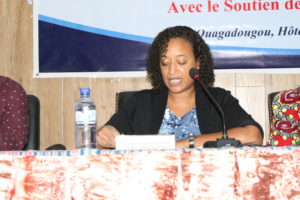
“The inclusion of all is needed to build the interventions around consensual tools that could enhance the synergy of action among actors and respond better to the needs of the populations,” said Charles Dalla, the Director General of Territorial Development who represented the minister delegate in charge of territorial planning.
Participants at the workshop expressed satisfaction with the quality of data from the Interpeace research and appreciated the rich discussions they had on the findings. Some recommendations were made at the end of the workshop, which if implemented, will facilitate the operationalization of the Nexus approach.
“Beyond the coordination and consistency of interventions for the benefit of the people, establishing a humanitarian-development-peace nexus is a real accelerator for development in Burkina Faso. It is therefore imperative to implement it urgently by putting in place a credible, inclusive and participatory structure, mobilise political actors and involve local actors,” said Cheick Faycal Traore, Interpeace Country Representative in Burkina Faso.
Some of the recommendations from the study include: a call for the process to be given political validation and anchored in national institutions in line with mechanisms of the national development repository; the creation of a technical committee to support, guide and develop the tools needed to implement the nexus; develop an interactive database that presents, in real time, an overview of the humanitarian, development and peacebuilding interventions carried out by both the government and technical and financial partners; pilot the new approach in the regions first, especially in those areas where the study was carried out and use the evidence and lessons learned to scale it up at national level; strengthen the coordination, flexibility and duration of funding in order to facilitate access by local actors and taking into account emergencies; strengthen the role of deconcentrated and decentralized actors, civil society and the concerned populations in the project life cycle; and deepen the work of the Troïka – a framework for consulting technical and financial partners - on joint analysis and data sharing.
The inclusive study by Interpeace was carried out in three of the country’s administrative regions – the Sahel region, Boucle du Mouhoun region and the Centre-North region. Data was collected from individual interviews, focus group discussions and literature review.
Libya goes through challenging months as the country heads towards elections on 24 December. On 2 July 2021, the Libyan Political Dialogue Forum (LPDF), supported by the UN, was not able to reach a consensus on the constitutional basis of the upcoming elections. Earlier in June, during the Second Berlin Conference, there was no significant progress in terms of withdrawal of foreign troops or mercenaries from the country.
In this highly divided context, community-based reconciliation processes are critical to address conflicts stemming from local grievances. However, too often, local populations and communities are not sufficiently involved in the higher-level peace processes. To bridge this gap, Interpeace has gathered a broad range of change agents involved in establishing a common vision of priorities for peace to bring solutions at the local level through community dialogue.
The deep political divisions that characterize Libya both stem from and feed into local grievances – creating a vicious cycle and making the work at the community level all that more important. Since 2011, Interpeace’s engagement in Libya has focused on the development of local infrastructure for peace and social cohesion. Amid this prolonged state of conflict, Libyans are frustrated with the continued political stagnation, failed dialogue processes, and unkept promises. In the context of long-standing multifaceted crisis in Libya, there are high hopes for a democratic transition in the coming months, even with the last setbacks, but that is complicated by numerous social and political challenges in addition to the ongoing conflict and the spread of Covid-19.
The years of conflict have also weakened the already fragile social cohesion and widened the gaps in the country. Re-establishing social cohesion and inclusion must be a priority while building sustainable peace in such a complex conflict situation as the one in Libya. Through its project “Strengthening Local Cohesion in Libya: A Pathway to Lasting Peace”, Interpeace seeks to reinforce local resilience capacities for sustainable peace and contribute to the development of local environment for stability and future growth in Libya. Almost 30 communities benefit from the programme.
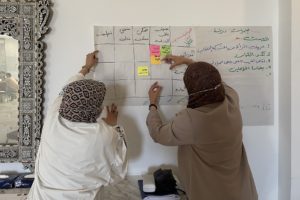
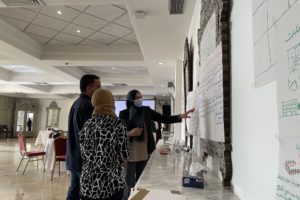
Over the last ten years in Libya, Interpeace has developed and accompanied a network of over 200 ‘Change Agents’ or ‘Dialogue Facilitators’, across the country working directly with the population. This group is made up of influential individuals of all ages, genders and social status. Its members play an important role in building resilient peace in Libya from the bottom-up, by ensuring that engaged communities are equipped to be more resilient to conflict, especially at the community level. This initiative is aimed at catalyzing collaboration between Libyan communities, and with national authorities, to establish a common vision of priorities for peace through strengthening dialogue platforms and building the capacity of change agents in local communities. This effort is supported by the German Federal Foreign Office and the Swiss Federal Department for Foreign Affairs.
“On the practical level, I was greatly empowered in my social participation. There were some activities I stayed away from, thinking they belong to the specialists, and I never participated. I felt that it [the engagement in the initiative] gave me the courage to participate. I was staying away from those having opposing ideas and positions, but I began to intervene in positive ways. If a tough situation occurs, I try and find constructive solutions to it,” says a female change agent from Tobruk.
In the programme’s framework, Interpeace sets up various initiatives to bring together change agents based in different parts of Libya and support their efforts in building peaceful social environment. The most recent gathering took place in Tunis from 20 to 28 June 2021. It was organized to help these community leaders and influencers in identifying and addressing priority issues inside communities.
“This experience can be characterized in two ways: we established relationships in all Libyan cities when maintaining direct communication. I mean, now I have friends in every Libyan city, and I can say that 60% of the advantage I gained is the fact that I personally know young people from all the cities and from different fields. […] Personally, I have met influential people in different communities, wise people and influencers in civil society. […] We know mistrust that can exist among individuals towards international organisations working in Libya, but Interpeace has a different approach – this is a special experience,” explains a male change agent from Tobruk.
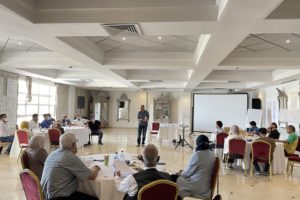
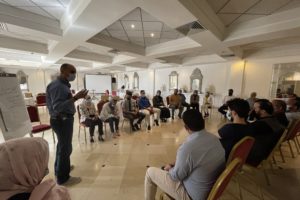
Forty change agents divided into two groups participated in four-days sessions for each. The workshop aimed at providing the dialogue facilitators who are based in the eastern part of Libya with the required skills and tools to design and conduct community dialogue tailored to their local context.
“I am shy – even when I have something to say, I prefer to stay in the background, keep quiet. I am not social by nature, I prefer staying at home. My participation in the workshops […] made me want to express my point of view whether or not it is accepted by the other party. Now, on the social level I have the power to participate in ongoing projects in Libya, such as enhancing the role of women in electoral processes, as voters or as candidates, as well as at the level of national reconciliation,” says a female change agent from Al-Baida.
This work is critical with the current changes taking place in the sensitive political context of Libya and ahead of elections in which communities will play a key role.
“The role of the change agents will be critical in the eventual implementation of a political agreement in bringing public support, particularly among civil society, who are likely to be key champions of any peace outcomes negotiated. The sustainability of a political solution will be dependent on a shared societal agreement about what peace means and what it entails, but also community engagement –going beyond simple outreach - as an actual process of inclusion in the implementation to ensure sustainable peace,” concluded Renée Larivière, Senior Director for Programme Management at Interpeace.
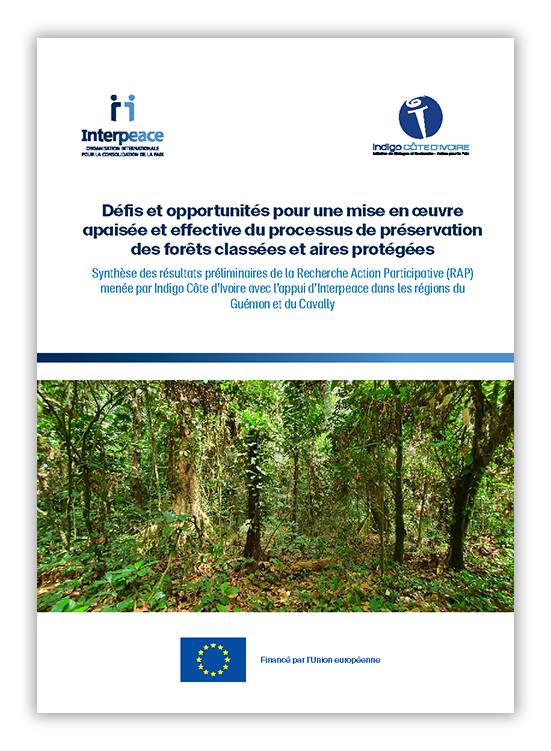
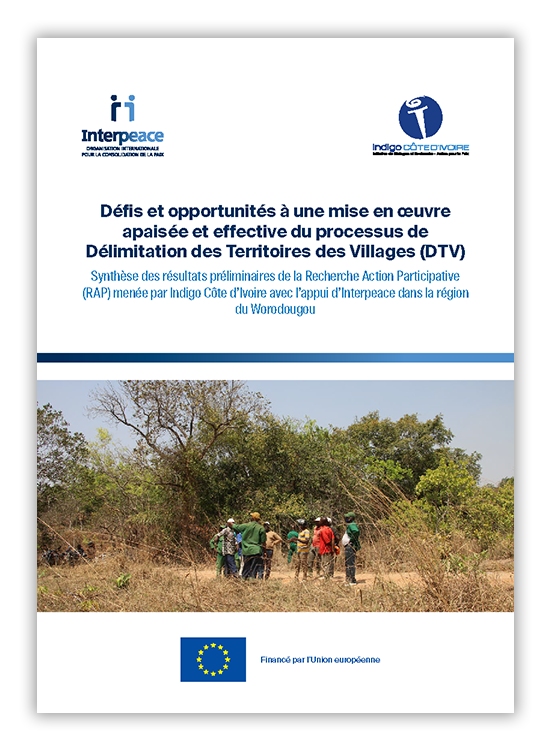
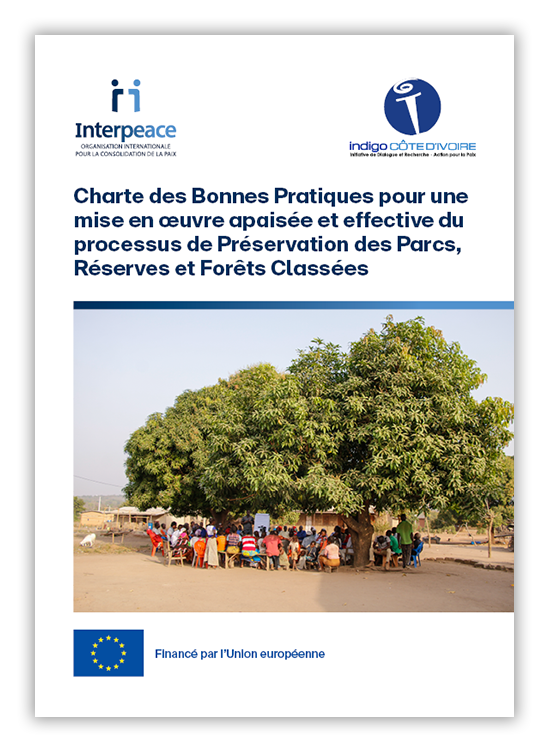
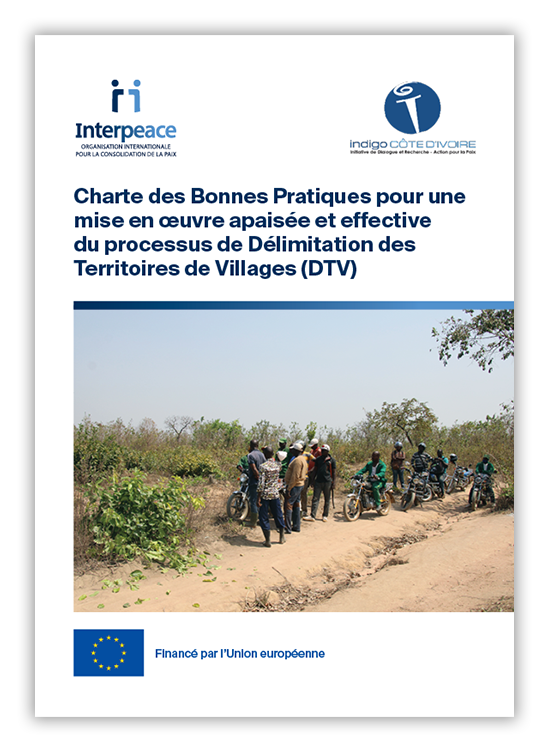
Public policies and arrangements managing the use of land in Côte d'Ivoire now need inclusive collaboration between authorities and populations to settle longstanding issues and prevent conflicts concerning land in rural areas, says recommendations from a broad consultative process facilitated by Interpeace and partner Indigo Côte d'Ivoire. These recommendations have come at the end of a 26-month project that worked to strengthen sustainable and inclusive governance of the State-led land tenure and conservation process in the country. The participation in rural land management project, known by its French acronym PAGEFOR, was concluded during a national forum of all stakeholders held in the main city Abidjan on 31 March 2021.
“The way public policies are implemented can be a source of conflict. Land provides economic opportunities to the population, and is also intimately linked to their history, identity, and social status. For this reason, changing the rules governing the exploitation of a forest, displacing people from protected areas or adjusting the borders of a village can upset the social order and trigger resistance,” explained Margaux Pimond, Programme Manager at Interpeace Côte d'Ivoire.
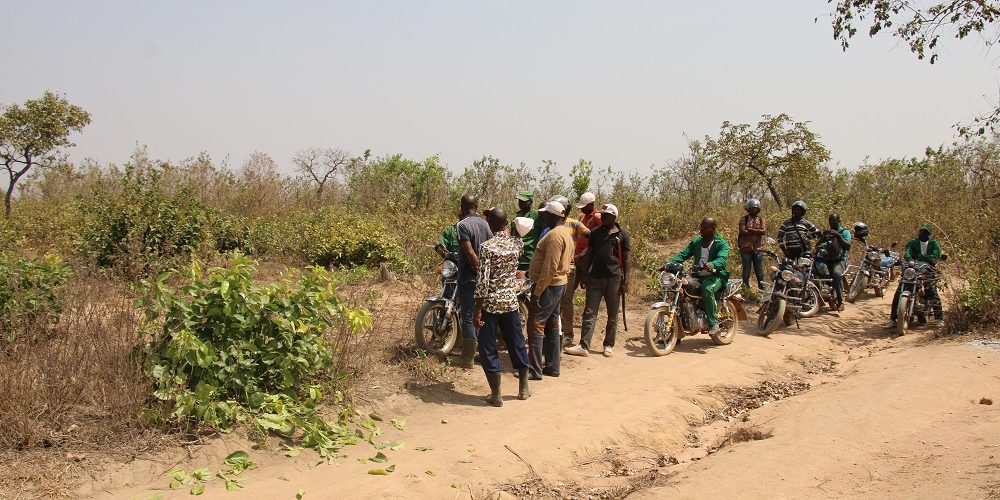
Photo credit: INDIGO
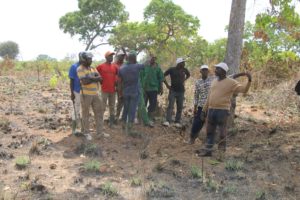
Recent policies implemented to preserve classified forests and to map the demarcation of village territories have caused misunderstandings and tensions in some rural communities in Côte d'Ivoire. Low levels of knowledge about the policies and limited dialogue around the implementation processes have generated mistrust and made it difficult for communities to collaborate, hence creating a serious problem for technical agents to access communities and do their work.
“Before the [village] delimitation process, we thought the State’s policy was to take away our land and that after the demarcation, we would no longer have access to our land,” said Dosso Metogba, Youth President of Massala-Assolo community.
Considering these challenges and their consequences to peace and social cohesion, Interpeace and Indigo Côte d'Ivoire designed and implemented the PAGEFOR project with the goal to improve understanding and ensure that these tensions are managed collaboratively. The project received financial support from the European Union and targeted specific areas in the country.
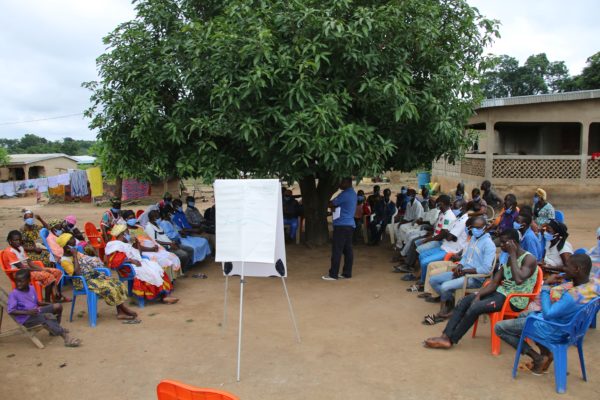
Photo credit: INDIGO
Through this project, our teams conducted a participatory study on the obstacles to the peaceful implementation of the preservation and village delimitation processes. The results informed the creation of collaboration frameworks with community members, local authorities, and technical agents to jointly address these challenges through dialogue and cooperation.
Together, members of the collaboration framework supported communities and all relevant stakeholders; improving their understanding and management of the dynamics linked to the preservation of classified forests and protected areas in western Côte d'Ivoire. They conducted a series of information sessions on the objectives and legal frameworks surrounding those processes and facilitated dialogue around their concrete implications for local populations.
“We were sensitized in the past, but we misunderstood. It was after an activity organised in Barata by Indigo that we understood [properly] and were convinced. We were told what delimitation means, what it allows us to do and what will happen if it does not. This is what led us to create a framework for collaboration with all members of the society,” explained the Massala-Assolo Youth President.
The project also empowered existing collaboration frameworks and local peace committees in the field of rural development with the capacities they need to identify early warning signs, prevent, or mediate any conflicts that are linked to this process of preserving the protected areas or delimitation of village borders.
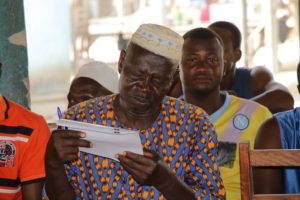
"Through the collaboration frameworks and the peace committees that we have set up, I can say that in the two villages I haven't had a dispute for over a year. The communities themselves have mechanisms, they settle the issues and report back to me. If we could put this mechanism in all the villages to manage conflicts, we would breathe, " said Henri Blé Guédé Nahounou, a local administrator in Guiglo.
Through this project, Interpeace and Indigo Côte d'Ivoire have strengthened collaboration between the different actors, improved the inclusivity and sustainability management of the issues in contention, and contributed to social cohesion and peace.
Other recommendations from this project include the need to always conduct an initial participatory analysis of the economic, social, and political issues related to conservation and village delimitation in the targeted communities. This process will give community members and local authorities the opportunity to express their concerns and clarify what is doable within the law. The project also proposes that sensitization processes and tools be reviewed and adapted, to promote a shared understanding of the objectives and the legal, institutional and operational framework of policies managing conservation and village border delimitation.
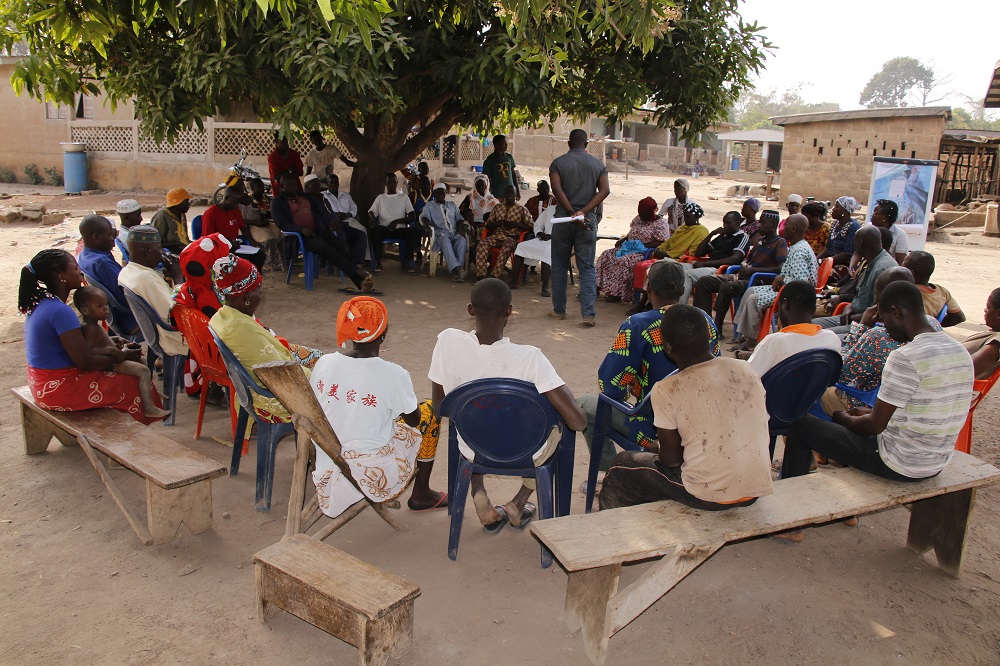
Photo credit: INDIGO
Additionally, it is recommended that context-specific and joint solutions be identified, implemented, and promoted through dialogue. Also, replicate the collaborative frameworks to prevent or manage disputes related to the processes of protecting specific areas and village delimitation. Improving communication between populations and technical agents on the field, as well as the strengthening of communication and coordination mechanisms between political authorities and relevant technical agencies will ensure coherent public action.
Following the success of this project, Interpeace is advocating that the initiative be replicated in other areas across Côte d’Ivoire where issues linked to land management and village delimitation remain a serious concern. The good practices and recommendations from the PAGEFOR project, if reproduced elsewhere, will contribute to more peaceful, cohesive, and collaborative governance of rural land tenure in the country.
Interpeace is now testing the project’s successful collaboration framework mechanism in other conflict contexts such as the prevention of political violence in Abidjan, Bouake (center) and Bangolo (west).
Learn more in links below -
To ensure that the frustration from growing impunity does not lead to a cycle of violence, Interpeace has joined the Institut Malien de Recherche-Action pour la Paix (IMRAP) and several United Nations bodies to fight impunity and improve access to justice in central Mali.
A new project will identify the causes and perceptions of impunity in central Mali’s Mopti and Ségou regions, put in place a mechanism that responds to the need for social justice and ensure that the justice system is more efficient and enjoys the trust of the population to fight impunity. It will also facilitate access to justice for the population of central Mali and ensure protection of victims.
The project, known as “Integrated approach to fight against impunity and improve access to justice in central Mali”, is a 30-month initiative jointly implemented by IMRAP, Interpeace, the Office of the United Nations High Commissioner for Human Rights, the United Nations Entity for Gender Equality and Empowerment of Women (UN Women), and the United Nations Development Programme (UNDP) with the financial support of the UN Secretary-General’s Peacebuilding Fund (PBF).
A deteriorating violent conflict in the central regions of Mali – mainly between ethnic Dogon and Fulani armed groups – has made it difficult to build trust and cohesion between communities in central Mali. The inability of the justice system to hold perpetrators of violent behaviour accountable has made impunity one of the aggravating factors of the ongoing violence. Despite this reality, the way laws are framed and implemented in Mali has limited victims’ access to justice and nurtured distrust in the judicial system.
Through this project, a barometer for perception of impunity by the population across central Mali will measure the level of trust in the justice system by people in Ségou and Mopti where the project is being implemented.
“Basing interventions on solid data is paramount for key actors to properly understand and address main factors of conflict and social strife. The barometer ensures that the project and the sector at large can be informed by high quality data about how communities perceive their situation with regards to equal access to justice,” says Helene Bradburn, Interpeace Mali’s Monitoring, Learning and Evaluation Officer.

Interpeace and IMRAP are leading the process to collect and analyse data, using an inclusive and participatory approach that will witness the active participation of the local population, relevant authorities – especially those in the judicial system - and project partners.
“Communities are not only involved but are very much leading every step of the way in this methodology; from designing the survey questions, through which data is collected, to providing the data itself, and finally analysing the quantitative findings,” explains Ms Bradburn.
As the first research of its kind in Mali, the barometer will generate enough data to inform the support provided by the consortium’s partners and key actors of Mali’s formal justice system, as well as inform future dialogue initiatives.
“Thanks to this advanced tool, we can develop an unmatched understanding of the justice and impunity situation in central Mali. By providing this data to UN agencies and partners, we are ensuring that joint interventions really answer local needs and provide pertinent solutions,” Concludes Ms Bradburn.
The barometer will be used to understand how the people feel about the justice system and the results will be vital in influencing decision-makers in Mali.
Young people have played an important role in pushing a narrative that promotes peace, reconciliation and societal healing in Rwanda, since the 1994 genocide against the Tutsi. Training them to communicate well is key to ensuring that they feel more empowered and can actively participate in shaping their own futures.
On 26 May 2021, Interpeace and its partners trained some 42 young people in Rwanda’s Bugesera District to sharpen their critical thinking abilities and equipped them with the communication skills they need to promote peace and reconciliation.
“Young people participated immensely in the 1994 genocide against the Tutsi, mainly because they were uninformed and lacked analytical capabilities. The ruling regime at the time used the opportunity to feed them with hateful and genocidal ideology,” explained Hugues Mugemana, the lead trainer and Director of Communications at Rwanda We Want - a youth empowerment organisation.
During the genocide against the Tutsi and the period before, young people did not have the capacity to properly analyse information. As a result, they were fed with hateful and genocidal ideas which they believed without questioning. This exposed them to manipulation that had severe repercussions, as they got heavily involved in massacres that happened during the genocide. This communication training was therefore very important for young people in post-genocide Rwanda to avoid a repeat of what happened in the past.
“Social media, which the youth [mostly] rely on as a means of communication, exposes them to a lot of information, [some of which can be harmful]. This workshop helped them to analyse and critically process this information to make informed decisions that decrease their chances of being manipulated into actions that are detrimental to themselves and their societies,” said Mr Mugemana.
The workshop was organised by Interpeace in partnership with Bugesera District and in collaboration with Rwanda We Want, as part of our societal healing pilot programme in Bugesera District, funded by the European Union (EU).
The training responded to one of the programme’s objectives, to strengthen the capacity of young people to receive, process and digest the legacies of the genocide against the Tutsi; and to transform them in a positive way that helps them to manage trauma and develop a shared understanding for building a peaceful and inclusive future.
“Empirical studies and previous experiences have revealed transgenerational legacies of the genocide against the Tutsi. This training has strengthened the young people’s capacity to think critically and exploit modern-day communication channels to communicate for peace, make an impact in their communities and help fight misinformation,” says Ernest Dukuzumuremyi, Programme Manager at Interpeace Rwanda.
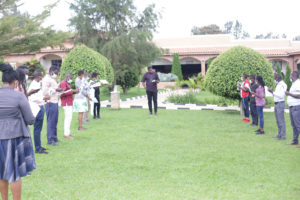
During the workshop, facilitated by young people from Rwanda We Want, participants discussed the importance of drawing from young people’s experiences to communicate more effectively for peace.
“The training has equipped me with new skills that I need in my daily life. As an active communicator on social media, I learned how I can apply them in promoting peace, unity and reconciliation,” said Osée Nkurikiyimana, one of the trainees.
The training has provided participants with the skills they need to promote peace and to overcome hate and deceit, as they create positive impact in the Rwandan society. The Mayor of Bugesera District, Richard Mutabazi encouraged the youth representatives to use the skills gained from the workshop to communicate more efficiently and to fight misinformation.
On his part, Interpeace Rwanda Country Representative, Frank Kayitare talked about the importance of communicating properly to prevent violent behaviour. He advised the trainees to be confident in sharing information but should first assess its accuracy and credibility.
There was emphasis on the role of social media in uniting people, reducing stigma and stereotypes as well as in advancing peaceful coexistence.
Eleanor Friel, who represented the EU Ambassador in Rwanda during the opening session, commended Interpeace and Rwanda We Want for organising this communication for peace workshop in Bugesera District. She reminded the trainees that communication is very important in everyday life and for peacebuilding.
Our societal healing programme in Rwanda enhances capacities of communities through an innovative and holistic approach to expand investment in mental health, address trauma and advance social cohesion. The programme is funded by the EU through its instrument contributing to stability and peace (IcSP).
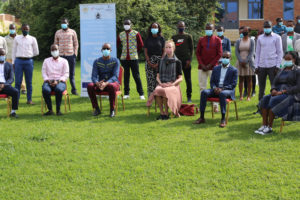
Credits: Interpeace