The proposed panel discussion co-hosted by the Dag Hammarskjöld Foundation (DHF) and Finance for Peace (Interpeace) aims to raise global awareness, understanding, and advocacy of new approaches and partnerships between development finance actors, the international community, and peacebuilding actors, and how they can work together to develop sustainable financing models for consolidating peace in fragile and conflict-affected countries. Facilitated by DHF, panelists from the African Development Bank (AfDB), Finance for Peace (Interpeace), the UN Peacebuilding Support Office (PBSO) and the UN Capital Development Fund (UNCDF), will discuss how private and public investments can support peacebuilding and reflect on the role that development finance institutions, private sector actors, the UN, peacebuilding actors, and civil society can play in designing integrated solution that de-risk investments for investors and communities. Country-level examples, and the practical case of the partnership between the AfDB and Finance for Peace/Interpeace, will illustrate how better partnerships can catalyse peace-positive impacts in fragile and conflict-affected countries.


Awa Dabo is a human rights lawyer with extensive experience in crisis recovery, peace building, transitional justice, humanitarian affairs, and development. Awa has held several positions within the United Nations, including currently as Director and Deputy Head of the Peacebuilding Support Office (PBSO) at the UN Department of Political and Peacebuilding Affairs. Awa was previously Chief of Country Oversight and Support for the UNDP Regional Bureau for Africa, Senior Advisor and Head of the Crisis and Fragility Policy and Engagement team for the Crisis Bureau of UNDP, Country Director for UNDP in Tanzania, and Regional Programme Manager and Team Leader with UNDP’s Bureau for Crisis Prevention and Recovery. Awa has experience both at HQ and at country offices, having worked on and/or in Africa, Asia, Latin America and the Caribbean, and Europe. Awa has also worked with UNDP’s Crisis Response Unit in New York, as Crisis Coordinator for Africa, Latin America, and the Caribbean. With UNDP in Geneva, Awa worked as Transitional Governance Specialist and subsequently as Reintegration Specialist. With UNDP Liberia, Awa was the Chief Technical Specialist and Programme Manager, Human Rights and Protection Programme. During her professional career, Awa has worked with other UN and non-UN entities including the UN Office for the Coordination of Humanitarian Affairs (OCHA), the Office of the UN High Commissioner for Human Rights (OHCHR), the UN Department for Peacekeeping Operations (UN DPKO, now DPO) and the African Society of International and Comparative law – an international law NGO based in London, United Kingdom. Awa holds an LLM in International Human Rights Law from the University of Nottingham (1996) and a BA in Law, Sociology and Social Anthropology from the University of Keele (1994).
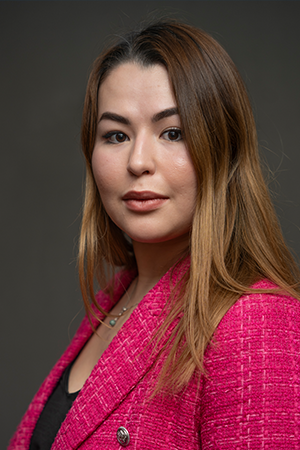
Peacebuilder focusing on policy in the Finance for Peace initiative at Interpeace. Finance for Peace is a multistakeholder initiative that seeks systemic change in how private and public investment supports peace in developing, fragile and conflict-affected contexts. It aims to create networked approaches that can co-develop the market frameworks, standards, political support networks, partnerships and knowledge required to scale up Peace Finance – investment that intentionally seeks to improve conditions for peace. Previously lead program development in Ukraine with Interpeace, applying the concept of peace responsiveness to advance a peace and health agenda as part of a strategic partnership with the World Health Organization and its country office in Ukraine. Before that, Elina worked on broader policy at Interpeace, having previously been a visiting researcher at the United Nations Office in Geneva, where she focused on global disarmament and the ethics of artificial intelligence. Elina also conducted research at the Global Resilience Institute at Northeastern University in Boston (United States of America) into the aftermath of hurricane Katrina in New Orleans (Louisiana, United States of America); supported the scheduling and external affairs team at the executive bureau of the Office of Massachusetts Attorney General Maura Healey; and worked part-time as a gun violence prevention advisor at the same office.
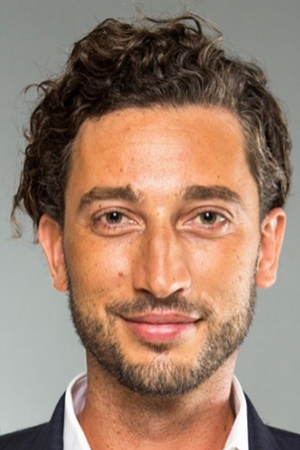
Frederik Teufel is the Lead Coordinator in the Transition States Coordination Office at the African Development Bank (AfDB). He promotes innovative financing mechanisms that raise resources for interventions at the humanitarian-development-peace-security nexus, including through capital markets. Frederik supports the effective deployment of these resources through holistic investment strategies that are conflict-sensitive, peace-positive and designed to scale up impact by leveraging the private sector and technology.
Frederik has 18 years of experience in development finance. Previously, he was the Advisor to AfDB’s Vice-President for Regional Development, Integration and Business Delivery.

Currently based in Kigali, Rwanda, as the Deputy Director for the Nature Assets Team with UNCDF. Kawtar Zerouali has spent over 16 years with UNDP, a journey that has taken her to countries like Yemen, Tunisia, Germany, Egypt, Djibouti, the Kingdom of Saudi Arabia, and Jordan. Her work focuses on making a difference by improving how systems work for people, making financial services more accessible, pushing for equality, and cocreate new solutions to social challenges. Kawtar has a special interest in supporting young people and has been involved in creating strategies that help them across various countries. She has also been part of efforts to strengthen civil society and national dialogue, particularly during a crucial period of constitutional change in Tunisia from 2012 to 2013. Her roles have included significant responsibilities, such as helping lead UNDP's efforts in Djibouti and the Kingdom of Saudi Arabia as the Deputy Resident Representative. Her background is in economics, with a particular interest in how organizations are managed. This education has helped her understand the complexities of development and peacebuilding work. As she joins the Stockholm Peace and Development Forum, Kawtar looks forward to sharing her experiences and learning from others about how to better address the many challenges our global community faces today, with a humble approach and an open mind.
