Table of Contents
We engaged and led policy initiatives on the conceptual framing of peace, design of peace processes, and funding mechanisms enabling peace. Through rigorous data collection and analysis, coupled with the strategic dissemination of findings, we reshaped the ways donors, governments, and institutions think, discuss, and shape peace.
| Number of large-scale, innovative conflict transformation measuring tools developed by Interpeace and used by partners | 4 |
| Number of people engaged in participatory data collection efforts | 15,545 of which 2,855 women and 2,182 young people |
By harnessing our longstanding expertise in designing and implementing innovative mixed-methods action-research, our evidence and research informed decisions made by government and private actors. Combined with our advocacy efforts, our research enabled us to push evidence-driven, sustainable peacebuilding approaches even further.
In 2025, we enhanced evidence-based programming and advocacy in:
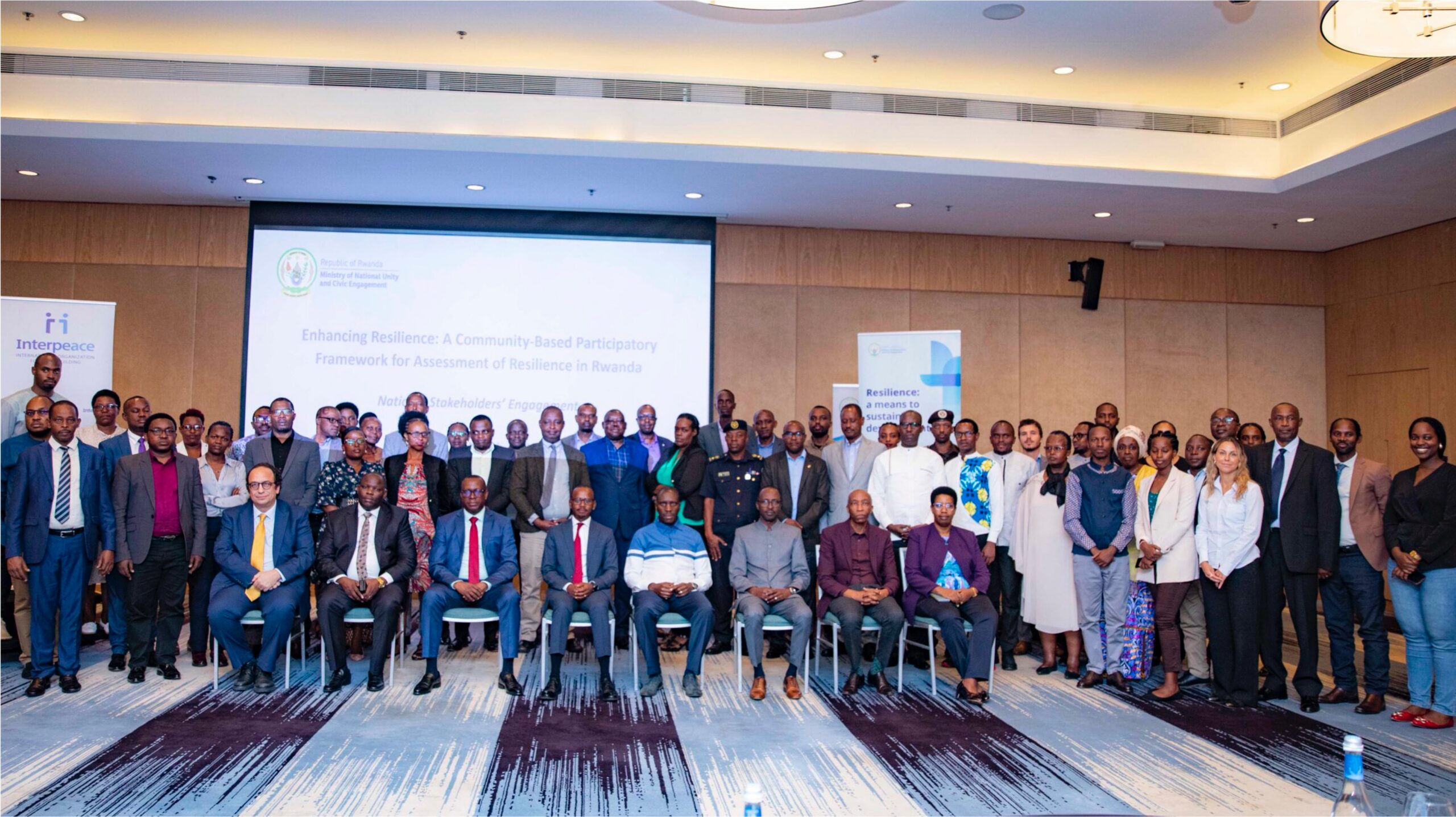
Interpeace contributed to the design and piloting of an innovative, multi-level measurement tool, the Community Resilience Assessment Framework (CRAF), commissioned by the Ministry of National Unity & Civic Engagement (MINUBUMWE). Tailored to the post-genocide context, the programme established and validated resilience indicators at individual, household, community, and institutional levels. The granular indicators drew on earlier epidemiological and psychosocial analyses, identifying trauma as a central driver of social fragmentation and mental health conditions. With the help of the data, MINUBUMWE was able to design approaches that, not only manage conflicts, but actively foster peace. Furthermore, the CRAF informed the National Resilience Barometer and the Government’s National Transformation Strategy 2025-2029, thus enabling durable, institutionalised change.
Interpeace launched the Peace Impact Study, a large-scale research project carried out across the Ituri region. Drawing from the Infrastructures for Peace methodology pioneered in the Sahel, the study sought to identify conflict drivers, including land disputes, identity-based grievances, and natural resource divisions. At the same time, the project focused on highlighting entry points for peace, such as shared markets, water points, intercommunal committees, and women’s associations. The analyses informed the design and sequencing of programmatic activities, harnessing the potential of physical infrastructure investments for reconciliation. By integrating peace efforts into the management and use of existing infrastructures and processes, interventions are more likely to generate durable impact by becoming part of the everyday life of communities.
Interpeace published and disseminated a comprehensive mixed-methods predictive analysis identifying potential hotspots of electoral violence. Drawing on survey data from more than 3,000 participants, the findings were presented to and discussed with more than 60 state and local actors, informing the National Observatory of Social Cohesion’s prevention strategies. Complementing this effort, a violence barometer engaging more than 7,000 participants was developed to support rapid response interventions throughout the electoral year. The electoral process unfolded without widespread violence, and the activities implemented under the programme are expected to yield durable benefits for democratic institutions and electoral cycles.