Table of Contents
Questions regarding the durability of outcomes remains a persistent issue across the peacebuilding sector. One of the reasons why peace does not last, is that the approaches meant to enable it are not embedded in their contexts nor institutionalised through legitimate mechanisms. To use resources efficiently and to create sustainable solutions, we prioritise constant and consistent engagement with State and local authorities as well as global structures, coupled with targeted advocacy.
| Number of State-level policies and programming officially integrating Interpeace’s inputs | 7 |
| Number of public interventions at international policy platforms or events, contributing to policy processes | 5 |
| Number of participants to the CSO-UN Dialogues during the UN’s Peacebuilding Architecture Review | 45 |
| Total online reach of #PeaceTalks | 5.96M (50.1% + than previous period) |
Integrating conflict transformation programming within State and local structures
For years, we have worked with conflict transformation institutions embedded in State structures. Respectively, authorities and public institutions are increasingly including our approaches and findings into their frameworks and protocols. Examples from our work with State and local authorities include:
In the DRC, the provincial government of Mai Ndombe signed a decree establishing a permanent provincial committee regrouping conflict-resolution commissions, thus endorsing our recommendations. The decision was the outcome of our efforts to rejuvenate and coordinate various conflict prevention mechanisms. Furthermore, the Provincial Government of Mai Ndombe formally committed to singing an edict aimed at regulating the collection of customary fees during the March 2026 parliamentary session. Representing a significant conflict driver, especially in the Kwamouth territory, the commitment marked a step towards an institutional response to mitigate and prevent violence and tensions.
Building on past collaborations with the Kenyan Institute for the Study of Conflict Transformation (ISCT), a mediation training manual rooted in Interpeace’s mediation approach was developed together with ISCT's staff and practitioners. The manual will be launched in 2026. In parallel, Wajir County signed a Memorandum of Understanding with the goal of integrating its staff and our trainings into peace efforts, thus enhancing the efficient and sustained participation of local authorities in conflict prevention.
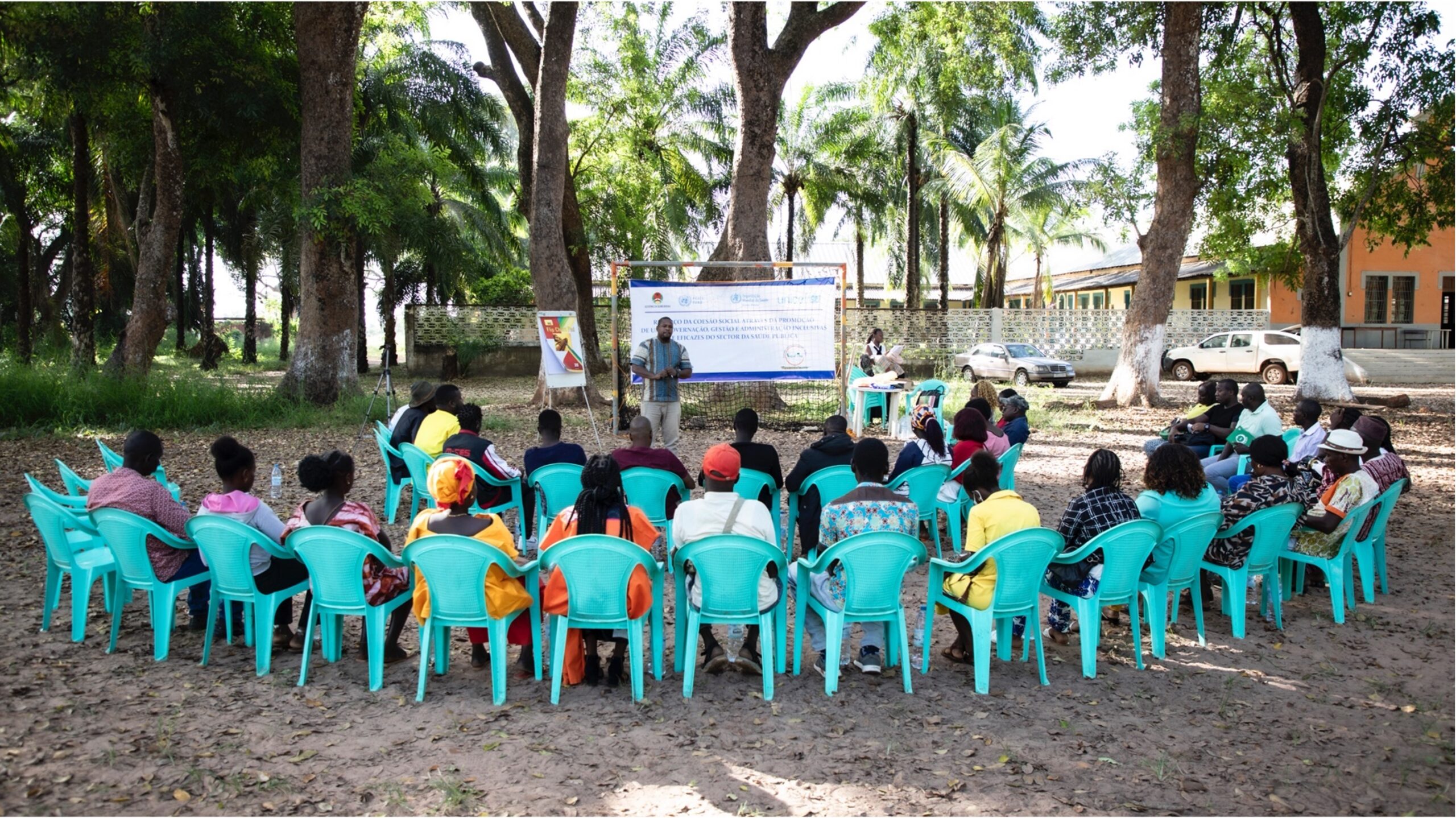
The Health Barometer implemented by Interpeace was launched and presented together with the World Health Organization and the Ministry of Health in Guinea-Bissau. Capturing insights on the public perceptions of service quality and equity, the data informed strategic decision-making in both institutions, specifically on decentralisation and accountability mechanisms. Follow-up discussions are underway with the Ministry of Health and the United Nations for potential replication and scaling.
Peacebuilding within the global community
Legitimate peace is rooted and informed by the realities, aspirations, and agency of those affected by conflict. To ensure that those at the frontlines of conflict and peace are given a platform, we hosted, co-hosted and participated in the following global spaces, events, and processes:
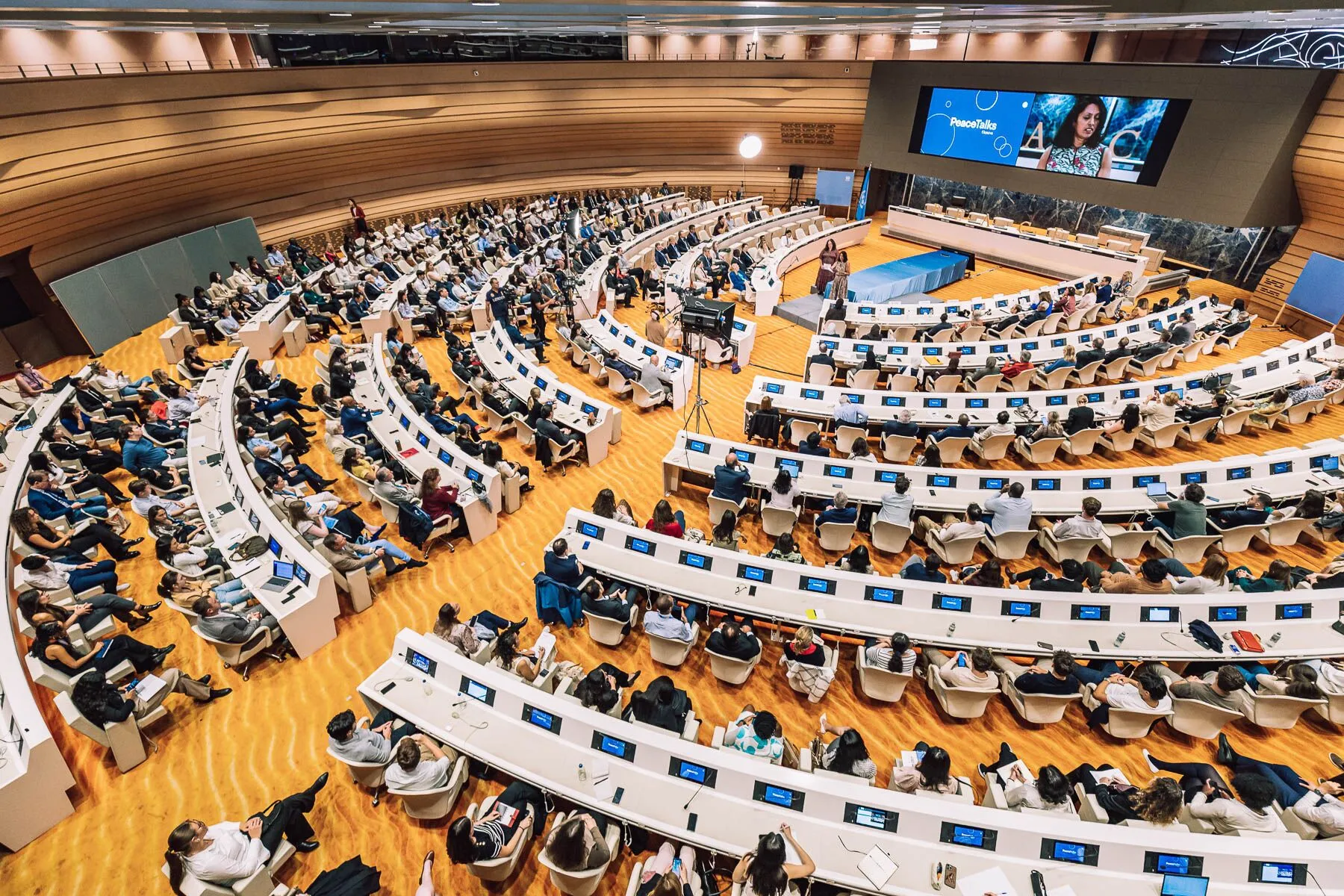
The PeaceTalks is a global initiative harnessing storytelling as a tool to build peace and inspire action. The 13th edition of the Geneva PeaceTalks was held in September under the title Peace is Possible. The event brought together diplomats, peacebuilders, community leaders, and artists to share personal experiences with practitioners and other experts. Further PeaceTalks were held in Addis Ababa as a part of the Geneva Peace Week meets Addis Ababa initiative.
We co-hosted five high-level events during the Geneva Peace Week, reflecting our growing international recognition and the global interest in our Peace Responsive approach. Sessions were hosted in partnership with, for example, the World Trade Organization, the Geneva International Centre for Humanitarian Demining, the Food and Agriculture Organization, and the Danish Refugee Council.
Interpeace co-hosted a high-level panel titled Sustaining Peace in a Shifting Global Order at the Bled Strategic Forum 2025, together with the Ministry of Foreign and European Affairs of the Republic of Slovenia. The session featured global voices on peace and multilateral cooperation, including Dr. Melita Gabrič, State Secretary for Multilateral Affairs, Political Affairs and Development Cooperation of Slovenia, and brought together leaders from Qatar, Thailand, and the International Crisis Group.
Interpeace's sustained advocacy work on the Peacebuilding Architecture Review (PBAR) continued through multiple avenues in 2025. Early in the year, we convened the Geneva Consultations, bringing together peacebuilding stakeholders, multilateral institutions, and civil society organisations. Interpeace also participated in the Policy Meeting on European Civil Society Organisations’ input to the PBAR in Brussels. Furthermore, we convened a Southeast Asia regional consultation in Manila with over 20 civil society representatives, followed by a Latin America regional consultation in Medellín with 25 civil society organisations. In a follow-up survey, at least 80% of respondents felt that the consensus-building process was effective and inclusive.
In 2025 we received a record-breaking 203 applications for the Effective Advising Course focusing on advisory skills in complex and conflict-affected settings. The 21 participants represented UN agencies and other multilateral organisations, multi-mandate INGOs, government entities, as well as peacebuilding, governance, and think-tank organisations. The course received an overall review of 4.8/5, with 95% of respondents giving the course the highest mark in terms of relevance.