Peace is not built by peacebuilders alone. Economic systems, livelihoods, investment, trade and public finance all shape the conditions in which peace either takes root or breaks down.
In fragile and conflict-affected settings, economic exclusion, unequal access to opportunities, weak institutions and mistrust between communities, authorities and markets can reinforce grievances and fuel cycles of violence. At the same time, inclusive, broad-based and conflict-sensitive economic structures can strengthen trust and services delivery, create shared interests, expand livelihoods, and reduce the risks that drive instability. Yet, the mediation and dialogue facilitation work of peacebuilders is too often disconnected from long-term development needs and livelihoods provision, despite poverty and inequality being important triggers of violent conflict.
As part of Interpeace’s Peace Responsiveness approach under the Strategic Framework 2026-2030, our work on Economic Peacebuilding, Innovative Finance and Trade for Peace helps ensure that economic development, investment and trade are deliberately designed to contribute to peace. It connects Interpeace’s long-standing peacebuilding expertise with the systems, institutions and financial flows that shape people’s daily lives.
Interpeace works with communities, governments, development partners, development finance institutions, investors, the private sector and multilateral institutions to make economic interventions more peace-positive: informed by conflict analysis, grounded in local realities, and designed to strengthen social cohesion, institutional trust and resilience.
Our work in this area advances three mutually reinforcing pathways: Livelihoods for Peace, Peace Finance and Innovative Financeet Trade for Peace.
Livelihoods for Peace
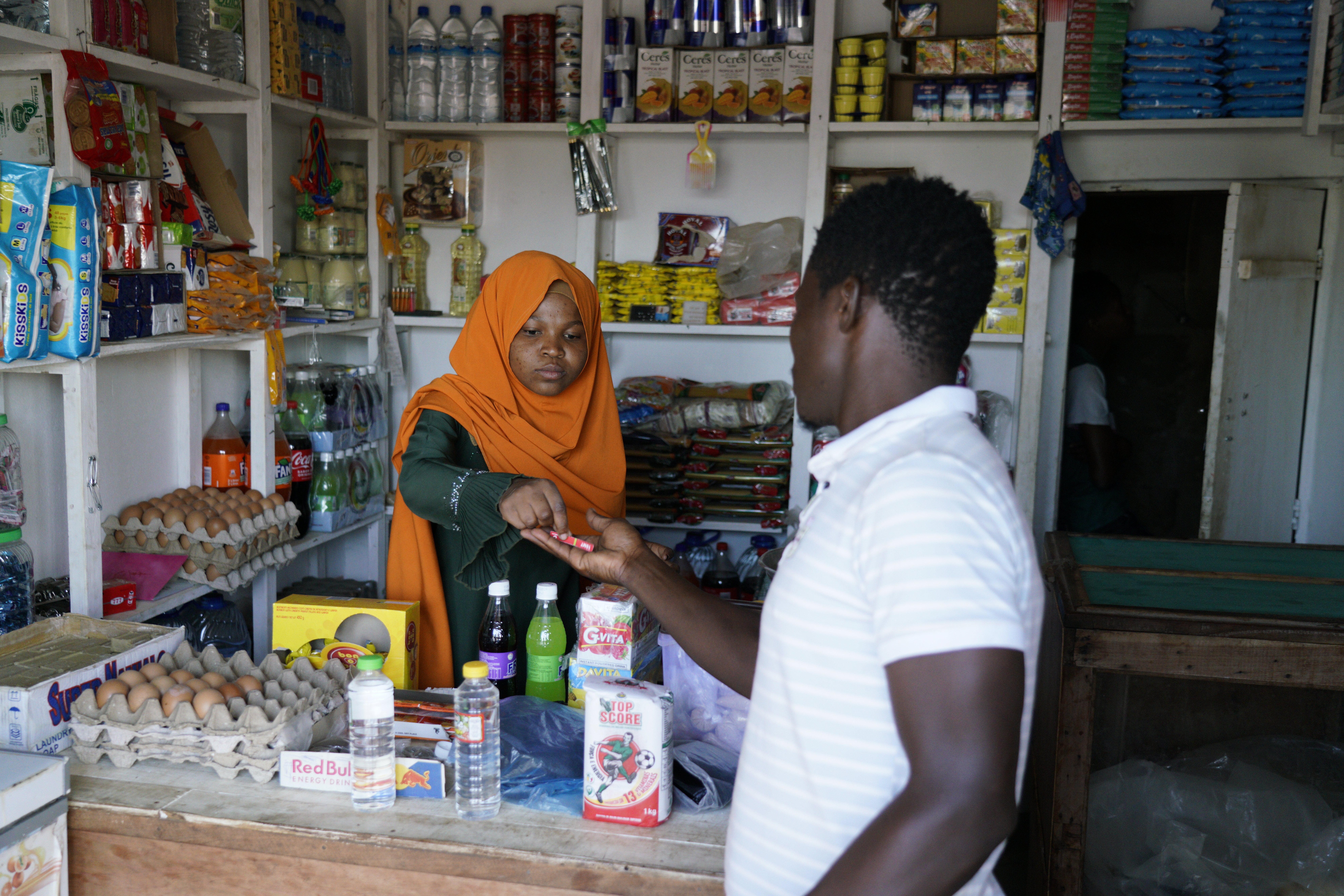
Interpeace’s Livelihoods for Peace work focuses on the relationship between economic opportunity, dignity, agency and social cohesion. Livelihoods are not only about income; they influence how people participate in society, relate to one another and engage with institutions. The way in which livelihoods opportunities and resources are distributed and accessed matters just as much as the material contributions they bring to societies.
Interpeace’s Livelihoods for Peace approach sets out a theory of change linking livelihood development and positive peace. It shows that livelihood interventions are most peace-positive when they go beyond income generation and are designed to address the relationships, institutions and grievances that shape economic life.
Across contexts, Interpeace works with partners to design livelihood approaches that expand and diversify economic opportunities; strengthen formal and informal governance and dispute-resolution mechanisms; support cooperative economic activities across divides; and improve access to social protection. These approaches help ensure that livelihood programmes do more than address material needs: they also repair relationships, strengthen trust and build the foundations for sustainable peace.
In Rwanda, Interpeace has combined societal healing, reconciliation, civic engagement and livelihoods to support recovery from the long-term legacies of the Genocide against the Tutsi. In Burundi, Interpeace has supported community healing, intergenerational dialogue, women’s and youth empowerment, and cooperative approaches to rebuilding trust. In Kenya, Interpeace has worked to strengthen local peace infrastructures, promote social cohesion and improve conflict management in counties affected by longstanding grievances. In Burkina Faso, Interpeace supports women’s and youth leadership, cooperative livelihood activities and community resilience in areas affected by displacement, economic pressure and insecurity. At the border with Côte d’Ivoire, the project aims to mitigate the consequences of environmental stress on inter-communal relationships by promoting a community-led approach to the rehabilitation and construction of key social infrastructure, ensuring greater access to social services through participatory and inclusive decision-making processes.
Peace Finance and Innovative Finance
There is a clear and urgent need to shift the way in which global financial resources are allocated in support of peace and development around the world. While conflict and violence have surged significantly in many parts of the world since 2010, driving the global economic cost of violence to 19.1 trillion dollars, global financing allocated to peacebuilding and conflict prevention is comparatively drastically decreasing – from 17.2% of global Official Development Assistance to 2012 to only 10.8% in 2021. Concurrently, the international financing system that sustains the international development agenda has failed to redress global inequalities and bridge financing gaps in developing countries, with fragile and conflict-affected settings still facing a 4 trillion dollar annual investment gap.
As the global development system faces unprecedented pressures from shifting geopolitical dynamics, declining foreign aid, and escalating debt distress in many developing regions, traditional development finance alone falls short in addressing complex demands for stability, with only 12 to 18% of private finance mobilised through ODA and development finance allocated to least-developed countries. Yet, there is no lack of political will or of opportunities on capital markets for impact investing, and undercapitalized needs in fragile regions present a dual opportunity to drive both returns and peace-aligned impact.
To unlock this potential, new approaches are needed: the high costs of capital and mispriced risks discourage investments in fragile markets, where existing de-risking tools are inadequate. In response, Interpeace has played a pioneering role in building these approaches: Peace Finance aims to drive the development of resilient, inclusive, broad-based economic structures by enabling peace-positive investments in fragile and conflict-affected settings, that mitigate risks for investors, communities and institutions.
In many fragile and conflict-affected settings, the challenge is not simply a lack of capital: in fact, development finance is financed approximately 80 times more than peacebuilding, and it is estimated that 280 billion dollars in capital inflow are currently blocked due to risk mispricing in these contexts. What is missing is the trusted relationships, contextual analysis, institutional capacity and coordination infrastructure needed to turn opportunities into credible, peace-positive investment pipelines. While public and private investments play a crucial role in stabilisation and recovery, lack of proper understanding and engagement with the political, economic and cultural contexts raise risks of undermining peace and stability strategies at much greater scale than peacebuilding and mediation work.
Through the « Finance for Peace » initiative, incubated by Interpeace, we have helped build a global ecosystem for peace-positive investment. Finance for Peace brings together investors, development finance institutions, governments, peacebuilding and development actors, civil society and communities to develop the standards, partnerships, market intelligence and practical tools needed to guide, measure and validate investments that contribute to peace. The potential for peace-aligned investment amounts to 2.5 billion dollars in public and private debt issuance (including blended finance) to address key development challenges in Africa alone – including natural resources management, agri-tech innovation and food security, healthcare, human capital development, renewable energy, and migration.
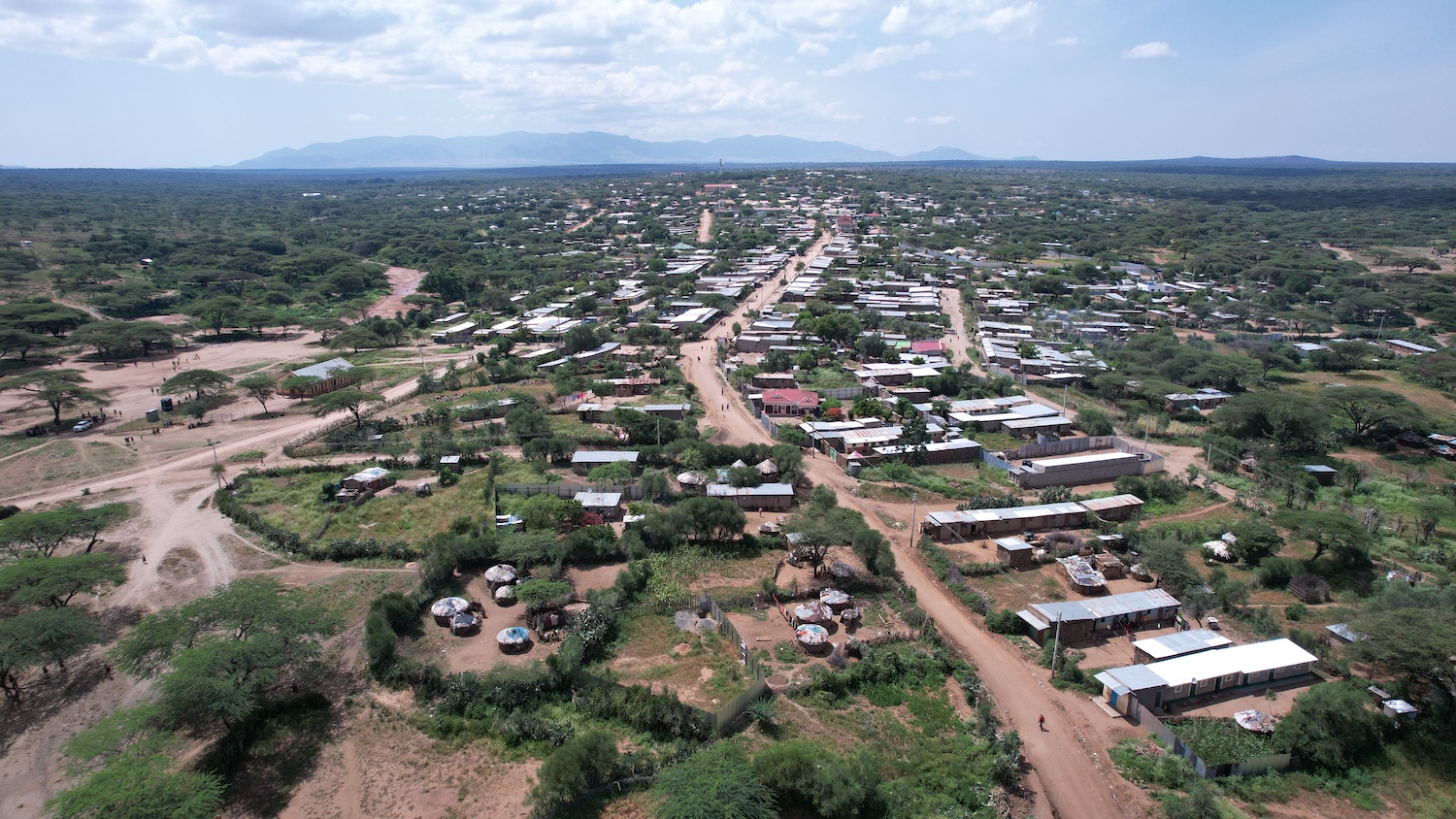
This work is increasingly moving from concept to practice. In northern Kenya, Interpeace and Finance for Peace have supported analysis to identify peace-positive investment opportunities in frontier markets affected by conflict, underdevelopment and marginalisation.
In Mozambique, Interpeace’s work with the African Development Bank, UNDP and ADIN has contributed to the establishment of the Peace and Security Investment Hub, a government-anchored platform designed to originate, coordinate and advance conflict-sensitive, peace-positive investment in northern Mozambique. The Hub strengthens institutional capacity, supports investment pipeline development and helps ensure that development finance and private investment are informed by peacebuilding analysis and community realities.
By linking peacebuilding analysis with investment origination, institutional capacity and strategic partnerships, Interpeace helps ensure that finance does not inadvertently reinforce conflict, but instead contributes to trust, inclusion and sustainable peace.
Trade for Peace
Trade and peace have a deeper relationship than international policy frameworks have historically recognised. When trade systems are inclusive, well-governed and designed with the needs of conflict-affected communities in mind, they can help address economic grievances, strengthen institutional legitimacy and build forms of interdependence that sustain stability over time.
The reverse is also true. Trade asymmetries, exclusion from markets and global value chains, and the collapse of economic opportunity can reinforce fragility and become structural drivers of conflict.
Realising the peacebuilding potential of trade requires deliberate effort. Trade policy, accession and post-accession processes are often designed for relatively stable institutional environments. For governments navigating conflict or its aftermath, the technical and political demands of these processes can be significant. Bridging the gap between the promise of trade as a vehicle for recovery and resilience, and the capacity of fragile states to access and shape that opportunity, is where peacebuilding expertise becomes essential.
Interpeace works at this intersection to reframe trade as a strategic lever for peace, inclusion and institutional resilience. This means embedding conflict sensitivity into trade policy and accession processes; supporting civil society as a core actor in locally led trade governance; and making the case within multilateral forums that fragile states require approaches that are politically attuned and operationally grounded in realities on the ground.
Developed by the World Trade Organization, the Trade for Peace initiative advances an approach to trade cooperation that takes seriously the political and conflict realities of the countries it is designed to serve. As an implementing partner, Interpeace brings more than two decades of experience in fragile and conflict-affected settings to an initiative that has grown from supporting Somalia’s WTO accession process into a broader effort to expand what trade cooperation can deliver for peace and inclusive development.
Building on that foundation, Trade for Peace aims to work across three interconnected areas.
- First, it provides technical and programmatic support to WTO accession and post-accession processes in fragile and conflict-affected contexts.
- Second, it creates a platform for diplomatic dialogue, enabling member states to shape narratives on fragility and use trade as a peacebuilding instrument.
- Third, it advances normative innovation through policy dialogue that connects trade policy with peacebuilding, post-conflict recovery and innovative financing mechanisms.
Anchored in the WTO’s global trade governance role and Interpeace’s expertise in fragile settings, Trade for Peace pushes the boundaries of what trade cooperation can deliver where it is needed most.
Our Added Value
Across Economic Peacebuilding, Innovative Finance and Trade for Peace, Interpeace brings a distinctive peacebuilding contribution to economic development and investment.
Our added value lies in deep contextual analysis, long-term relationships with local actors, participatory methods, and the ability to translate conflict dynamics into practical guidance for programmes, policies and investment decisions. We help partners understand not only where economic opportunities exist, but how they can be designed, governed and implemented in ways that strengthen peace.
By connecting communities, governments, development finance institutions, investors, private sector actors and multilateral institutions, Interpeace helps ensure that economic systems, livelihood programmes, trade policies and investments do not inadvertently reinforce conflict, but instead contribute to trust, inclusion, resilience and sustainable peace.