From Fear to Forgiveness: How Sociotherapy Is Healing Wounds in Ngoma
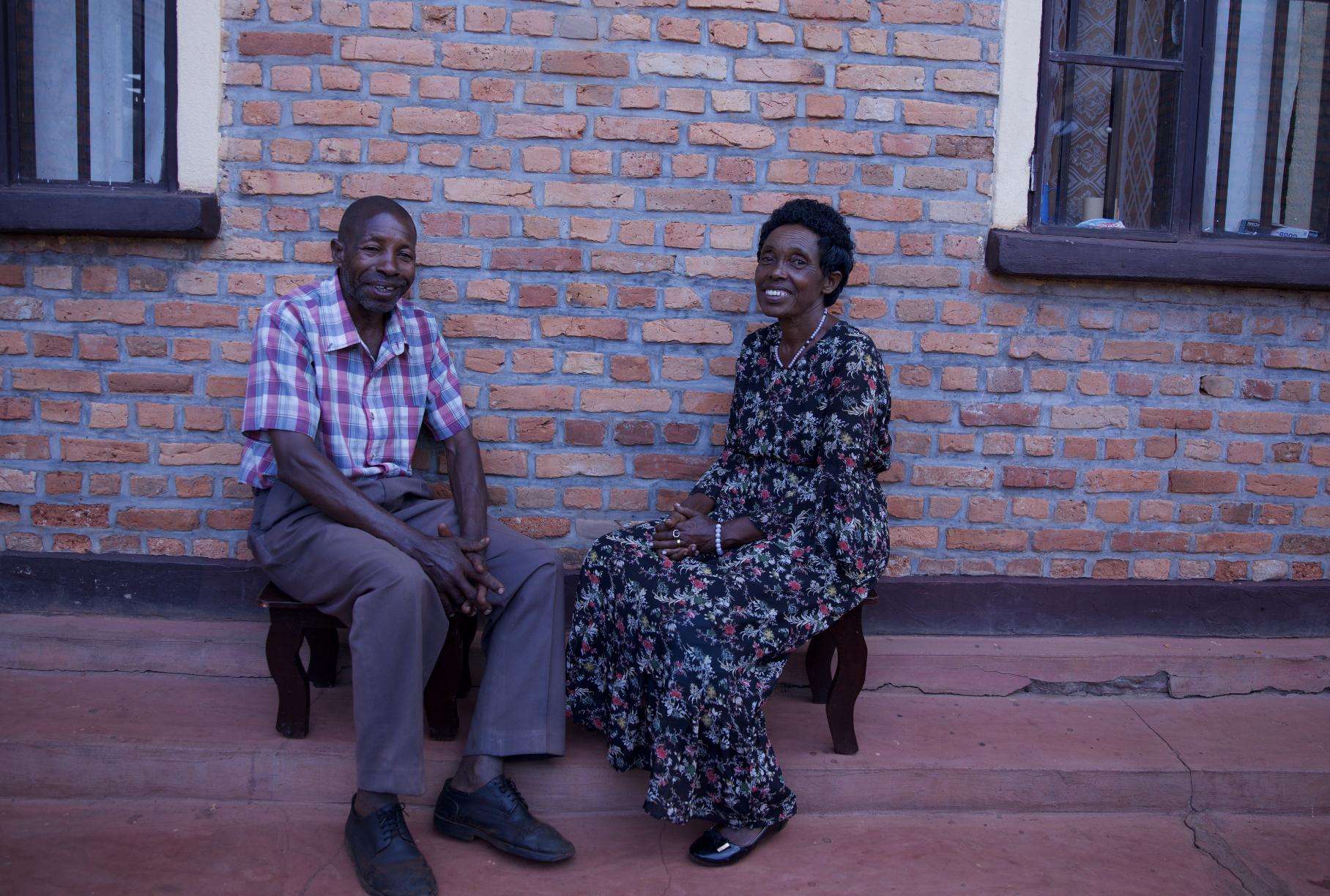
In Ngoma District, East Province of Rwanda, stories once defined by pain and mistrust are being rewritten through courage, dialogue, and reconciliation. Two neighbours: Aloys Hakizimana, a genocide perpetrator, and Alphonsine Mugerintoki, a survivor, once lived in silent hostility, their lives divided by trauma and fear. Today, they share laughter, family milestones, and a renewed sense of peace.
A Life Haunted by Fear and Regret
After the 1994 Genocide against the Tutsi, Aloys fled to Tanzania to escape accountability for the crimes he had committed. When he returned to Rwanda, he avoided his home district of Ngoma and hid in Musanze, disguising himself as a 19-year-old to evade justice, though he was 33.
“I was afraid to meet those I wronged and my neighbours. I felt ashamed of the atrocities I committed,” he recalls. “To conceal my identity and age, I constantly wore shorts and shaved, hoping to appear much younger,” he said.
Even after he was eventually arrested and imprisoned, peace continued to elude him. “Even in prison, I could not sleep. I was constantly depressed and fearful, and sometimes I could hear the voices of those killed during the genocide.”
After confessing his crimes, the Gacaca court granted Aloys a reduced sentence of 11 years in prison.
After confessing his crimes, the Gacaca court granted Aloys a reduced sentence of 11 years in prison. After release, the burden of guilt grew heavier, until he joined an Adult Sociotherapy Group created in Ngoma.
A psychosocial support intervention, Sociotherapy is part of the Societal Healing Programme implemented by Interpeace, Prison Fellowship Rwanda, Haguruka, and Dignity in Detention with support from the Government of Sweden. It brings together genocide survivors, perpetrators, and their descendants to promote truth-telling, rebuild trust, and foster collective healing, reconciliation, and resilience.
“Whenever I was about to meet a genocide survivor, I would pretend to be on a phone call just to avoid them. I couldn’t bring myself to attend social gatherings for fear of facing them. I lived like that for years,” he admits.
When Healing Becomes Shared
For Aloys, the Sociotherapy group sessions became a turning point. At first, he sat quietly, listening more than speaking. But as others shared their pain and longing for honesty, the truth he had buried for years began to surface.
“The Sociotherapy came at the right time. I felt relieved after sharing my experience with everyone in the group. Today, I feel at ease with everyone in our community and no longer live in fear,” he says.
Through the process, Aloys discovered a new kind of strength: the strength to repair. He reached out to those he once feared, including Alphonsine, a woman who had lost everything and had attended Sociotherapy sessions alongside him.
Divided by unimaginable suffering, they found the courage to meet again; not as enemies, but as neighbours bound by a shared desire for peace.
“I was healed thanks to Sociotherapy. I was able to forgive Aloys. We now live well together,” says Alphonsine. “We invite each other to family events, such as weddings. He was even the first to contribute to the weddings of two of my children,” she adds.
For many survivors, one of the deepest wounds remains uncertainty over where their loved ones were buried. For Alphonsine, this burden was heavy. Years of anger and alienation took a toll.
“I was traumatised because people who committed genocide would gaslight me and call me crazy when I confronted them and asked them to at least tell me where they buried my loved ones,” she remembers. Her distrust led to heavy drinking, fights, and self-neglect.
The dialogues in the Sociotherapy sessions eventually yielded clues about bodies possibly dumped in a nearby lake. But details were scarce, making proper identification difficult. Recognising his responsibility, Aloys joined Alphonsine in encouraging perpetrators and neighbours to speak the truth. Their persistence led to the discovery of eleven bodies of genocide victims, finally laid to rest with dignity.
Their journey inspired others, like Monique, who was only 15 during the genocide. Among the eleven bodies found were her family members. Through Sociotherapy, she found the strength to forgive and advocate for truth. “If it wasn’t for Sociotherapy, we would not have found the bodies of our loved ones,” she reflects.
Rebuilding Trust and Resilience
Sociotherapy has reached 2,039 individuals through 140 community healing groups across five districts: Musanze, Nyabihu, Ngoma, Nyagatare, and Nyamagabe.
The programme has produced measurable positive changes: a 17.2% increase in intergroup trust, a 12.5% rise in social harmony, and a 9.5% improvement in readiness to forgive, resulting in a 34.5% increase in willingness to collaborate.
The journeys of Aloys and Alphonsine, as well as those of many participants in Sociotherapy, show that reconciliation is possible, even after the deepest wounds. Survivors who were once silenced now speak with dignity. Perpetrators who once hid in fear of revenge now take responsibility. Together, they are shaping a legacy of healing and truth for future generations.
Their stories serve as a quiet model of what reconciliation can look like when psychosocial healing meets courage and accountability. It is not just about individuals finding peace, but about entire communities rebuilding trust and resilience.
From the quiet hills of Ngoma, a message echoes nationwide: true reconciliation is not about forgetting, but about courage; the courage to face the past, speak the truth, and rebuild stronger together.