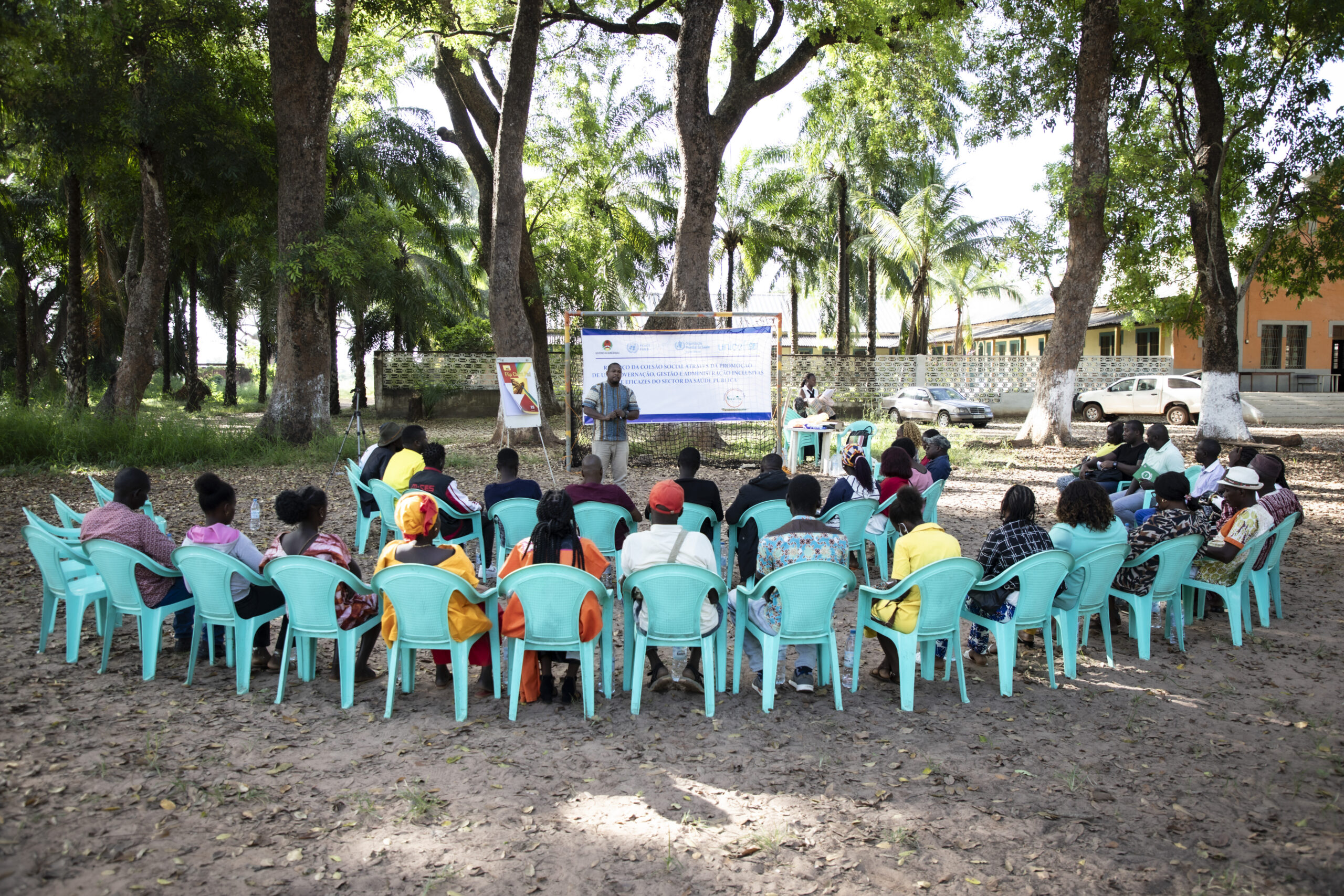
Adaptive Capacity in Practice: Integrating Peace Responsiveness into Public Health Sector Governance, Management and Administration in Guinea-Bissau
This insight report examines how Peace Responsive approaches were integrated into public health sector governance, management, and administration in Guinea-Bissau between 2023 and 2025, drawing on field experiences from a project implemented by Interpeace, Voz di Paz, WHO, UNICEF, and national institutions. It explores how health-for-peace programming can contribute to stability and cooperation in politically volatile, non-bellicose settings. The report identifies key relational and procedural dynamics shaping the health governance ecosystem, including patterns of mistrust, institutional friction, and the challenges of crisis-driven engagement between the state and health sector workers. Drawing on two flagship initiatives — the Health and Peace Resilience Barometer and the Equipa Mista (Joint Team) for Health Sector Governance — it proposes a complementary fifth pathway to WHO's Health for Peace framework: stabilising governance from within. Addressing instability in such contexts requires more than formal policy reform; it calls for sustained dialogue, adaptive programme design, and the strengthening of everyday cooperation among citizens, health workers, and institutions. By centring these relational foundations, this research offers practitioners and policymakers a model for advancing durable, peace-responsive health governance amid ongoing political uncertainty.