Since 1992, when the Agenda for Peace on preventive diplomacy, peacemaking and peacekeeping was adopted by the UN Security Council, armed conflicts have changed in type and nature. Over the past decade, both the number of armed conflicts and fatalities have been increasing, while the level of trust towards national and international institutions has correlatively been shrinking[1]. Time and time again, distrust has been observed as a consistent driver of conflict. Trust is usually the first element lost when conflict erupts, and the last to be regained. Today, ominous geopolitical mistrust and breakdown in relations between and within States erode the capacities of our international political system to promote sustainable and resilient peace at the local, national, regional, and international levels.
The eve of defining a New Agenda for Peace in 2024 offers decisive momentum to address this obstacle by placing trust at the center of a renewed peacebuilding architecture. Effective dialogue and collaboration between international actors, states, citizens, and communities can nurture trust, fostering social cohesion and reinforcing social contracts. Even in the most difficult conflict contexts, building blocks for trust and reconciliation between parties exist.
2024 also marks the celebration of Interpeace’s thirty years of existence. Based on three decades of collective peacebuilding experience and ahead of the Summit of the Future in September, this discussion will explore the avenues to rebuilding a trust-based international system shaping peacebuilding policies, processes, and practices, crossing learnings from different country contexts. It will also discuss the role peacebuilding organisations can play in fostering drivers of trust at the local level and helping to reshape multilateral relations, notably between the Global North and the Global South.
This session's objective will be to discuss drivers of trust as a foundation of peace in the new peace architecture. The discussion will be based on successful stories of peacebuilding efforts, using trust as a bedrock and leverage for the growth and reinforcement of social cohesion and reconciliation in societies affected by conflict. The objective is to draw from trust-building practices from different contexts to shape positive transformative learning for the definition of the New Agenda for Peace, the Summit of the Future, and the review of the UN Peacebuilding Architecture. All levels of trust will be examined, from grassroot communities to the multilateral system. The panel will discuss the role different actors can play in anchoring trust-based peace at all levels.
1) What lessons learned can civil society organisations draw from their work in countries to help build trust in international fora and institutions, in the current context of geopolitical tensions and political deadlock?
2) How can the variety of actors working on peace and security work in a peace responsive manner across divides and mandates, and promote a trust-based international system?
3) How can peacebuilding organisations reconcile the political agenda at the international level with the peacebuilding needs at the grassroots level? And how is this work enabling trust-building activities?
4) How can the new Agenda for Peace and UN peacebuilding architecture address the trust deficit between the Global North and Global South? What role can be particularly played by CSOs in this regard?
5) How can the international community, states and regional institutions support organizations across the Humanitarian-Development and Peace (HDP) nexus to carry out activities that are drivers of trust and social cohesion?
The session will be 75 minutes long. The moderator will introduce the session and the panel of speakers for five minutes and will then give ten minutes to each panelist to provide their answers to his questions (45 minutes of discussion). The next 25 minutes will then be dedicated to the audience engaging with the panelists. The moderator will dedicate the last five minutes to summarize and provide the main takeaways of the session.
[1] https://www.un.org/development/desa/dpad/wp-content/uploads/sites/45/publication/PB_108.pdf ; https://ourworldindata.org/trust ; https://ourworldindata.org/grapher/deaths-in-armed-conflicts ; https://ourworldindata.org/grapher/number-of-new-armed-conflicts

Mr. Itonde Kakoma assumed the role of President of Interpeace on October 2, 2023. Prior to Interpeace, he most recently served as the Permanent Representative of the International Federation of the Red Cross & Red Crescent Societies (IFRC) to the African Union and International Organizations (2021-2023). In this capacity, Kakoma advanced continental wide humanitarian diplomacy initiatives with the African Union in public health security; climate change; disaster risk management; food security; and humanitarian affairs. Mr. Kakoma served in various leadership capacities on matters of international peace mediation, including as Director for Global Strategy and member of the leadership team at CMI Martti Ahtisaari Peace Foundation. Over a period of eight years at CMI, he steered mediation support teams for both official and informal peace processes, and advanced high-level peace mediation and dialogue undertakings in the Great Lakes, the Horn, and wider Red Sea region. Previously, Mr. Kakoma was the Assistant Director for the Conflict Resolution Program at The Carter Center, managing a portfolio of the Center’s peace initiatives and supporting former President Carter’s backchannel diplomatic efforts. He was an international observer for The National Referendum on the Right to Self Determination for the People of South Sudan; and served as an advisor and report writer for the Liberian Truth and Reconciliation Commission. He is an experienced facilitator and moderator for high-level peace processes and dialogue fora; and has expertise in mediation, negotiation, process design, humanitarian diplomacy and transitional justice. Mr. Kakoma is an advocate for women, peace and security and frequently moderates seminar(s) on inclusive mediation strategies. Mr. Kakoma was an Executive-in-Residence and subsequently Global Fellow at the Geneva Centre for Security Policy (GCSP). He holds an Executive Master in International Law in Armed Conflict from the Geneva Academy for International Humanitarian Law & Human Rights and the Graduate Institute of International & Development Studies.

The Government appointed Counsellor for Foreign Affairs Outi Holopainen to serve as Under-Secretary of State for Foreign and Security Policy for a fixed term from 1 September 2023 to 31 August 2027. Holopainen will transfer to the post of Under-Secretary of State from Finland’s Embassy in Addis Ababa, where she has served as Head of Mission since 2020.
Holopainen served as Inspector-General of the Foreign Service from 2016 to 2020. Before that, she served as Ambassador in Lisbon from 2013 to 2016 and as Director of the Unit for Security Policy and Crisis Management from 2010 to 2013 and as Director of the Unit for Arms Control from 2007 to 2010. In the Diplomatic Service, she has also held posts in Stockholm and Bonn.
Holopainen joined the Ministry for Foreign Affairs in 1988. She holds a Master of Laws degree.
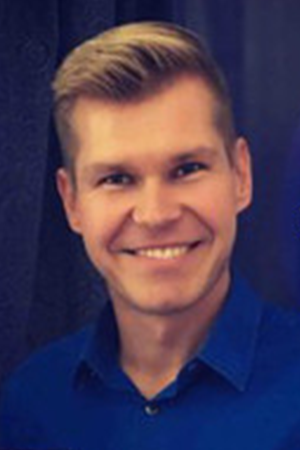
David Korpela works as the Chef de Cabinet for the EU Special Representative to the Horn of Africa. He has worked for the EUSR since October 2018, first as a Regional Political Advisor working primarily on Somalia, Ethiopia, Eritrea and Red Sea discussions based in Nairobi and then as the Chef de Cabinet based in Brussels. Prior to joining the team of the EUSR, David worked at the Ministry for Foreign Affairs of Finland as a Senior Policy Advisor for Conflict Affected and Fragile States. He has also worked as a Political Advisor for EUCAP Somalia based in Mogadishu (2015-2016). David has also served as East Africa Regional Representative (2012-2015) and Haiti Country Representative (2010-2012) working in the humanitarian sector for Finn Church Aid.


Alain Délétroz has been serving as the Director General of Geneva Call since January 2018, bringing with him a longstanding experience of nearly three decades in conflict-stricken areas and politically tense contexts.
Mr. Délétroz has extensive expertise in conflict assessment and resolution, democratic reforms, and humanitarian aid. He has worked on the ground in various regions, including Russia, North/South Caucasus, Central Asia, the Andean countries, and West Africa.
Prior to his current role, Mr. Délétroz served as a Fellow at the Geneva Center for Security Policy from 2014 to 2017 and as Vice-President of theInternational Crisis Group from 2002 to 2013. He was also Director of the Open Society Institute in Tashkent from 1998 to 2002 and a Delegate for the International Committee of the Red Cross in Moscow from 1994 to1998.
Mr. Délétroz's passion for humanitarian and development work began in Peru, where he focused on adult literacy and capacity building from 1986 to 1991.

Marwa Baabbad is a researcher and development consultant. She has over ten years of experience working in the fields of community engagement, gender, peace and security, and youth political inclusion. She has worked on short and long term freelance contracts with multiple organisations, including Saferworld, Oxfam, Yemen Policy Center, Resonate Yemen, and the UK Government. Marwa is an Associate Fellow at the Royal United Services Institute for Defence and Security (RUSI).
Marwa was Director of the Oxford Research Group (ORG) Strategic Peacebuilding Programme between 2018-2020. There, she led the delivery of a Track-II project that fed into the United Nations-led Yemen peace process. Previously, she worked as a development professional with Saferworld in Yemen. During that time, she led Women, Peace and Security and youth projects and contributed to the organisation’s work on Egypt, Libya and Syria’s neighbouring countries. Marwa was a Visiting Fellow at the London School of Economics Centre for Women, Peace and Security and a member of the Youth Consultative Group for the United Nation’s Development Programme’s 2016 Arab Human Development Report.
Marwa holds a Master’s degree in Post-war Recovery Studies from the University of York, which she completed with a Chevening Scholarship award. She Is fluent In Arabic and English.
