Home - Interpeace : Interpeace

History

Building peace since 1994
1994
A United Nations Project Supporting Countries Emerging From War

Founded in 1994 and entitled “The War-torn Societies Project”, Interpeace was created as a United Nations project to assist the international community and national actors to better respond to the challenges faced by countries emerging from war.

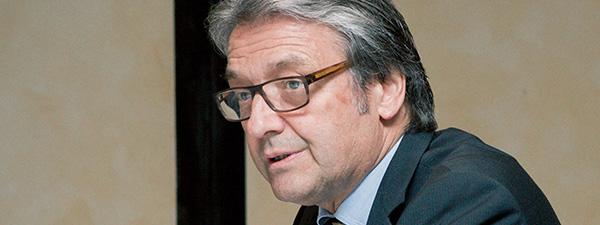
The project was championed and founded by Matthias Stiefel, who is now Vice Chair of Interpeace’s Governing Board. Initial field projects were launched in Eritrea and Mozambique, with Guatemala and Somalia quickly following.
Creation of a Research Methodology to Guide Durable, Community-Owned Solutions

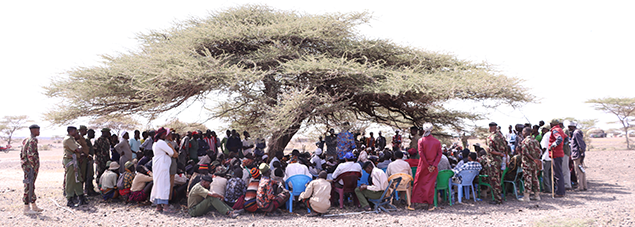
To address the shortfalls of peace interventions and provide insights on the specific challenges faced by societies in post-conflict situations, a Participatory Action Research (PAR) approach is developed and launched across contexts of intervention.

The methodology is defined by the principle of inclusive participation, local ownership, community-based problem identification, and the gathering of relevant data. The PAR approach thus takes a step away from classical research, providing an alternative to traditional expert-driven and top-down ways of working. The approach enables the creation of insights and analysis to efficiently strengthen local capacities, pave the way for consensus-based decision-making, and prioritise practical policymaking. With adaptations over the years, the PAR methodology remains foundational to Interpeace’s work even today.

2000
Transforming Into an Independent Organisation to Better Address Contemporary Challenges

In 2000, the War-torn Societies Project becomes an independent non-governmental organisation. A strong partnership and robust link to the United Nations remains, ensuring that projects and programmes can still be implemented either independently or through the various bodies of the United Nations.

In parallel, the forging of long-standing partnerships with local actors continues and expands. New programmes are initiated and rolled out in South-Central Somalia, Rwanda, Macedonia, as well as Israel and Palestine.

2006
Broadened Reach and Expanded Scope Call for a New Name

Interpeace to better reflect the scope and scale of its work. The new name emerged from broad discussions and was crystallised from the longer form, “The International Alliance for Peacebuilding.

Work Expands With Thousands Benefiting From Community-Led Approaches

New programmes are developed in Guinea-Bissau, Burundi, Aceh in Indonesia, Nimba County in Liberia, and across Central America. All work is designed and implemented together with local, context-specific partners.

In the meantime, the thematic programme ‘Constitution-making for Peace’ is initiated. The programme seeks to support constitution-making processes and more durable peace by promoting the principles of local ownership, inclusion, gender equality, participation, and transparency.

2009
15 Years of Peacebuilding Together With Local Communities and Global Actors

In the summer of 2009 Interpeace celebrates 15 years of peacebuilding around the world. Programmes in Cyprus are launched and work in Liberia is expanded to encompass a the entire country.

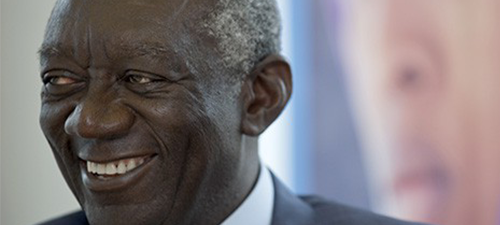
The organisation also marks a significant milestone as former President of Ghana, President John A. Kufuor, becomes the Chair of Interpeace’s Governing Board, accepting the Chairmanship from former President of Finland and 2008 Nobel Peace Laureate, Martti Ahtisaari.

2013
Establishing a Solid Presence in West Africa

Interpeace opens its West Africa regional office, solidifying its local presence and enhancing its commitment to the region. With new programmes in Côte d’Ivoire and Mali, the regional office allows Interpeace to reinforce its strategic engagements and provide rapid and sustained assistance to conflict-affected societies.

The same year, Interpeace co-organises the first Geneva Peace Talks – an international platform and event series giving voice to those working at the front lines of peace.

2014
Two Decades of Making Peace Possible

Celebrating its 20th anniversary, Interpeace now operates in over 20 countries and territories. To mark the milestone, Interpeace hosts a Peace Debate with the title “Cancel the cruise missiles: Military intervention cannot build peace between warring parties.”

At the same time, Interpeace launches a pilot project in Sweden, seeking to bridge the gap between marginalized youth and decision-makers. An innovative tool, the Frameworks for Assessing Resilience (FAR), is also launched to better understand, address, and assess the key sources of resilience and fragility within conflict- or violence-prone contexts. The tool enables the creation of knowledge on the existing, inherent sources of resilience for peacebuilding in societies.

2015
Interpeace Joins the Maison de la Paix in Geneva

Interpeace relocates is headquarters to the Maison de la Paix, a hub for international experts in the heart of international Geneva. The organisation thus becomes an integral part of a complex hosting diverse organisations that work on international issues, thus providing an opportunity to organically create networks and foster exchanges between partners. These synergies foster solutions to promote peace, security and sustainable development.

2018
Interpeace Is Recognized as an International Organization

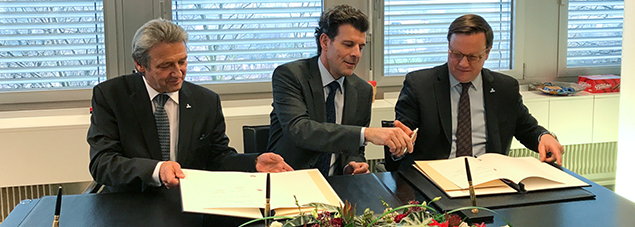
Interpeace is officially recognized as an international entity by the government of Switzerland. This acknowledgement reaffirms the important role played by the organisation in peace processes.

25 Years Building Peace Worldwide

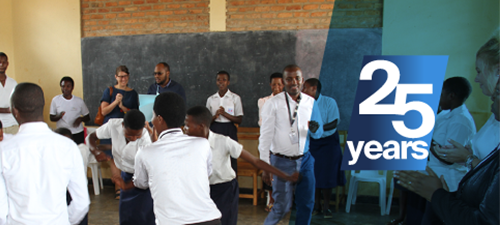
Interpeace marks a quarter-century of building peace in over 20 countries in Africa, the Middle East, Latin America, and Europe. The organisation has become an integral actor in the sector bridging gaps between communities affected by conflict and national, regional, and global decision-making.

Launch of the Principles for Peace Initiative

Incubated and founded by Interpeace, the Principles for Peace Initiative is launched in 2018 piloting the first-ever global standards for peace processes. From 2019 to 2022, the initiative engages thousands of stakeholders in more than 60 countries and conducts more than 150 consultations and unpacks more than 700 case studies. The process represents the largest and most inclusive effort to draft a framework on how to design, implement and carry out peace processes.

Later on in 2023, Principles for Peace becomes an independent foundation, uniting over 120 organisations to promote a unity of vision for peacemaking at global, regional, and local levels.

2024
Three Decades Serving Communities Impacted by Conflict

With a solid track record covering 30 years of engagements in over 20 countries across the world, Interpeace is testament to the fact that peace is possible. Working alongside local partners in many of the world’s most conflict-affected regions, efforts to build trust through inclusive dialogue continue to prove their value for sustainable, durable peace solutions.

Milestones celebrated throughout the anniversary year include initiatives to re-thinking peace, enhancing resilience for peace, and embedding peace across sectors. These goals manifest in timely initiatives including Principles for Peace, Finance for Peace, Rethinking Stability, Peace Responsiveness, and Youth, Peace and Security work.

2026
A New Strategic Direction to Navigate Increased Global Volatility Is Launched

A year-long consultation and drafting process comes to a close as Interpeace’s Strategic Framework 2026-2030: Navigating Political and Civic Space – Peacebuilding in an Era of Heightened Instability is launched. Reflecting the monumental shifts witnessed across the peacebuilding landscape, the framework outlines the organisation’s foundations, clarifies its strategic direction, and defines the structures that enable the work conducted across the world. For the upcoming five years, the framework will serve as Interpeace’s compass, ensuring that those affected by conflict remain at the heart of everything we do.