ImPACT Coalition on Peacebuilding
10 mai, 2024
The expectation of the Pact for the Future is to offer a picture of future scenarios and a world that will be different for future generations. However, it is important that this vision is not disconnected from the realities of the present. Operationalising the Pact demands a focus on action and practical solutions.
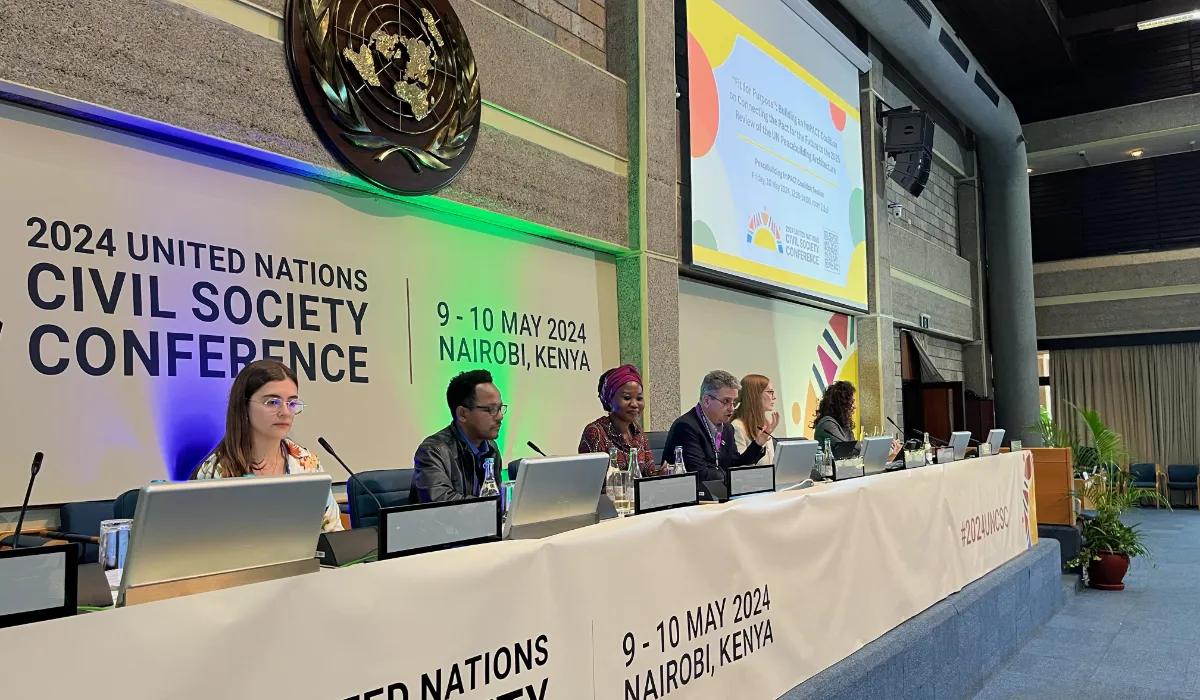
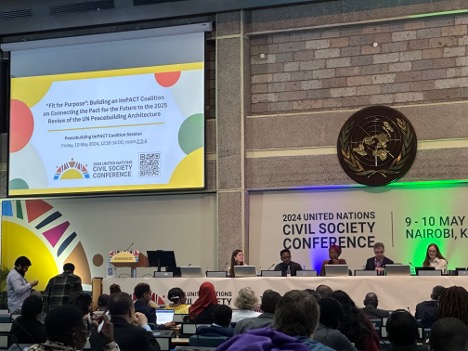
It is in this spirit that the ImPACT Coalitions (ICs) were launched at the 2024 UN Civil Society Conference in Nairobi. These self-organised, civil society–led networks bring together CSOs, UN agencies, Member States, and other stakeholders around cross-cutting issues connected to global policy processes. Designed to bridge vision and implementation, the ImPACT Coalitions co-create new initiatives and consolidate existing ones into a broader ecosystem of action. Their aim is to amplify civil society’s contributions to multilateral reform—not only by advocating for what states should do, but by offering concrete, collaborative pathways to advance shared goals.
Each Coalition is grounded in principles of transparency, inclusivity, and shared leadership, particularly elevating voices from the Global South and underrepresented groups. ICs operate as action-oriented communities of practice, committed to transforming ambitious policy commitments into practical, scalable solutions. By fostering cross-sectoral collaboration and sustained dialogue across silos, the ICs aim to build lasting partnerships that can contribute to the longer-term renewal of the multilateral system.
The ImPACT Coalition on Peacebuilding was established to mobilise the global peacebuilding community around the opportunities presented by the 2025 UN Peacebuilding Architecture Review (PBAR) and the Pact for the Future. Recognising that these processes must go beyond rhetoric to deliver real reform, the coalition brings together civil society organisations, UN actors, and Member States to co-develop strategies that strengthen the inclusivity, adaptability, and effectiveness of the UN peacebuilding architecture. The Coalition aims to ensure that peace commitments in the Pact are translated into concrete action, and that the 2025 PBAR delivers meaningful outcomes—particularly through institutionalising civil society engagement in peacebuilding. It is a collective invitation to shape the future of peacebuilding governance through practical, coordinated efforts that reflect the diversity, experience, and expertise of local and global peacebuilders alike.
Interpeace co-chairs this ImPACT Coalition alongside the UN Department of Political and Peacebuilding Affairs (DPPA). Over 500 civil society organisations are affiliated with the Coalition, many of which have engaged through the CSO–UN Dialogue’s annual events or contributed to global policy processes such as the Pact for the Future and the 2025 Peacebuilding Architecture Review (PBAR).