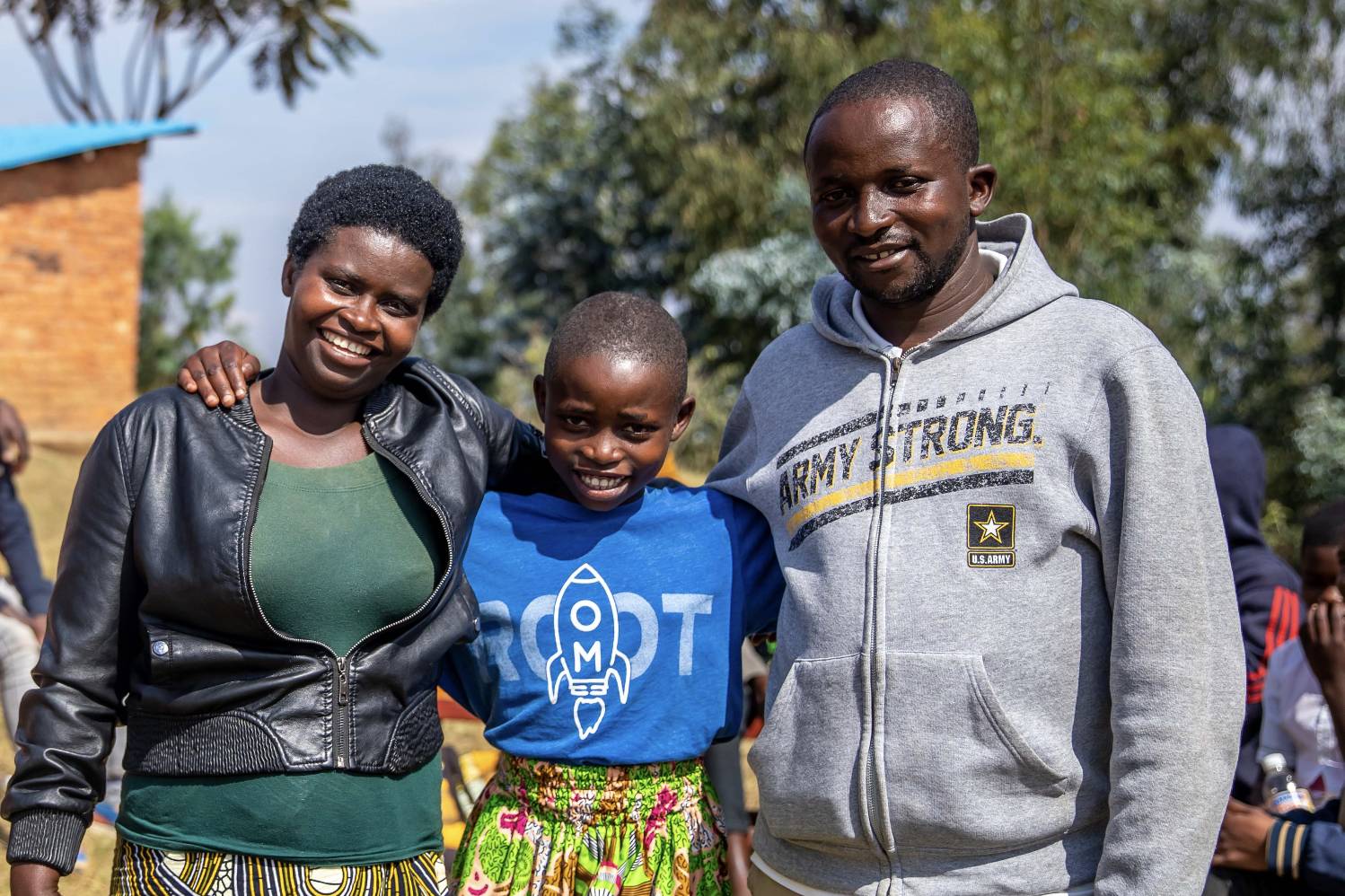
The home of Antoine Ibyimana and Marie Mediatrice Uwimana in Nyamagabe District’s Kibumbwe Sector was once filled with fear and conflict. For years, domestic violence and alcohol abuse tore their family apart.
Today, that same household radiates peace, mutual respect, and renewed hope, thanks to Multifamily Healing Spaces (MFHS), an initiative helping families rebuild trust and harmony.
A Family in Crisis
A few years ago, Ibyimana’s life was dominated by alcohol. The high school teacher spent most of his time drinking and often returned home angry and violent. His wife and children would hide in their rooms, terrified of his temper.
“When I came home drunk, my children would run away. They saw me as a monster,” he recalls with regret.
Uwimana bore the full weight of the abuse. Even during her pregnancy, she endured both physical and emotional suffering. “I was deeply traumatised by his violence. On top of beating me, he would let us starve even though he earned a monthly salary. I struggled alone to find food for my children,” she recalls softly. “I was treated like a maid in my own home. Leaving crossed my mind many times, but I stayed for the sake of my children.”
Ibyimana’s controlling behaviour went beyond violence. He made every decision alone, sold family property without consultation, and kept his salary a secret. The lack of communication eroded trust and destabilised the family.
A Turning Point Through Dialogue
Everything changed when they joined a Multifamily Healing Space established in Kibibi Cell. These healing spaces bring families (parents and their children) together through guided dialogues to help them identify harmful behaviours, rebuild relationships, and strengthen parenting skills. For Ibyimana, it was a turning point.
“I realised how deeply my actions hurt my family,” he says. “I learned to communicate, to listen, and to make decisions together with my wife.”
MFHS is a group-based psychosocial intervention designed to help families confront historical trauma, improve communication, and resolve conflicts through healing dialogues. It also addresses intergenerational trauma through parent–child discussions and promotes positive parenting.
The intervention was introduced by Interpeace and its partners —Haguruka, Prison Fellowship Rwanda, and Dignity in Detention —as part of the Societal Healing Programme, funded by the Government of Sweden (2021–2025).
The State of Family Conflict
According to the 2024 Rwanda Governance Board (RGB) Citizen Scorecard Report, family conflict ranks as the top challenge to family cohesion and development (17.4%), followed by psychological abuse (13.9%).
The report identifies alcohol abuse (82.8%), poor communication (82.6%), and poor parenting (68.4%) as key drivers of family dysfunction.
A 2023 evaluation of MFHS found the intervention effective in resolving intrafamily conflicts, improving communication and problem-solving skills, and strengthening family cohesion and resilience. It combines locally developed methods with international best practices, tailored to the Rwandan context.
Healing the Family Bond
In the safe space of group discussions, Uwimana finally found her voice. Sharing her experiences with other families facing similar struggles gave her strength and perspective.
“The group helped me release years of pain. I felt supported for the first time,” she says.
Family-only sessions allowed Ibyimana and his wife to address their problems constructively. Both parents learned positive parenting techniques and conflict management skills, enabling them to improve communication and build stronger bonds with their children.
Their daughter, Jessica, who had fallen from the top of her class to thirtieth position due to anxiety and distraction from constant family conflict, regained top marks after the household calmed.
“I used to think being a father meant giving orders,” says Ibyimana. “Now I share meals with my children, help with homework, and guide them with love.”
Local leaders and neighbours have witnessed the remarkable change. A family that was once on the verge of divorce now serves as a model of harmony and mutual respect for others in the community -
“When they see how calm and caring my husband has become, some joke that I must have used witchcraft to change him,” Uwimana laughs. “But what changed him was dialogue, not magic.”
Across five districts —Musanze, Nyabihu, Ngoma, Nyagatare, and Nyamagabe —2,088 individuals have participated in MFHS. But the real impact is not measured by numbers alone.
Comparative data before and after the intervention show meaningful improvements: family communication and problem-solving capacities rose by 14.6%, indicating greater collaboration and effectiveness in addressing stressful situations.
Parenting practices also improved by 34.5% (increase in warm, nurturing, and inclusive parenting behaviours), and participatory parenting increased by 13.4%, showing greater inclusion of children’s views even during disagreements.
Building a Future Together
Beyond emotional healing, the dialogues taught families to manage resources responsibly. Families have learned to plan finances together, prioritising long-term goals over wasteful spending.
“Before, almost all my salary went to alcohol,” Ibyimana admits. “Now we’ve bought a piece of land and are saving to build our own house.”
Their story is one of resilience and renewal; a reminder that family peace is built through patience, empathy, and shared responsibility.
“I regret the years I wasted destroying my family,” reflects Ibyimana, “but I’m proud of the father and husband I’ve become.”
Across Rwanda, initiatives like Multifamily Healing Spaces continue to show that strengthening family resilience is foundational because resilient families build resilient communities.