Rwanda Genocide Remembrance Day 2020: Monica McWilliams’ message of remembrance and hope

In 1994, the Genocide against the Tutsi in Rwanda claimed about 1million lives and left the country with the massive burden of overcoming this national trauma and building a fresh future.

The Chair of Interpeace’s Governing Board, Monica McWilliams, was in Rwanda recently and has spoken of her, ‘incredibly moving experience’ of visiting the Kigali Genocide Memorial.

In this video recording, issued today in remembrance of the Genocide against the Tutsi, Ms McWilliams says Rwanda is doing better in rebuilding from a genocidal history and fostering social cohesion. She also talks about how Interpeace is supporting the Government’s efforts in trauma healing in the country. “Rwanda is holding out the potential that we can move on,” Ms McWilliams says.

Watch video below:

Remembering the victims of the Genocide against the Tutsi in times of COVID-19

On this anniversary of the 1994 Genocide against the Tutsi, we reaffirm our solidarity with the people of Rwanda. This week in April is a period that stirs deep emotions. It reminds us of the power and responsibility of memory and of the humble lesson that healing cannot be forced or rushed.

The COVID-19 crisis that is gripping much of Asia, Europe and North America has only just begun its calamitous expansion into Africa. The quiet but deadly progression of the disease is generating considerable fear, mistrust and anxiety. Dangerous rumors and viral misinformation on social media are only compounding the problem. To make matters worse, the families of those succumbing to the virus are further traumatized by the inability to participate in the final rites of their loved ones. They are being robbed of the chance to mourn the dead and to console, embrace and care for those left behind.

For the world, this is a particularly tough time. For Rwandans, it is even harder. The COVID-19 crisis will make the mourning process more difficult for survivors and for the rest of the Rwandan community.

According to the Ministry of Health, over 1 million Rwandans, or close to 10% of the population, exhibit serious and pressing needs for mental health support. Evidence shows that numerous Rwandan children display similar symptoms, victims themselves of an inter-generational transmission of trauma related to the Genocide against the Tutsi. Too young to have lived through the events of 1994, the very presence of their symptoms are the strongest possible clarion call for us to invest whatever it takes to treat victims of trauma on a national scale, lest the neglect of those wounds impact generations down the line.

Through numerous initiatives at the family, community and national levels, Rwandans continue to demonstrate extraordinary determination to overcome the impact of the Genocide against the Tutsi. Interpeace is humbled to be partnering with the Ministry of Health of Rwanda in order to extend support to trauma healing for reconciliation nation-wide. By addressing these invisible but deeply felt wounds, our partnership with the government will help to support the remarkable progress Rwanda has made over the last twenty-six years.

As we observe this International Day of Reflection on the Genocide against the Tutsi, we renew our commitment to work with the Rwandan people and their government and to learn from their extraordinary resilience.


Scott M. Weber

President, Interpeace

7 April, 2020

Photo credits: Interpeace.

Interpeace and ECES form partnership to support democratisation processes in Somali Region

Interpeace et le European Centre for Electoral Support (ECES) have established a new partnership to reinforce support to electoral commissions in Somalia and Somaliland on their democratisation processes.

For almost two decades, Interpeace has worked closely with electoral management bodies such as the National Electoral Commission (NEC) of Somaliland since 2005 and the Transitional Puntland Electoral Commission (TPEC) since 2013. The collaboration with ECES will bring a unique set of capacities that will support and strengthen the process of democratisation and democratic governance in the region.

The partnership will combine Interpeace’s 25 years of peacebuilding experience in the Somali region and ECES’ solid technical expertise in electoral assistance in over 30 different contexts worldwide, in an effort that will deepen support for democratisation and democratic governance in the region.

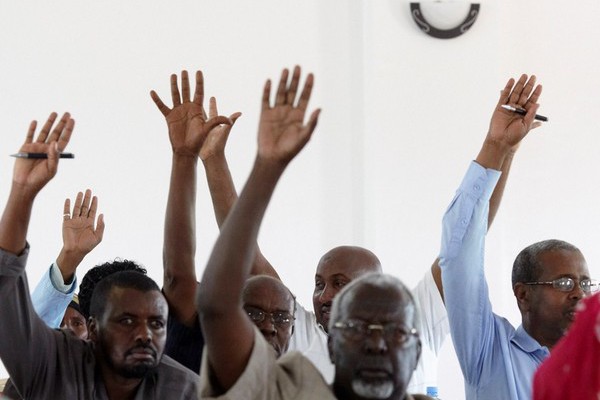
somali-region-raising-hands

Somali region. Photo credit: Interpeace

Interpeace President, Scott Weber, has said that: “This partnership with ECES demonstrates our commitment to sustain and advance our support to democratic governance and electoral processes while ensuring our work has lasting impact on the overall social cohesion in the Somali region.”

Interpeace and ECES already enjoy a strong partnership and have collaborated on other global engagements including serving as consortium partners within the European Resource for Mediation Support (ERMES), which helps to deliver inclusive peace mediation and dialogue processes at the international, national and local levels.

“With ECES’ innovative strategy on election support and Interpeace’s extensive experience in the Somali context, I believe this partnership will go deeper and further to ensure all-round support is available and accessible to Somali electoral stakeholders,” said Fabio Bargiacchi, Co-Founder and Executive Director of ECES.

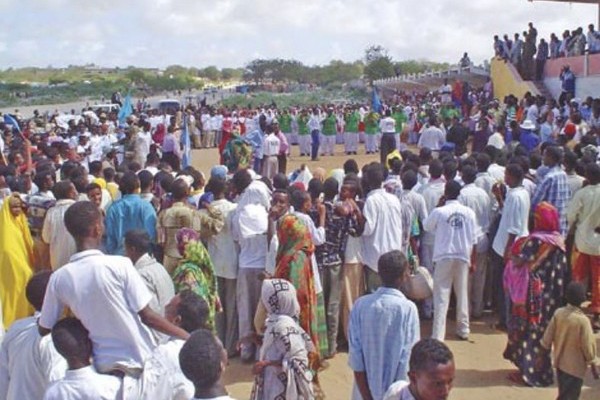
SomaliaForceforChange

Somali region. Photo credit: Interpeace


Empowering young people to dialogue for peace in Burkina Faso

Rising violence and hostilities are rapidly disrupting social cohesion in parts of Burkina Faso. Many actors from national to international institutions are working to address the issues and restore meaningful peace in the country.

However, when addressing violent conflict in communities, especially in areas vulnerable to extremist groups, young people are hardly given a chance to actively participate and make meaningful contributions of their understanding of the dynamics of how their peers engage with parties in conflict, especially through radical actions.

While violence is increasingly spreading throughout the country and transforming in character, youth exclusion has made it even more difficult to tackle the root causes of the violent behaviour.

Interpeace and Fondation Hirondelle have partnered to provide dialogue spaces where young Burkinabè can talk to each other productively about the issues facing their communities.

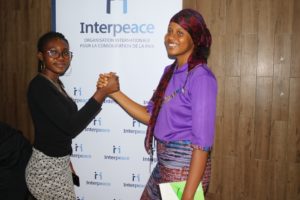
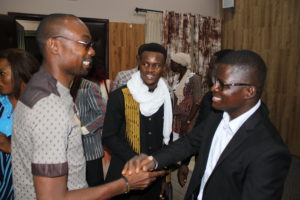
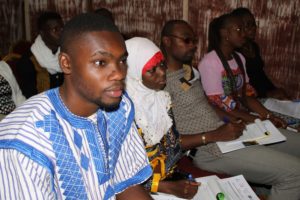
On Tuesday, 3 March 2020, a national forum for dialogue among young people was launched in Burkina Faso’s main city Ouagadougou. The national youth dialogue initiative gives a voice to young people and empowers them to discuss challenges to peace in their societies and propose practical solutions that can promote peace and improve social cohesion.

“We need committed and responsible young people working [for peace and social cohesion]. This campaign must continue, but we should not get ourselves into populism,” said Ali Bokoum, a young Burkinabè who participated in the forum.

The forum was part of a nationwide project known as “Bibiss Laafi Batû” – which translates loosely to “fostering dialogue among young people in Burkina Faso” - initiated by Interpeace and Fondation Hirondelle.
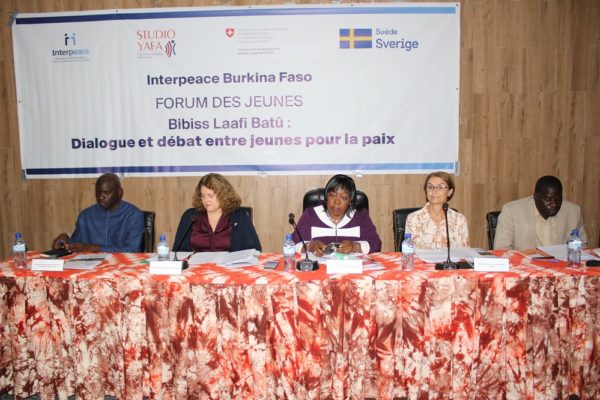
National forum for dialogue in Burkina Faso. Photo credit: Interpeace

Young people in Burkina Faso are often portrayed as perpetrators of violence, whereas only a few of them contribute to violent activities. Many young Burkinabè actively work for peace and security in their societies and drive significant positive change, but hardly engage with each other constructively.

“We have already established dialogue spaces in 9 communities across the country and recorded the participation of 300 young people, 40 percent of whom are women. The aim is to give them a voice to contribute substantially to enhancing social cohesion,” explained Ousmane Niang, Interpeace’s Senior Programme Manager in Burkina Faso.

Effective involvement of young people in peace efforts is essential to build relationships, restore trust and enhance social cohesion in Burkina Faso. The national youth forum for dialogue gave young Burkinabè an opportunity to express their ideas and share experiences for meaningful peace in the country.

“The Burkina Faso of tomorrow depends on our young people today. I count on their commitment and initiative to make peace and social cohesion flourish in our country,” said Ms Madiara Sagnon, Minister for Social Cohesion in Burkina Faso.

Often, young Burkinabè feel increasingly isolated in the national decision-making process. The frustration of exclusion leaves some of them vulnerable to radical actions that disrupt peaceful coexistence in communities.

The project “Bibiss Laafi Batû” promotes a culture of open dialogue among young Burkinabè to consolidate mutual understanding and trust among them, for meaningful and lasting solutions to the violence ripping their societies apart.

“Bibiss Laafi Batû” is funded by the Swedish Ministry of Foreign Affairs et Swiss Cooperation Office in Burkina Faso.
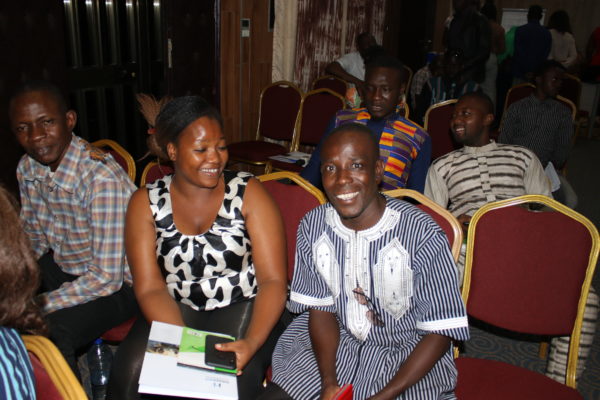
 

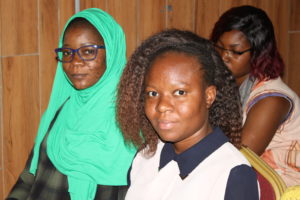
Empowering young people to dialogue for peace in Burkina Faso. Photo credit: Interpeace.

Partnership beyond projects: the importance of local ownership and trust

Interpeace et le Centre d'études pour la paix et le développement (CEPAD) have worked together since 2007, supporting peacebuilding processes in Timor-Leste. Our partnership began in response to the violent political crisis of 2006, which revealed the challenges of a young nation adopting a new system of state structures. Throughout the years, we used Participatory Action Research (PAR) and piloted innovative approaches to assessing local resilience (Frameworks for Assessing Resilience) to help break cycles of violence and create a safe environment for the Timorese. This work enabled bottom up and locally owned solutions to be formulated, to identify and address local grievances in a non-violent and sustainable manner. CEPAD is now considered a “go-to” organization for peace and development challenges, and is recognized for promoting inclusive democracy by providing safe spaces for community dialogue.

In 2019, a case study of Interpeace’s long-standing partnership with CEPAD was developed as part of the Stopping As Success (SAS) initiative – a collaborative learning project that aims to study and provide guidelines on how to ensure locally led development and peacebuilding. The SAS initiative touches on many of the core principles Interpeace was founded on – local ownership, long term commitment, process-oriented work and the primacy of trust as a keystone to peace. ‘Success’ in locally led peacebuilding work can be defined in many ways, and an organizational or programmatic exit of an INGO or International Organization in lieu of successful and sustainable local organizations is one important indicator. However, a larger understanding of ‘success’ in locally owned peacebuilding ought to ultimately be about whether the broader social contract is moving towards peace. As peacebuilders, Interpeace and our partners always aim toward that ultimate goal.

In order to achieve sustainable peacebuilding processes that reinforce a peaceful social contract we have long known local ownership and not internationally driven approaches is key. While this has long been recognized, operationalizing local ownership of peacebuilding remains an ongoing challenge. That is why the SAS case study ,“Centre of Studies for Peace and Development (CEPAD) and Interpeace: A partnership transition in Timor-Leste, is an instructive example of the practical steps international actors can take to support the  efforts of a locally led organization developing locally owned and inclusive peacebuilding solutions.


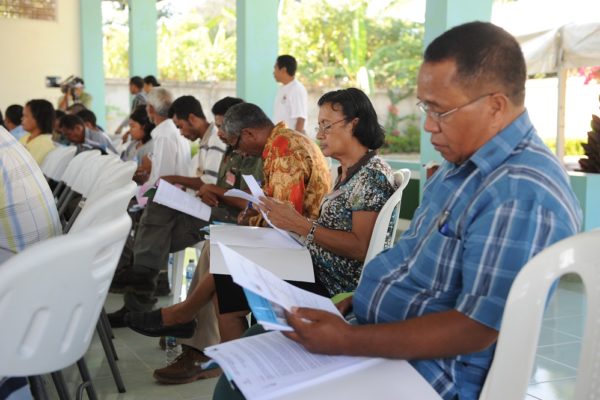
CEPAD Timor-Leste. Photo credit: Steve Tickner 2009

CEPAD Timor-Leste. Photo credit: Steve Tickner 2009


Fostering local ownership through sustainable partnerships  

For over 25 years, Interpeace’s approach has made sure that local people are at the heart of building peace. We believe that peace must be built from within societies and not imposed from the outside. Therefore, from the outset of our partnership with CEPAD, we put our trust in our partners local teams  to lead the strategic management and implementation of project activities. Interpeace provided ongoing technical , financial and capacity-building support to CEPAD, since its creation in 2007. However, in 2015, Interpeace began a process to phase out its financial support to remain engaged with CEPAD solely in an advisory capacity.  While Interpeace provided financial and technical support as well as supported the development, implementation and evaluation of projects, delivered ongoing training to CEPAD staff, CEPAD was in the driver’s seat.

A CEPAD staff member mentioned, “Interpeace stopped the funds in 2016 but the relationship continued. Whenever we have any difficulties, we contact Interpeace and get their ideas and comments on our work and situations that we are facing.”

The case study developed by SAS captures how Interpeace’s approach – working with local partners and committing to long-term engagement – is critical to ensure sustainable peacebuilding efforts. It highlights that the trust that was built during almost a decade between Interpeace-CEPAD, helped both organizations as Interpeace transitioned away from providing financial support.

A number of key lessons were also mentioned by the case study: a.) strong leadership is an important factor when creating and sustaining an NGO that can operate successfully when financial support from an INGO partner ends; b.) adopting bottom-up, locally led models from the outset – as opposed to time-bound, top-down projects – contributes to a more sustainable transition process; and c.) it is possible for INGOs to find creative ways of continuing to support locally led organizations and initiatives after transitions have concluded.

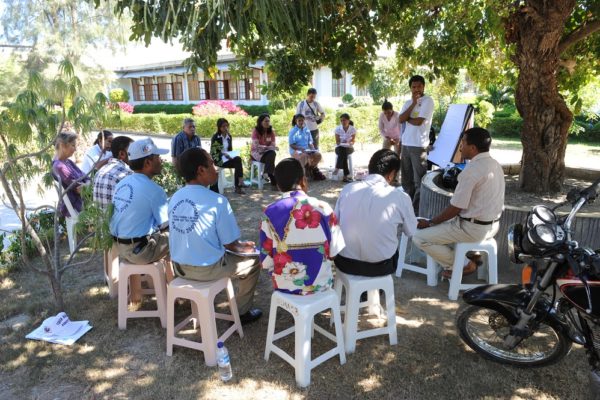
CEPAD Timor Leste. Photo credit: Steve Tickner 2009

CEPAD Timor-Leste. Photo credit: Steve Tickner 2009

Read the full case study or 2-page summary

Read here for more on why local ownership is important for peace and for brief examples of tools and approaches to enable local leadership and ownership.

NGO Consortium members vote Interpeace to chair Somalia peacebuilding group

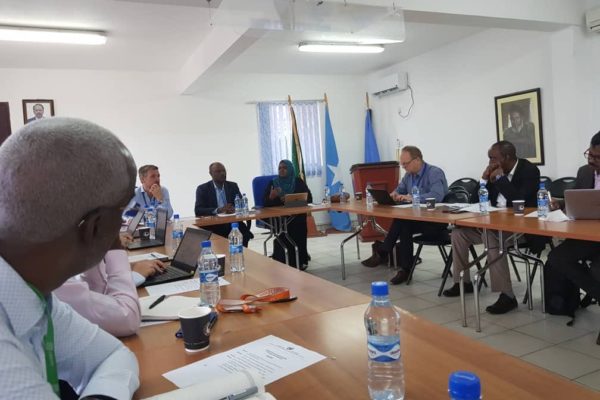
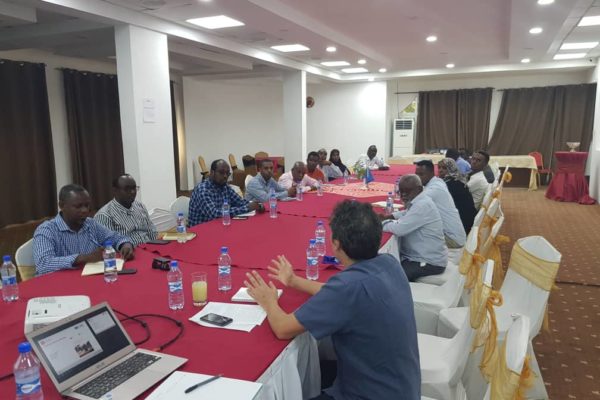
Members of national and international civil society organizations operating in Somalia have voted Interpeace as the chair of a multi-agency peacebuilding working group. The Somalia NGO Consortium made the announcement on 27 January 2020.

Somalia NGO Consortium (SNC) is a voluntary coordination mechanism of national and international Non-Governmental Organizations (NGOs) working in Somalia and operates in Somaliland. The Consortium was established in 1999.

Interpeace will lead the Peacebuilding Working Group for a period of one year, together with Saferworld as co-chair. The peacebuilding group is one of 6 thematic working groups established by the Consortium to effectively coordinate and conduct development and humanitarian support in Somalia.

NGO Consortium members in session. Photo credit: NGO Consortium.

Our team in Somalia and Somaliland has welcomed the news with delight and expressed their commitment to work closely with many other organizations to improve social cohesion, community safety interventions and effectively build sustainable peace in Somalia.

“We are indeed excited and pleased to be coordinating and working in a cohesive way with our peer organisations,” said Ahmed Abdullahi, Interpeace’s Somalia Country Coordinator.

“This platform gives us the opportunity to shape and advance innovative approaches to address the root causes of violence and work on restoring trust between communities,” said Mr Abdullahi.

We can only build a more peaceful future through collaboration. Working together as a group within the consortium strengthens our work as a peacebuilding community to effectively contribute to Somalia’s vision for change.

The Somalia Peacebuilding Working Group is an opportunity to consolidate partnerships, build a stronger peacebuilding community in Somalia and demonstrate to the world that we are more efficient when we work together.

NGO Consortium members in session. Photo credit: NGO Consortium.