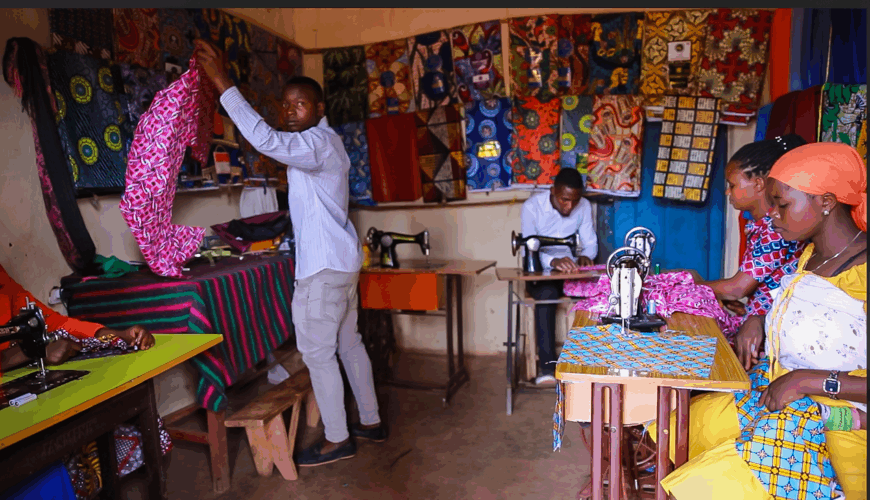
From Prison to Purpose: How Jeanne d’Arc’s Journey Is Redefining Reintegration in Rwanda

When Jeanne d’Arc Nyirahabiyaremye was sentenced to seven years in prison, she thought her life was over. “When I was incarcerated, I felt as if my world had collapsed. I was hopeless and depressed,” she recalls.

Born in Kamembe, western Rwanda, Jeanne d’Arc had finished her university education, worked as a primary school teacher, and supported herself and her daughter after a difficult divorce. However, a desperate attempt to find a home for her children following her painful divorce resulted in her arrest and a seven-year prison sentence that profoundly changed her life.

At the time, she was a mother of newborn twin girls, whom she took with her to Nyamagabe Correctional Facility, and an adolescent daughter she left at home alone. Having to raise her 10-month-old twin daughters behind bars was a trauma she struggled to endure.

Inside the correctional facility, located in southern Rwanda, Jeanne d’Arc began to rebuild herself. Her background as a teacher quickly earned her a leadership role among inmates: she served two terms as the women inmates' representative, taught English and Swahili, coordinated education programmes, and helped others pursue their studies.

Still, the emotional toll was heavy. “I couldn’t sleep while I was in the correctional facility. I was like a zombie for the first two years. I only ate maize and didn’t want to eat anything else,” she says, adding that “the only thing that kept me alive was my twins.”

Jeanne d’Arc’s struggle was far from unique. Interpeace and partners’ studies have shown that many inmates experience serious mental health challenges, such as anger, guilt, anxiety, depression, and hopelessness, while incarcerated. Those convicted of grave offences, including genocide-related crimes or murder, often experience isolation, guilt, or hallucinations. Without adequate mental health support, these issues can slow rehabilitation and complicate reintegration. Some inmates continue to struggle with genocide ideology or denial, which can slow rehabilitation and pose risks to community cohesion and resilience efforts, and even fuel recidivism.

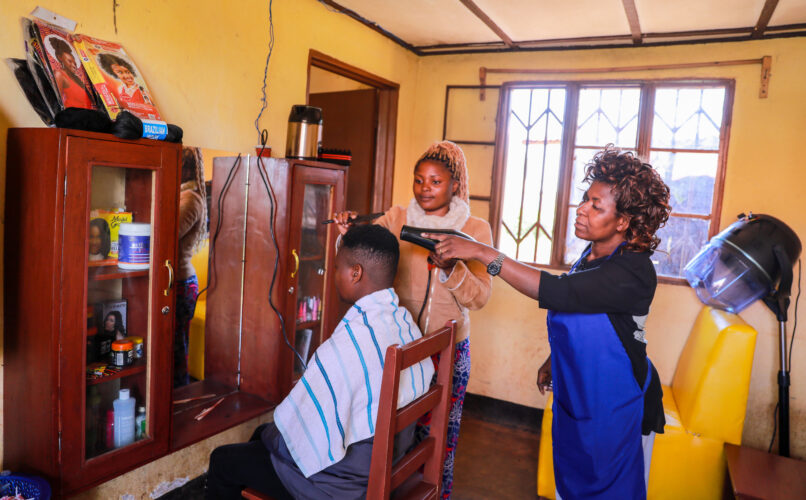
Today, less than a year after her release, Jeanne d’Arc is the founder and manager of Brighten Business Company Ltd, a local company that runs a hair and beauty salon and a training centre in Giheke Sector, Rusizi District — a place now filled with laughter, hair dryers, renewed hope, and the sound of second chances.
Healing Behind Bars

Jeanne d’Arc’s transformation is not an isolated case. Across Rwanda, similar healing and reintegration initiatives are changing lives behind bars. Hers and those of hundreds of others are part of a broader national effort to link rehabilitation with mental health and social reintegration.

Since 2022, Interpeace, in partnership with Dignity in Detention, Prison Fellowship Rwanda, and Haguruka, has collaborated with the Rwanda Correctional Service (RCS) and the Ministry of National Unity and Civic Engagement (MINUBUMWE) to enhance psychosocial support for inmates through the Societal Healing Programme, supported by the Government of Sweden.

Through this initiative, healing spaces based on sociotherapy have been introduced in several correctional facilities. In these small group sessions, inmates approaching release learn to confront past trauma, accept responsibility, rebuild trust, and find strength in resilience. The sessions also guide them in reconnecting with their families, communities, and even those they once harmed, paving the way for genuine forgiveness and reconciliation.

So far, over 600 inmates have participated, showing marked improvements in emotional stability and openness to reconciliation. A comparison of baseline and endline data survey confirms that acknowledgement of personal responsibility rose from 54% to 88%, while self-forgiveness improved by 31%.

A standardised psychosocial rehabilitation curriculum also helps inmates who cannot attend healing group sessions. It is delivered by trained correctional officers across all correctional facilities, helping inmates prepare for reintegration and rebuild relationships with families and communities.

“We were taught how to manage our emotions, take care of our mental health, and develop techniques to cope with challenges,” she recalls. “Facilitators often reminded us that our mental well-being is the most valuable thing we have, because there is no life without mental health.”

As part of their preparation, inmates receive vocational training in trades such as hairdressing, tailoring, welding, construction, masonry, mechanics, and handicrafts. This formal programme runs for six months, with graduates receiving official Rwanda Technical and Vocational Education and Training (TVET) Board certificates upon successful completion.

Close to 410 inmates graduated from TVET training in two years across four correctional facilities: Musanze, Nyamagabe, Ngoma, and Nyagatare.

Jeanne d’Arc chose hairdressing. She learned with zeal and enthusiasm, eventually earning her TVET Board certification, a milestone that laid the foundation for her new life. For her, these practical skills played a therapeutic role during incarceration and have helped her overcome unemployment challenges and reduce stigma after release.
A New Beginning

When Jeanne was released in January 2025, she was determined to start over. With the little savings she had earned from a nursery school teaching job she secured after her release, along with the skills she had gained, she opened her own beauty salon.

“I started the business here because there are no similar opportunities nearby. People would otherwise have to travel 30 minutes to get services,” she explains. Her salon offers Haircuts, braiding, washing, styling, nails, and makeup.

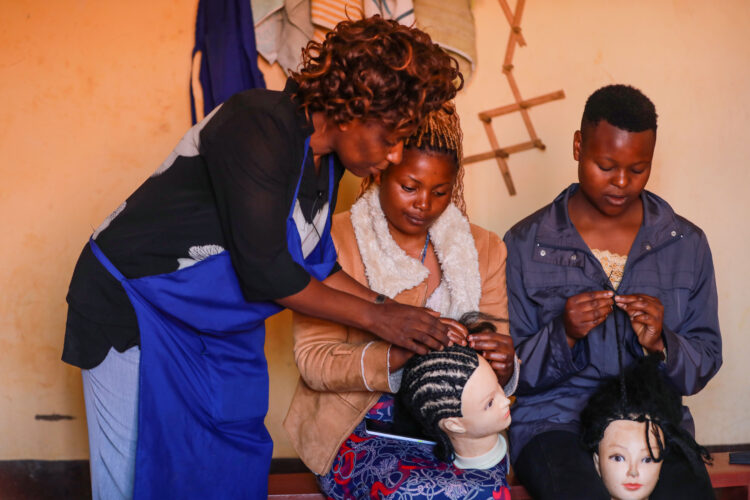
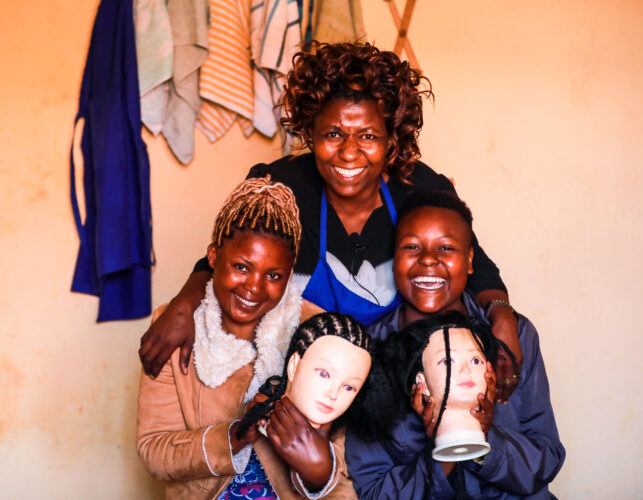
Her ambitions quickly grew. She transformed the salon into a training centre, offering young people practical skills and renewed hope to overcome challenges linked to unemployment and limited access to technical training opportunities. Brighten Business Company Ltd currently trains ten young apprentices who are working towards national certification under Rwanda’s TVET Board. But it’s more than a business — it’s a place full of laughter, energy, ambition, and renewed hope. Three of her first graduates now work alongside her at the salon, while others have secured jobs in the neighbourhood.

“I chose to focus on youth because they are the powerhouse of the country,” she says. “If they have skills, they can create jobs, support their families, and contribute to building our country.”

Her training extends beyond technical skills. Students learn English for client communication, sexual and reproductive health to prevent unplanned pregnancies, emotional regulation to handle workplace and daily life stress, and entrepreneurship to enable them to run their own businesses.

“We face many stressors in our daily lives. If a student has all the technical skills but can’t manage their emotions or treat clients with respect, the theory becomes meaningless. Teaching social and emotional skills is my way of giving back — those skills helped me the most in my journey of reintegration,” she says with conviction.

Redefining Reintegration

Today, Jeanne d’Arc is a respected member of her community. Her determination and positive example even earned her a teaching position at a local secondary school in Nyamasheke District. She now divides her time between running her company and teaching, and she plans to expand her business to create more training opportunities for women and youth.

Jeanne d’Arc’s journey from incarceration to empowerment shows the human face of rehabilitation — how restoring dignity, skills, and mental well-being can transform not only individuals but entire communities.

She deplores that stigma, community rejection, and being judged by one’s past remain major hurdles for former prisoners. Her message to society is simple but urgent:

“Don’t judge people by their past. Incarceration doesn’t take away your abilities, skills, or knowledge. Everyone deserves a second chance.”
From Fear to Forgiveness: How Sociotherapy Is Healing Wounds in Ngoma

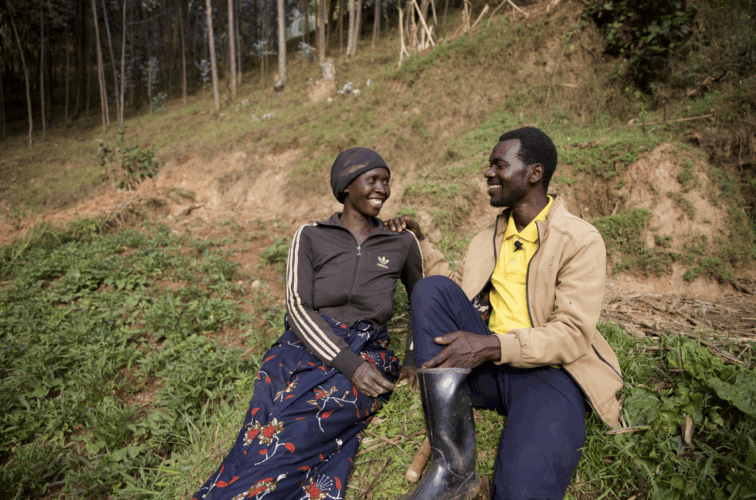
In Ngoma District, East Province of Rwanda, stories once defined by pain and mistrust are being rewritten through courage, dialogue, and reconciliation. Two neighbours: Aloys Hakizimana, a genocide perpetrator, and Alphonsine Mugerintoki, a survivor, once lived in silent hostility, their lives divided by trauma and fear. Today, they share laughter, family milestones, and a renewed sense of peace.

A Life Haunted by Fear and Regret

After the 1994 Genocide against the Tutsi, Aloys fled to Tanzania to escape accountability for the crimes he had committed. When he returned to Rwanda, he avoided his home district of Ngoma and hid in Musanze, disguising himself as a 19-year-old to evade justice, though he was 33.

“I was afraid to meet those I wronged and my neighbours. I felt ashamed of the atrocities I committed,” he recalls. “To conceal my identity and age, I constantly wore shorts and shaved, hoping to appear much younger,” he said.

Even after he was eventually arrested and imprisoned, peace continued to elude him. “Even in prison, I could not sleep. I was constantly depressed and fearful, and sometimes I could hear the voices of those killed during the genocide.”

After confessing his crimes, the Gacaca court granted Aloys a reduced sentence of 11 years in prison.

After confessing his crimes, the Gacaca court granted Aloys a reduced sentence of 11 years in prison. After release, the burden of guilt grew heavier, until he joined an Adult Sociotherapy Group created in Ngoma.

A psychosocial support intervention, Sociotherapy is part of the Societal Healing Programme implemented by Interpeace, Prison Fellowship Rwanda, Haguruka, and Dignity in Detention with support from the Government of Sweden. It brings together genocide survivors, perpetrators, and their descendants to promote truth-telling, rebuild trust, and foster collective healing, reconciliation, and resilience.

“Whenever I was about to meet a genocide survivor, I would pretend to be on a phone call just to avoid them. I couldn’t bring myself to attend social gatherings for fear of facing them. I lived like that for years,” he admits.

When Healing Becomes Shared

For Aloys, the Sociotherapy group sessions became a turning point. At first, he sat quietly, listening more than speaking. But as others shared their pain and longing for honesty, the truth he had buried for years began to surface.

“The Sociotherapy came at the right time. I felt relieved after sharing my experience with everyone in the group. Today, I feel at ease with everyone in our community and no longer live in fear,” he says.

Through the process, Aloys discovered a new kind of strength: the strength to repair. He reached out to those he once feared, including Alphonsine, a woman who had lost everything and had attended Sociotherapy sessions alongside him.

Divided by unimaginable suffering, they found the courage to meet again; not as enemies, but as neighbours bound by a shared desire for peace.

“I was healed thanks to Sociotherapy. I was able to forgive Aloys. We now live well together,” says Alphonsine. “We invite each other to family events, such as weddings. He was even the first to contribute to the weddings of two of my children,” she adds.

For many survivors, one of the deepest wounds remains uncertainty over where their loved ones were buried. For Alphonsine, this burden was heavy. Years of anger and alienation took a toll.

“I was traumatised because people who committed genocide would gaslight me and call me crazy when I confronted them and asked them to at least tell me where they buried my loved ones,” she remembers. Her distrust led to heavy drinking, fights, and self-neglect.

The dialogues in the Sociotherapy sessions eventually yielded clues about bodies possibly dumped in a nearby lake. But details were scarce, making proper identification difficult. Recognising his responsibility, Aloys joined Alphonsine in encouraging perpetrators and neighbours to speak the truth. Their persistence led to the discovery of eleven bodies of genocide victims, finally laid to rest with dignity.

Their journey inspired others, like Monique, who was only 15 during the genocide. Among the eleven bodies found were her family members. Through Sociotherapy, she found the strength to forgive and advocate for truth. “If it wasn’t for Sociotherapy, we would not have found the bodies of our loved ones,” she reflects.

Rebuilding Trust and Resilience

Sociotherapy has reached 2,039 individuals through 140 community healing groups across five districts: Musanze, Nyabihu, Ngoma, Nyagatare, and Nyamagabe.

The programme has produced measurable positive changes: a 17.2% increase in intergroup trust, a 12.5% rise in social harmony, and a 9.5% improvement in readiness to forgive, resulting in a 34.5% increase in willingness to collaborate.

The journeys of Aloys and Alphonsine, as well as those of many participants in Sociotherapy, show that reconciliation is possible, even after the deepest wounds. Survivors who were once silenced now speak with dignity. Perpetrators who once hid in fear of revenge now take responsibility. Together, they are shaping a legacy of healing and truth for future generations.

Their stories serve as a quiet model of what reconciliation can look like when psychosocial healing meets courage and accountability. It is not just about individuals finding peace, but about entire communities rebuilding trust and resilience.

From the quiet hills of Ngoma, a message echoes nationwide: true reconciliation is not about forgetting, but about courage; the courage to face the past, speak the truth, and rebuild stronger together.


From Violence to Harmony: How Multifamily Healing Spaces Are Transforming Household Conflicts

The home of Antoine Ibyimana and Marie Mediatrice Uwimana in Nyamagabe District’s Kibumbwe Sector was once filled with fear and conflict. For years, domestic violence and alcohol abuse tore their family apart.

Today, that same household radiates peace, mutual respect, and renewed hope, thanks to Multifamily Healing Spaces (MFHS), an initiative helping families rebuild trust and harmony.

A Family in Crisis

A few years ago, Ibyimana’s life was dominated by alcohol. The high school teacher spent most of his time drinking and often returned home angry and violent. His wife and children would hide in their rooms, terrified of his temper.

“When I came home drunk, my children would run away. They saw me as a monster,” he recalls with regret.

Uwimana bore the full weight of the abuse. Even during her pregnancy, she endured both physical and emotional suffering. “I was deeply traumatised by his violence. On top of beating me, he would let us starve even though he earned a monthly salary. I struggled alone to find food for my children,” she recalls softly. “I was treated like a maid in my own home. Leaving crossed my mind many times, but I stayed for the sake of my children.”

Ibyimana’s controlling behaviour went beyond violence. He made every decision alone, sold family property without consultation, and kept his salary a secret. The lack of communication eroded trust and destabilised the family.

A Turning Point Through Dialogue

Everything changed when they joined a Multifamily Healing Space established in Kibibi Cell. These healing spaces bring families (parents and their children) together through guided dialogues to help them identify harmful behaviours, rebuild relationships, and strengthen parenting skills. For Ibyimana, it was a turning point.

“I realised how deeply my actions hurt my family,” he says. “I learned to communicate, to listen, and to make decisions together with my wife.”

MFHS is a group-based psychosocial intervention designed to help families confront historical trauma, improve communication, and resolve conflicts through healing dialogues. It also addresses intergenerational trauma through parent–child discussions and promotes positive parenting.

The intervention was introduced by Interpeace and its partners —Haguruka, Prison Fellowship Rwanda, and Dignity in Detention —as part of the Societal Healing Programme, funded by the Government of Sweden (2021–2025).

The State of Family Conflict

According to the 2024 Rwanda Governance Board (RGB) Citizen Scorecard Report, family conflict ranks as the top challenge to family cohesion and development (17.4%), followed by psychological abuse (13.9%).

The report identifies alcohol abuse (82.8%), poor communication (82.6%), and poor parenting (68.4%) as key drivers of family dysfunction.

A 2023 evaluation of MFHS found the intervention effective in resolving intrafamily conflicts, improving communication and problem-solving skills, and strengthening family cohesion and resilience. It combines locally developed methods with international best practices, tailored to the Rwandan context.

Healing the Family Bond

In the safe space of group discussions, Uwimana finally found her voice. Sharing her experiences with other families facing similar struggles gave her strength and perspective.

“The group helped me release years of pain. I felt supported for the first time,” she says.

Family-only sessions allowed Ibyimana and his wife to address their problems constructively. Both parents learned positive parenting techniques and conflict management skills, enabling them to improve communication and build stronger bonds with their children.

Their daughter, Jessica, who had fallen from the top of her class to thirtieth position due to anxiety and distraction from constant family conflict, regained top marks after the household calmed.

“I used to think being a father meant giving orders,” says Ibyimana. “Now I share meals with my children, help with homework, and guide them with love.”

Local leaders and neighbours have witnessed the remarkable change. A family that was once on the verge of divorce now serves as a model of harmony and mutual respect for others in the community -

“When they see how calm and caring my husband has become, some joke that I must have used witchcraft to change him,” Uwimana laughs. “But what changed him was dialogue, not magic.”

Across five districts —Musanze, Nyabihu, Ngoma, Nyagatare, and Nyamagabe —2,088 individuals have participated in MFHS. But the real impact is not measured by numbers alone.

Comparative data before and after the intervention show meaningful improvements: family communication and problem-solving capacities rose by 14.6%, indicating greater collaboration and effectiveness in addressing stressful situations.

Parenting practices also improved by 34.5% (increase in warm, nurturing, and inclusive parenting behaviours), and participatory parenting increased by 13.4%, showing greater inclusion of children’s views even during disagreements.

Building a Future Together

Beyond emotional healing, the dialogues taught families to manage resources responsibly. Families have learned to plan finances together, prioritising long-term goals over wasteful spending.

“Before, almost all my salary went to alcohol,” Ibyimana admits. “Now we’ve bought a piece of land and are saving to build our own house.”

Their story is one of resilience and renewal; a reminder that family peace is built through patience, empathy, and shared responsibility.

“I regret the years I wasted destroying my family,” reflects Ibyimana, “but I’m proud of the father and husband I’ve become.”

Across Rwanda, initiatives like Multifamily Healing Spaces continue to show that strengthening family resilience is foundational because resilient families build resilient communities.


From Survival to Leadership: Joseph’s Journey of Healing and Hope

In the steep hills of Nyabihu District, western Rwanda, a man once feared by his neighbours now leads efforts to foster peace and understanding in his community.

Joseph Nshimiyimana, a father and community leader, has experienced both the darkest and brightest sides of human existence — from a life defined by violence and isolation to one marked by healing and reconciliation.

Joseph was born into extreme poverty as one of twelve surviving children of his family. Hunger and neglect defined his early years. At just 12 years old, unable to bear life at home, he ran away and began to work as a shepherd.

His family, overwhelmed by hardship, believed he had died for years. As Joseph grew older, loneliness and lack of affection took a deep toll on his mental health, fuelling anger and aggression. Known in his village as a bully, he often terrorised neighbours and peers.

“He was extremely violent and dangerous. He would beat anyone, regardless of their age, for no reason,” recalls Willy Habiyaremye, a neighbour whom Joseph attacked several times. “He even set up a roadblock at the entrance to our village just to harass people. Everyone was afraid of him.”

Alcohol and narcotic drugs, especially cannabis, became part of Joseph’s daily life — a way to silence the pain he couldn’t express. Alone and mistrustful, he preferred the company of his hunting dogs to that of other people.

“I would smoke two pellets of cannabis at once to feel relaxed and find peace of mind,” Joseph recalls. “After smoking, I felt strong and powerful, like I had control over everyone. I didn’t want anyone near me — only my dogs. They made me feel like a king surrounded by his guards.”

Eventually, Joseph married, but the cycle of pain continued. His unresolved trauma turned into domestic violence.

“We lived in fear every day,” says his wife, Godelieve Ntegejo. “He would beat me and the children, and sometimes we fled to our in-laws’ house for safety. Even small things made him furious, like someone possessed.”

A Turning Point Through Healing

Joseph’s transformation unexpectedly began when he joined a Youth Sociotherapy group in Jomba Sector, Nyabihu District. Sociotherapy is part of a broader societal healing programme led by Interpeace in partnership with Prison Fellowship Rwanda, Haguruka, and Dignity in Detention — implemented from 2022 to 2025 with support from the Government of Sweden. Sociotherapy is a community-based psychosocial support approach that provides safe spaces for individuals to share, listen, and heal together.

Through open dialogue, self-reflection, mutual support, and guided reflection, Joseph began to confront his traumatic past.

“For the first time, I understood the pain I was carrying,” he says. “The sessions on care and safety made me realise how much I had passed my suffering on to others. From that moment, I decided to change.”

Gradually, Joseph stopped using drugs and alcohol. He reached out to those he had wronged, seeking forgiveness and making amends. His violent outbursts faded, replaced by empathy and accountability. By the end of the six-month Sociotherapy stages, Joseph had become a respected voice in his community — the same community that once feared him.

“When he came to ask for my forgiveness, I thought I was dreaming,” says a neighbour we found helping Joseph with farm work. “I couldn’t believe he had become humble and kind. I forgave him, and now we are close friends.”

Community members and leaders began to trust Joseph again, recognising his commitment to peace. His exemplary behaviour earned him three leadership roles within the village committee.

At home, his family life underwent a transformation. His wife and children — once living in fear — now speak of safety and hope. To mark this new chapter, Joseph chose to legalise his marriage and celebrate it in the local ADEPER church, reconciling with his faith.

“He listens now. He helps around the house. We talk and laugh. I feel loved and cared for,” Godelieve says with a smile.

Across 140 community healing groups in five districts, over 2,000 people have begun their healing journey as part of the Societal Healing Programme that has boosted resilience by 9%, emotional well-being by 24%, and self-management by nearly 30%.

Levels of trust and forgiveness among community members have also grown, paving the way for stronger social cohesion.

The Ripple Effect of Healing

Joseph’s transformation brought renewed harmony into his household and strengthened the couple’s livelihood. Together, they bought land to grow food, a cow to provide milk for their children, and manure to enrich their soil.

Once feared and despised, Joseph is now someone others — especially young people and couples in conflict — turn to for advice and encouragement. Drawing on his own story, he helps them reflect on their behaviour and accept responsibility for their actions.

So far, he has helped five couples in his neighbourhood resolve their disputes and rebuild trust.

“Joseph’s case proves that healing is possible when people are given safe spaces to talk, reflect and reconnect,” says a local leader.

Once a threat to social harmony, Joseph is now a source of hope, a living reminder that when individuals heal, entire communities can begin to thrive.


From Darkness to Light: How a Young Mother’s Healing Journey Inspires Hope

After years of rejection and despair, a young mother named Rosine from Musanze rebuilds her life through Resilience-Oriented Therapy, a community-based psychosocial approach transforming mental health care across Rwanda.

In the misty hills of Gataraga Sector, Musanze District, Rosine walks along a narrow path, holding her little daughter’s hand. To those who meet her today, she seems calm, confident, and full of quiet strength. But just a few months ago, Rosine’s world was shadowed by depression and despair.

As a teenager, she faced challenges that would overwhelm many adults: poverty, rejection, and the crushing loneliness of being a young mother abandoned by those she needed most – her own family and neighbours.

Rosine grew up in a humble home. Her education ended abruptly in fifth grade when her family could no longer afford school fees. Like many girls in similar circumstances, she was left to navigate life without the guidance or opportunities she once hoped for.

When she became pregnant, her already fragile situation collapsed. Her mother, shocked and angry, struggled to accept it. “It really hurt me. I thought about how I struggled to feed her, and she repaid me with an unplanned pregnancy. It felt like an abomination to me,” Rosine’s mother says.

“My mother rejected me. She would openly tell me to go back to the father of my child,” Rosine recalls. “I had to buy my own food and utensils. I was abandoned—helpless and hopeless.”

Her siblings distanced themselves, and her neighbours whispered behind her back. The father of her child, who had once promised marriage, disappeared shortly after the baby was born, cutting off all support — emotional and financial. The burden of depression and isolation became unbearable.

“I wanted to kill my child and myself because I couldn’t leave her alone in that suffering,” Rosine says quietly. “I had lost the taste for life because of the verbal abuse, harassment, bullying, and financial hardships.”

A Lifeline in the Darkness

Rosine’s turning point came when she was invited to join a Resilience-Oriented Therapy (ROT) group at her local health centre - Gataraga. Facilitated by trained psychologists, these sessions provide a safe and supportive environment for individuals experiencing trauma, depression, anxiety, or even suicidal thoughts to share their stories, support one another, and rebuild their confidence.

“Through ROT, I began to accept myself and my circumstances,” she says. “I learned to manage my emotions and respond calmly when insulted. Slowly, I started to believe that my life could change.”

Resilience-Oriented Therapy is a group-based psychosocial intervention introduced in 2023 by Interpeace, in collaboration with Rwanda’s Ministry of Health through the Rwanda Biomedical Centre (RBC). The initiative aims to decentralise mental health care by bringing therapeutic support to community health centres — making help accessible to those who might otherwise never seek it.

Grounded in Rwandan cultural values of solidarity and collective healing, ROT addresses a critical gap in one-on-one therapy, which remains limited and often stigmatised. Instead of focusing only on individual treatment, the sessions encourage participants to draw strength from shared experiences and to rebuild a sense of belonging.

“ROT helps people rediscover who they are,” explains one of the psychologists who facilitates the groups. “It teaches emotional regulation, identity rebuilding, and self-management—essential skills for mental resilience.”

The Broader Picture: Healing a Nation

More than three decades after the 1994 Genocide against the Tutsi, Rwanda continues to deal with its psychological aftermath. While remarkable progress has been made in national reconciliation and socio-economic recovery, the invisible wounds remain deep.

According to the Rwanda Biomedical Centre, one in five Rwandans has faced mental health challenges — a figure that emphasises the urgent need for accessible, community-based care. However, the number of professionals available remains low compared to the scale of demand.

Since its introduction, ROT has reached 621 individuals across five districts — Musanze, Nyabihu, Nyagatare, Ngoma, and Nyamagabe — through 52 healing groups in 32 health centres and seven hospitals. Each group is facilitated by a trained psychologist who guides participants through structured dialogues and exercises to process trauma, strengthen coping mechanisms, and envision positive futures.

Interpeace’s pre- and post-intervention data revealed striking results: cases of severe mental distress dropped from 38% to 19% among participants, marking significant progress toward recovery. Beyond the numbers, however, are hundreds of human stories — each a testament to resilience, empathy, and the possibility of change.

Rebuilding Bonds and Restoring Trust

Rosine’s personal transformation rippled outward. Her renewed confidence began to shift her relationship with her mother, who once rejected her out of shame and frustration.

“As a parent, it was hard to accept, especially because she didn’t tell me early,” her mother says. “I felt humiliated. But when I saw how she was struggling to recover, I began to regain my sense of being a parent and accepted it. I have found peace. Now I treat her equally and support her again.”

Their reconciliation mended more than a family bond; it restored faith within their community. Neighbours who had once gossiped now see Rosine as a symbol of courage and hope.

“Healing doesn’t end with one person,” says a psychologist who facilitates ROT sessions at the Gataraga Health Centre. “When one person heals, their whole family begins to heal—it’s like light spreading from one home to another.”

The psychologist explains that, whenever possible, families are involved in the healing process to prevent relapse due to a lack of family support.

A New Beginning

Today, Rosine, like other participants in ROT sessions, is determined to build a better life for her child. She works casual jobs to earn income and saves money, dreaming of opening a small shop and raising livestock. Each step she takes forward is an act of defiance against the despair that once consumed her.

“I have come out of darkness,” she says with a bright smile. “Now, I am in the light.”

Her story embodies what Resilience-Oriented Therapy stands for — restoring dignity, rebuilding identity, and turning pain into purpose.

Encouraged by the approach's success, Interpeace and the Rwanda Biomedical Centre are working together to scale Resilience-Oriented Therapy across all health centres and hospitals in the country. The goal is to make psychosocial support as routine and accessible as physical health services.

“By addressing mental well-being at the community level, we are not only healing individuals but strengthening Rwanda’s social fabric,” says Frank Kayitare, Interpeace Country Representative in Rwanda. “Every story like Rosine’s shows that resilience is not just a personal journey, it’s a collective transformation.”

Rosine’s journey from darkness to light is more than a personal triumph. It reflects a nation’s ongoing effort to prioritise mental health, rebuild trust, and foster compassion to achieve sustainable peace and development that the country aspires to.

As Rwanda continues its journey toward becoming a middle-income country by 2035, stories like Rosine’s remind us that progress is not measured only in infrastructure or the economy, but also in the emotional resilience of its people. Through initiatives like Resilience-Oriented Therapy, hope is being restored — one story, one family, one community at a time.

From Healing to Livelihoods: How Youth in Ngoma Are Building Hope Together

In Musya, a quiet village in Ngoma District, fifteen young people are proving that healing and livelihoods can go hand in hand. Calling themselves Abahuje Umugambi — meaning “those who unite to achieve a common goal” — the eight women and seven men have transformed shared pain into purpose, and mistrust into meaningful collaboration.

Some are descendants of genocide survivors, others from families of perpetrators, and some come from households affected by conflict. Once marked by trauma, mistrust, and hopelessness, they are now healed, united, and thriving together.

They first met under the Youth Sociotherapy Group, part of the broader Societal Healing Programme implemented by Interpeace and its partners, namely Prison Fellowship Rwanda, Haguruka, and Dignity in Detention, with funding from the Government of Sweden (2022–2025). The initiative helps communities confront trauma, rebuild trust, and restore social cohesion among Rwandans still affected by the 1994 genocide against the Tutsi and its aftermath.

“I grew up with parents who were traumatised genocide survivors,” recalls Julienne Uwitije, the group’s president. “I was afraid of perpetrators’ families and their children. I never interacted with them. Now, after Sociotherapy, I trust them so much that I can even leave my children with them.”

Turning Healing into Livelihoods

Few would have imagined that this group could come together to build a thriving community enterprise, given their difficult pasts. But Sociotherapy helped them confront trauma, rebuild trust, and work collaboratively. Individual healing soon sparked collective transformation, demonstrating that a healed and united community is also a thriving community.

After completing the healing sessions, the group chose to stay together. They formed a savings group, contributing 1,000 Rwf weekly and 200 Rwf for social activities, which facilitated ongoing support and prevented relapse. Every Friday, members meet to strategise, socialise, and collect savings.

“Our primary purpose was to create an opportunity to stay connected because we had become a family. We wanted to continue supporting each other. This group helped me a lot. I found a safe space to share my personal experiences and everyday worries,” says Aline Izabera, one of the members.

The support group quickly evolved into a community business. They launched a tailoring shop and training programme. With four members already skilled in sewing, they taught the others and expanded their operations. Within months, they secured contracts to sew school uniforms for hundreds of students and outfits for local church choirs.

Through the Collaborative Livelihoods component of the Societal Healing Programme, Interpeace supported Abahuje Umugambi with a grant of 800,000 Rwf. They purchased additional sewing machines, expanding from four to seven stations, and expanded their small tailoring school for local youth.

The Collaborative Livelihoods approach is designed to strengthen the economic resilience of individuals and communities. It’s an empowerment package that combines funding, skills training, and mentorship to enable community-owned businesses established by graduates of healing spaces to grow and sustain themselves.

The impact reaches beyond the group to individual members and their families. Members have gained confidence, empathy, and entrepreneurship skills. Through their internal savings-and-loan system, members have launched personal ventures. One runs a street food business, another built her own house, while others purchased land or livestock.

Oreste Niyotwizeye borrowed 50,000 Rwf to start a samosa-making business. “This group gave me start-up capital I could never have gotten. I couldn’t apply for a bank loan because they require a guarantee, which I don’t have. Now I am realising my dreams,” he said, joyfully mixing dough.

The group has also expanded its pig-rearing project, starting with six pigs to tap into a growing local market. Today, Abahuje Umugambi owns assets worth over 3 million Rwf, including sewing machines, fabrics, livestock, and other equipment.

The Societal Healing Programme supported 40 community enterprises through its Collaborative Livelihoods component, benefiting 529 members. It has also trained 1,767 individuals in entrepreneurship, cooperative governance, and business development, laying the foundation for lasting community growth.

A Future Built on Hope and Unity

Beyond financial gains, the most profound transformation has been personal growth and social resilience. Julienne, once shy and fearful, now leads the group and serves her local community as a cell-level secretary.

Alice, another member, describes how Sociotherapy has changed her relationships: “Sociotherapy taught me that everyone is dealing with something. Before, if someone walked by without greeting me, I would take it personally. Now I understand people better and respond with empathy.”

Jean de Dieu, the son of a genocide survivor, shares a similar awakening: “My mother always warned me not to trust others because they killed her family. But Sociotherapy helped me face anger, sadness, and grief — and, most importantly, to forgive.”

These personal transformations have rippled through families and the wider community. What began as individual healing has grown into a living example of collective resilience.

With growing ambitions, Abahuje Umugambi now plans to register as a cooperative and build a permanent workspace to expand their tailoring business and training programmes.

“We want to remain connected as a group, keep supporting each other, and build the capacities of others in our community,” says Julienne.

Their story illustrates the transformative power of pairing psychosocial healing with livelihood opportunities. By rebuilding trust, they have also built sustainable livelihoods, showing that when young people are supported to heal together, they can help entire communities thrive.