Peacebuilding initiative opens new doors for young people in the African Great Lakes

There is a growing recognition of the role young people play in building peace in the African Great Lakes region. However, their participation and capacity to influence decision-making are often limited by structural barriers and insufficient investment in facilitating their inclusion and empowerment.

Interpeace is taking action, through a new regional initiative, to equip young people in Burundi, DR Congo, Rwanda and Uganda with the skills and knowledge they need to influence and play a more effective leadership role in regional peace processes.
The Great Lakes Youth Innovation Lab for Peace (YouthLab) project is a 30-month initiative implemented in partnership with Never Again Rwanda (NAR), the Pole Institute and the Centre d’Alerte et Prevention des Conflits (CENAP). The initiative is funded by the European Union.

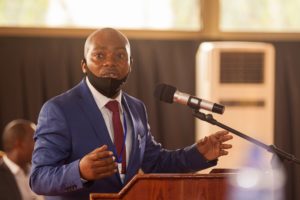
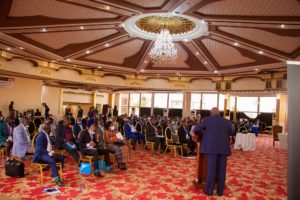
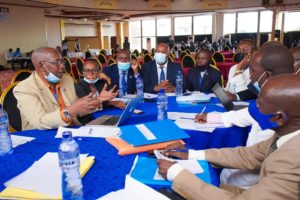
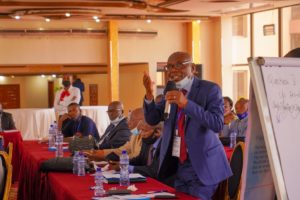
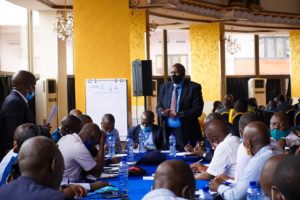
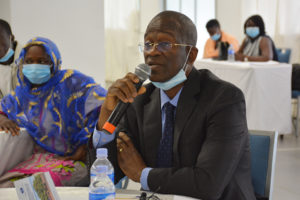
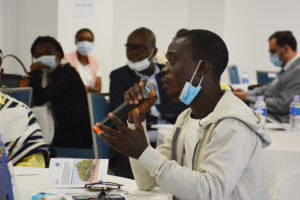
Planning workshop in Nairobi. Photo credit: Interpeace

Recurring and deeply interconnected conflicts have claimed millions of lives and disrupted social cohesion in the Great Lakes region since the 1960s. Conflict dynamics on one side of a border often have an impact on the other side, due to the interdependence between countries in the region. Young people, who make up the majority of the population in the Great Lakes countries, are severely affected by the cycles of protracted conflict. They face physical violence, forced recruitment into armed groups, intergenerational transmission of trauma, forced displacement and have lost access to schooling, job and livelihood opportunities. Despite these challenges, previous and ongoing peacebuilding interventions have not offered young people sufficient space for meaningful dialogue and shared peacebuilding action.

The Interpeace YouthLab project that was launched in January 2021, will provide a platform for young people in the Great Lakes to have dialogues and share a common voice for collective action as they engage policy makers to articulate their vision for peace in the region.

“This initiative will stand out as a shining example of how young people can be the difference between violence and peace. They need to come together in a more inclusive platform to act and make this work,” said Frank Kayitare, Interpeace’s Great Lakes Regional Representative.

NAR team visit to Famille d'unite et reconcilliation FRC during their entrepreneurship for peace activity. Photo credit: Never Again Rwanda (NAR)

The project will bring together young people from across the region to actively participate and lead initiatives that contribute to governance, peacebuilding, and development processes at the local, national and regional levels. It will also support youth leadership in peacebuilding and expand cultural and intergenerational exchanges.

Through a series of engagement activities, the project has been introduced to political actors and potential partners, shortly after a planning workshop, to make them aware of planned activities and to get these stakeholders from the different countries to actively contribute. A stakeholder mapping exercise, the identification of participants and a process to develop capacity-building modules and tools are ongoing.

The YouthLab initiative is part of our Great Lakes programme that works to promote peace, stability, and social cohesion by strengthening resilience capacities for peace and reconciliation throughout the region.


Facing escalating violence with resilience in Burkina Faso

A worsening violent conflict in the Sahel is disrupting social cohesion in Burkina Faso. But there is also evidence showing individual and community resilience in the face of the growing violence, a new Interpeace research has found. While many are struggling to cope, practical challenges linked to structural and cyclical issues at the origin of the conflict, remain.

A new report by Interpeace Burkina Faso has proposed recommendations to change this. The Burkinabè people were key in bringing these proposals forward themselves to build peace that is sustainable.

“This report is an important contribution, in terms of information to the government, in developing a national social cohesion strategy. It also informs development partners to structure and tailor their support [as needed] in Burkina Faso,” says Cheick Faycal Traore, Interpeace Country Representative in Burkina Faso. He adds that: “It sets out a concrete roadmap, which, if implemented will significantly contribute to a return to peace.”

The report will be launched this Thursday, 29 April 2021 in the capital, Ouagadougou. It presents a deep analysis of the underlying causes of conflict in Burkina Faso and the existing opportunities for resilience, following an inclusive and participatory research carried out in all 13 administrative regions of the country.

“The report explores ways to renew the social contract in Burkina Faso. It presents a holistic and nuanced understanding of the situation nationwide by highlighting the issues that are transversal to all and the local specificities that need to be addressed,” explained Mr Traoré.
According to the report, poor governance, existing inequalities to access opportunities, the emergence of local self-defence groups, ethnic stereotypes, the waning legitimacy of traditional authorities and some radical religious practices have disrupted social cohesion and are at the origin of the broken trust between some citizens and the state.

Research began before Covid-19 and continued through this pandemic period. This photo was taken early in 2020. Photo credit: Interpeace Burkina Faso

Some resilience opportunities identified include the culture of hospitality that still flourishes in most Burkinabè communities, existing strong family ties, community and interfaith dialogue frameworks, alliances between different communities and ethnic groups, and the active involvement of state technical services and civil society organisations in the promotion of social cohesion as well as the continuous respect of state authorities by citizens amid the growing mistrust.

Through this report, a major milestone in building sustainable peace has been achieved: the population, including those directly affected by the insecurity, played a more active role in an inclusive process to identify the resilient factors that hold them together and propose recommendations that, for the first time, set a concrete roadmap to enhance social cohesion and build lasting peace.

This research carried out by a team of national researchers from Interpeace Burkina Faso is part of a peacebuilding project that seeks to lay a solid foundation for lasting peace in the country, through a participatory analysis of conflict and resilience factors in consultation and collaboration with the Burkinabè people. The project is supported by the Kingdom of Netherlands.

In total, 538 people from the country’s 13 administrative regions took part in the participatory analysis. Data from this process was supplemented by a quantitative survey of over 2300 people in some six regions of the country, including those most affected by insecurity.

The participants included community members, government and traditional authorities, the leaders of family, community and religious groups, as well as women, young people, and civil society representatives, among others.

The report’s recommendations have the potential to reduce the rising tensions, prevent violence, and foster social cohesion.

Read the full report here.

DR Congo: Social cohesion in focus at South Kivu inter-community peace dialogue

The big challenge for peace actors in the Democratic Republic of Congo is to create conditions for social cohesion – especially in the highland communities of Fizi, Uvira and Mwenga in South Kivu province, where a persistent inter-community conflict over land, power, identity and citizenship has torn societies apart.

Facilitating a return to social cohesion and lasting peace in Fizi, Uvira, and Mwenga was the main reason the Congolese government, Interpeace and partners organised an inclusive dialogue of all stakeholders to address the root causes of the violence.

Intensified intercommunal clashes between a group of militias, known as the Mai-Mai, from the Bafuliru, Babembe and Banyindu communities and armed groups affiliated to the Banyamulenge community have severely disrupted social cohesion. The Mai-Mai group of militias who consider themselves as “indigenous” Congolese are fighting the cattle-herding Banyamulenge community - often labelled as outsiders due to their Rwandan origin. Continuous violence has led to widespread killings, looting, burning down of villages and large-scale displacement across South Kivu’s highlands.

“When you wage war on your neighbour, no one wins. Everyone loses,” said Pacifique Borauzima, Interpeace Country Representative in DR Congo.

The dialogue in Kinshasa, from 29 to 31 March 2021, between the communities in conflict – the Babembe, Bafuliru, Babuyi, Banyamulenge, Barundi, Banyindu and Bavira – also witnessed the participation of representatives of the armed groups, religious leaders, politicians and government officials, civil society and peace actors among others.

At the meeting, government officials shared with participants what it takes to return to peaceful co-existence in the communities torn apart by conflict.

“If everyone said: ‘peace is my business, my neighbour is not my enemy; if my neighbour lives in peace, I will also live in peace; if my neighbour prospers, I will also proper’, then we can achieve the peace we seek,” said Bahati Lukwabo, DR Congo’s Senate President.
Participants agreed that everyone’s commitment is needed to tackle the growing threat to peace and security in their communities in South Kivu’s highlands. In a memo, women leaders who participated in the dialogue called for an effective peace agreement between the communities in conflict.

“The women of South Kivu present in this hall are strongly committed to the return of peace and security,” said Marie Amisi Misukyo, Director of the women group Solidarité de Femme de Fizi.

This memo also symbolises women’s resilience to rise above the violence and increased security risks that they face in the region. “There is a huge gap between making commitments and implementing them. We expect from you a change in behaviour for the return of peace, security and development,” said Gilbert Kankonde Malamba, Deputy Prime Minister and Minister of the Interior.

He added: “The high and middle plateaus of Fizi, Uvira and Mwenga/Itombwe are burning now, and the cries of children, women and others should challenge us. Violence has amplified the crisis instead of solving it.”

Building on previous attempts at dialogue in South Kivu, the three-day event in Kinshasa opened an inclusive space for continuous inter-community peace dialogue between the seven communities of Fizi, Uvira and Mwenga fighting each other. Representatives of the communities held bilateral  meetings, drafted, and endorsed reports of their  discussions, committing  to a peaceful process.

The Kinshasa dialogue was hosted by the Congolese central government and Interpeace, together with partners, Action pour le Développement et la Paix Endogènes (ADEPAE), Solidarité des Volontaires pour l'Humanité (SVH), Réseau d'Innovation d'Organisationnelle (RIO) and Radio La Benevolencija (RLB) - within the framework of an Interpeace project that seeks to design a roadmap for peace in the highland communities of Fizi, Uvira and Mwenga (Itombwe).

The project commenced in January 2020 and is supported by the UK Foreign, Commonwealth and Development Office in DR Congo. This Kinshasa dialogue was also made possible through a contribution from Global Affairs Canada. In March 2020, the project supported a peace process that led to the signing of a ceasefire agreement by 22 armed groups.

Prior to the Kinshasa dialogue, a preparatory meeting was held in Uvira from 10 to 12 March 2021. The meeting brought together representatives of the different communities, provincial and national officials to define the purpose, agenda, and practical approach for the inter-community dialogue process.

Interpeace and its partners will continue to engage national, provincial, and local stakeholders in the process of reinforcing social cohesion and establishing durable peace.

Gestion des conflits fonciers en Côte d’Ivoire: « Le cadre de collaboration nous permet d’ouvrir le dialogue avec l’Etat pour trouver des solutions pour l’avenir de nos enfants »

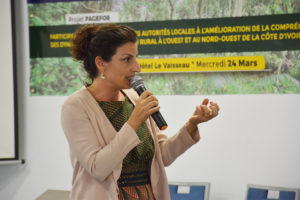
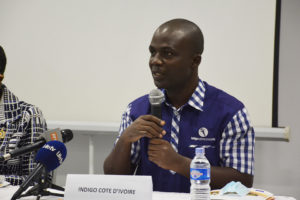
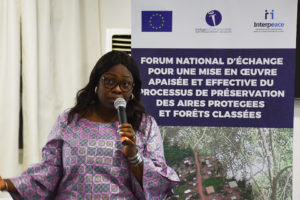
Dans certains villages riverains des aires protégées et des forêts classées en Côte d’Ivoire, les tensions entre les agents forestiers et les habitants sont une source majeure de conflits. Les agents de l’Office ivoirien des parcs et réserves (OIPR) ou de la Société de développement des forêts (SODEFOR) sont souvent considérés comme des agents de répression envoyés par l’Etat pour sanctionner les populations, et leur rôle dans la préservation est mal compris. De même, ces représentants de l’Etat perçoivent les communautés comme un danger pour l’environnement qu’ils s’évertuent à protéger. Le forum national sur la mise en œuvre apaisée et effective du processus de préservation des forêts classées et des aires protégées, organisé par Interpeace et son partenaire Indigo Côte d’Ivoire le 24 mars à Abidjan, a proposé des solutions durables à ce problème.

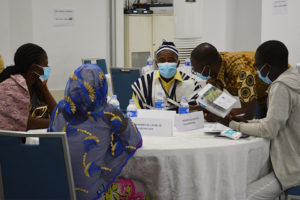
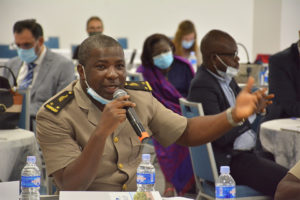
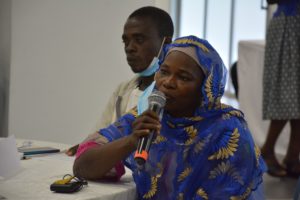
Les deux institutions ont tenu un évènement-clé pour clore le projet Participation à la Gestion du Foncier Rural (PAGEFOR) démarré en février 2019 et portant sur les dynamiques de conflits autour de ce processus, d’une part, et de celui de la délimitation des territoires de village (DTV), d’autre part. Le forum a attiré des décideurs politiques, dont la sénatrice chargée des questions relatives à l’environnement, Emilienne N’tamé Anikpo, des représentants des agences techniques chargées de la préservation, des organisations de la société civile et des acteurs internationaux. Cette réunion a permis de dresser le bilan du projet dont le premier objet était de contribuer à l’inclusivité, à la durabilité et à la bonne gouvernance des processus de préservation des aires protégées et des forêts classées tout en diminuant les tensions qui y étaient liées. Le projet s’est principalement déroulé dans quatre villages riverains de la forêt classée du Goin Débé (Cavally) et du parc national du Mont Péko (Guémon), à l’ouest de la Côte d’Ivoire. Dans ces zones, des conflits latents existent entre la population et les agents de l’Office ivoirien des parcs et réserves (OIPR) ou de la Société de développement des forêts (SODEFOR), qui affectent le vivre-ensemble et entravent la politique de préservation.

Parmi les progrès importants du projet, il convient de noter la création de cadres de collaboration qui ont permis de mener un dialogue structuré et régulier entre les représentants des communautés des villages de Paris-Léona (Cavally) et Bagohouo (Guémon), le chef de zone de l’OIPR ou de la SODEFOR et le sous-préfet. Ces formats ont favorisé un dialogue ouvert entre les parties prenantes afin d’instaurer la confiance et de trouver des solutions pour soulager les tensions.

« Avec l’expérience vécue avec Indigo, on a compris qu’il ne faut pas tout régler par la bagarre, qu’il faut s’asseoir avec les représentants de l’Etat pour débattre. Aujourd’hui, on arrive à s’entendre avec le sous-préfet, avec le chef du village. Le cadre de collaboration nous permet d’ouvrir le dialogue avec l’Etat pour trouver des solutions pour l’avenir de nos enfants. Au début, c’était pas pareil, on voyait l’OIPR comme l’ennemi numéro un.» - a commenté Nomane Yro , président du cadre de collaboration de Bagohouo.

Ces mécanismes ont participé à l’amélioration de la cohésion sociale dans ces localités en réduisant les tensions et les peurs entre les populations et les agents de l’OIPR et de la SODEFOR. Les citoyens ont désormais une meilleure compréhension du rôle des agents, de l’objectif de préservation et de ses moyens de mise en œuvre. Les agents communiquent mieux et plus régulièrement avec les populations et commencent à mettre en place des actions communes pour la préservation de l’environnement : « il faut mettre l’accent sur la collaboration avec les autochtones. Les tensions que nous avons pu baisser dans les localités, c’est avec le concours des populations » - a affirmé Desiré Tanoh , sous-préfet de Bagohouo.

« Indigo est venu pour mettre un cadre de collaboration en place pour travailler avec la SODEFOR. Ensemble, nous sommes allés à Ira [autre forêt classée] pour regarder comment la politique de reboisement avait été faite. Et nous avons compris. Paris Leona va reboiser la forêt classée du Goin Débé et l’Etat va venir voir» -  Jean-Baptiste Guei, Chef Adjoint du village de Paris-Léona.

Le forum national d’échange pour une mise en œuvre apaisée et efficace du processus de préservation des aires protégées et des forêts classées a présenté les résultats de la recherche menée par Interpeace et Indigo CI sur les défis et lancé une discussion sur les pistes de solution. Parmi les défis ont été identifiés les différences de compréhension du processus de préservation selon les parties prenantes ; les insuffisances de l’Etat dans l’application du processus ; la crise de confiance verticale entre populations et agents forestiers représentants l’Etat, née de ces mauvaises compréhensions et de cette insuffisance ; et la crise de confiance horizontale entre communautés, amplifiée par un sentiment de traitement inégal de la part des agents forestiers.

Photo credit: Interpeace

Plusieurs pistes d’action ont été discutées en plénière pour répondre à ces défis, dont  : la nécessité de générer une compréhension partagée entre populations, autorités et agents forestiers du cadre politico-légal entourant le préservation ; la création de formats de dialogue inclusifs et de collaboration entre parties prenantes ;  ou encore la promotion d’une cacaoculture écologiquement et socialement durable. A l’avenir, les résultats de cette rencontre permettront de poursuivre la réflexion sur la pertinence, la faisabilité et les moyens nécessaires à la réalisation des pistes d’actions discutées.  Afin de clore le second objet du projet sur le processus de délimitation des territoires de villages (DTV), Interpeace et Indigo Côte d’Ivoire organiseront un autre forum national qui aura lieu le 31 mars à Abidjan.

A Resilient Peace - Interpeace adopts a new strategy for the next 5 years

Interpeace has adopted a new strategy to advance peace in an increasingly volatile world.

The global health crisis that gripped the planet in 2020, and continues to do so in 2021, evidenced how Resilience, above all other attributes, can influence decisively a country’s ability to meet new and unforeseen challenges. As with a pandemic, so too with conflict.

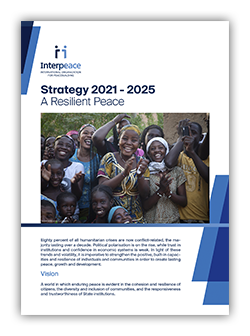
In our Strategy 2021-2025: A Resilient Peace, we are determined to impress upon the world the need to rethink peace – how it is built, measured and funded - to position Resilience-building as our collective responsibility, and to shun fleeting solutions in favor of systemic change that will sustain peace over time.

Our strength comes from our unity of purpose as One Interpeace: a team committed to achieving greater collaboration, diversity and inclusion across geographies, cultures, genders and races. Interpeace is a collective effort of our staff, Governing Board, Advisory Council, Strategic Partners at a global level and so many local partners in the countries where we work.

We hope you will join us on this journey and bring your own energy, creativity and dedication to our collective effort to build a more resilient peace.

Scott M. Weber
President

Read our Strategy 2021 - 2025: A Resilient Peace 

Celebrating our own women peacebuilders on International Women’s day

A world with a future that is equal for all, is a world free from stigma, stereotypes, and violence. It is a future that is sustainable and peaceful with equal rights and opportunities for all. However, this kind of world is still a distant dream for many women across the globe. Despite this reality, women from all over the world in different contexts and communities, stand up against these barriers by becoming leaders and by persevering in their careers.
This International Women’s Day, we celebrate the tremendous efforts by women and girls around the world in shaping a future of equality and a future of recovery from the COVID-19 pandemic. At Interpeace, we reflect on the journey of our own in shaping a future of equality and a peaceful society - real-life champions and role models in peacebuilding.
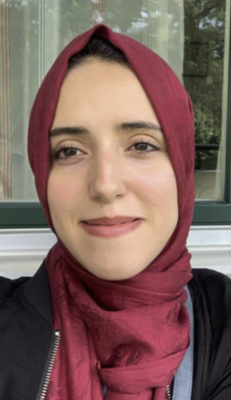
Roya Elmuntaser is operations officer of Interpeace’s Libya programme based in Tripoli. She is overseeing finance, human resources, logistics and legal aspects related to our work in Libya. Having grown up in a semi-traditional home in Tripoli’s suburbs, and academically ranked as one of the top students, she pursued a degree in economics and political science and then specialized in accounting at Tripoli University. She always dreamed of having a job, which would enable her to contribute to positive change in her own community. She is proud to be a part of Interpeace and contributing to a cause which is near and dear to her heart.

Roya Elmuntaser, Operations Officer, Libya Programme, Interpeace.

Her message to young women is to, “focus on the positives and don't overwhelm yourself with the negatives. It’s not always easy and simple to occupy a space but I assure you that you are much stronger and resilient than you think, so be kind to yourself”.
Renée Larivière is the Senior Director of Programmes at Interpeace, providing leadership to the organization’s peacebuilding work worldwide. Her experience in more than 30 countries includes a focus on people’s engagement with violence, conflict management and promoting conflict transformative approaches. She provides leadership and transforms the way peace is fostered, emphasizing that it is important to bring this lens for women and girls that are facing or emerging from conflict.
To her, peacebuilding  involves three fundamentals: The absence of structural violence, peace and security for all, and peace premised on the integration of gender perspectives. Finally, she also focuses on equal participation in peacebuilding processes.

Deputy Director-General, Interpeace

Renée Larivière, Senior Director for Programme Management, Interpeace.

“Women, including myself, find the courage to speak up in our everyday lives both professionally and personally. Yet, continued systemic and social barriers brand us as troublemakers, no matter the context where you work or live”. However, she notes that in speaking up we not only demonstrate courage, we also influence others to follow suit.
“Don’t be afraid to speak up. Stand up, be vocal. Find your voice!” says Renée.
“Peace cannot be built from outside; it has to be built from inside” reflects Abiosseh Davis, Global Monitoring, Evaluation and Learning Manager of Interpeace.
Abiosseh, born in Gambia, and raised in the US, was surrounded by many strong women in her childhood. She desired to make an impact in the world and also see the world around her after her studies. Her first exposure to development work, where she witnessed women being excluded, got her thinking, “this is not how development should be done”.
Her philosophy resonated with the mandate of Interpeace and the ethos of local ownership and facilitation, which does not take over the process. She has seen inclusion as a working reality as opposed to a conceptual ideology, and she is proud to be a part of an organization, which thrives to build more inclusive societies.

Abiosseh Davis, Global Monitoring, Evaluation and Learning Manager, Interpeace.

“I have always been a minority everywhere I have gone.  I am a minority in the place I was born, I was a minority in the places where I grew up and studied and I am a minority in the place I work currently. But this job gives me the opportunity to give voice to women like me in the process of building peace,” says Abiosseh.
Her message to young girls and women is very clear, “don’t let yourselves be placed in a box, constantly look for ways of creating the type of life you want to live. Create the kind of expectations you wish for yourselves and maintain a sense of openness and wonder. You never know what it would lead to”.
As the world celebrates “Women in leadership: Achieving an equal future in a COVID-19 world,” we at Interpeace muse over the acute need for a world where young girls and women can turn their dreams into reality, not a world that is imposed and restricted. Girls and women can change the world, and be who they have dreamed of becoming. The world needs more women at every table where decisions are being made. The world needs women in leadership to stand up and take action, and the girls in their communities and schools to take on leadership. The world needs you.