Strengthening the political elite of tomorrow – Working with students to create safer environments in Côte d’Ivoire’s universities

Since the 1990s, the universities in Côte d’Ivoire have been greatly impacted by violence, particularly during electoral periods. This has created conflicts and tensions, which have influenced the dynamics of young people attending different schools. A joint initiative by the United Nations Population Fund (UNFPA), United Nations Development Programme (UNDP) and Interpeace, in partnership with Indigo Côte d’Ivoire, aims to help prevent and better manage conflicts in the university environments through participatory mechanisms that would develop a model of positive leadership, which will ultimately influence social peace and governance.

The initiative is funded by the United Nations Peacebuilding Fund (UNPBF) and is being piloted in three universities in Abidjan: Félix Houphouët-Boigny University, Nangui Abrogoua University and Alassane Ouattara University.

To better understand the sources of conflict and the dynamics of violence in these university spaces, Interpeace and Indigo Côte d’Ivoire facilitated a Participatory Action Research (PAR) process in 2021 with 1,366 students, teachers, members of administrative and technical staff from these universities. The consultations and dialogue sessions highlighted the resilience factors that can be collectively used to prevent and mitigate conflicts. Furthermore, the conclusions and recommendations from this participatory research process were used as a basis for the development of an action plan per university, which entails peace initiatives and the creation of a framework for inclusive exchange and dialogue between all university members.

In the beginning of August, a three-day workshop took place, where teachers, students and staff of the three universities came together to create a specific "road map" for the implementation of these initiatives that will foster safer and healthier environments on university campuses and strengthen the political elite of tomorrow. By supporting and strengthening students’ capacities to improve the prevention and management of conflict, the initiative will also contribute to reducing the factors that allow political parties to mobilize students for the purpose of political violence during electoral periods.

One of the student representatives at Alassane Ouattara University highlighted that the project had enabled participants to “improve consideration for certain actors”, who had previously been viewed negatively by students. A participant from Nangui Abrogoua University reflected on the significance of the project stating, "We are using words more than muscles". On the issue of strengthening ties and improving communication between university stakeholders, a professor highlighted the necessity for “collaboration between groups [stakeholders] that, so far, have not been speaking to one another”.

Indigo Côte d’Ivoire highlighted that this workshop “marked the first coming together of different university members from all three universities to collaborate and work towards a common goal”. UNFPA’s representative underlined that “the workshop was a significant step towards building and strengthening peace and cohesion on campuses through jointly designed and led actions”. Overall, participants warmly welcomed this opportunity and expressed their hopes to see considerable change take root on their campuses in the near future.

In order to build on the results of this workshop, Interpeace and Indigo Côte d’Ivoire will share the universities’ “road map” and detailed action plans with Côte d’Ivoire’s Ministry for Higher Education and Scientific Research, and will strive to provide support at the highest level to ensure that these efforts help pave the way forward so that the universities’ can become a peaceful haven of research, innovation and excellence.

The African Union and Interpeace sign a Memorandum of Understanding (MoU) to strengthen peacebuilding efforts in Africa

Addis Ababa/Geneva, 2 September 2022. The African Union (AU) and Interpeace, an international organization for peacebuilding based in Geneva, signed a Memorandum of Understanding (MoU) confirming their mutual commitment to promote nationally-led peace processes to achieve sustainable peace, prevent violent conflict, and enhance resilient capacities for peace and development.

The signing ceremony took place on Friday, 2 September, at the African Union Headquarters in Addis Ababa. The MoU was signed by the Commissioner for Political Affairs, Peace and Security of the African Union, H.E. Amb. Bankole Adeoye and by the Vice -President of Interpeace, Simon Gimson.

Aligned with the AU’s priorities and strategies, the MoU aims to support more inclusive and participatory peacebuilding approaches that are gender and youth responsive, as well as to promote the opportunity and potential of societies as agents of positive change to achieve stronger social cohesion and sustainable growth and development.

Within the framework of their shared mandates to advance conflict prevention and resolution, the AU and Interpeace will support each other particularly through political dialogues, joint programmatic activities and joint policy and advocacy initiatives. Interpeace will provide technical support on conflict sensitivity and peace responsiveness and will help to sustain the AU in its conflict prevention capabilities to help member states mitigate the root causes of conflict.

Anchored in Interpeace’s Peace Responsive approach, this joint programming aims to increase member states’ capacities to implement bottom-up, community-centred peacebuilding infrastructure, as well as inform their development programmes to contribute to peace.

The AU and Interpeace will also work together to strengthen evidence-based programming to increase the effectiveness of the AU’s coordination with member states and regional bodies and the AU’s peacebuilding capacities. More concretely, the two will seek to carry out peace indexes and analyse findings to identify relevant programming approaches with a focus on mental health and psychosocial support as well as sustainable livelihoods.

This partnership reaffirms the direction taken by the AU through its African Peace and Security Architecture, the AU Master Roadmap on Practical Steps for Silencing Guns by 2020, the Structural Conflict Prevention Framework, the AU Transitional Justice Policy and AU Post-Conflict Reconstruction Policy as the bedrock of the African Union’s approach.

“We are delighted to formalise and deepen our engagement with the African Union through this MoU,” said Interpeace Vice -  President Simon Gimson. “The MoU affirms our joint commitment to increase AU member states’ capacity to foster more bottom-up, community-led approaches to peace.”  

Interpeace

Interpeace is an international organization for peacebuilding. With over 25 years of experience, it has implemented a broad range of peacebuilding programmes in Africa, the Middle East, Asia, Europe, and Latin America. Interpeace tailors its approach to each society and ensures that its work is locally designed and driven. Interpeace also assists the international community – especially the United Nations – to play a more effective role in peacebuilding, based on Interpeace’s expertise in field-based work at grassroots level. Interpeace is headquartered in Geneva, Switzerland, and has offices around the world. For more information, please visit our website: www.interpeace.org  

Press contact

Luvini Ranasinghe
Head of Communications

+41 79 475 64 95
ranasinghe@interpeace.org

Interpeace
Maison de la Paix
2E Chemin Eugène-Rigot
1202 Geneva, Switzerland

A blueprint for peace in an era of disruption and conflict

We are delighted to share our 2021 Annual Report titled, “A blueprint for peace in an era of disruption and conflict.”

With conflict being the single greatest barrier to achieving the Sustainable Development Goals by 2030, the traditional blueprints for achieving peace evidently require adaptation, and new approaches must be developed to address today’s challenges. Peacebuilders have an opportunity to act creatively and assertively to strengthen multilateralism, and to reinforce positive linkages between national leaders and the communities whom they represent and serve.

Our report illustrates examples of Interpeace’s focus in our current five-year Strategy on building trust, strengthening social cohesion and resilience, and promoting inclusive and participatory approaches. All are critical to preventing violence, managing conflict, and fostering sustainable peace and development. We highlight key achievements both within communities and at the highest levels of policymaking – from successfully brokering a truce between groups in Kenya’s North Rift region to driving efforts to create the first-ever financial asset class of peace bonds.

In 2021 alone, we worked on 805 locally designed and led initiatives that contributed to the transformation of 162 conflicts. We supported six security reform initiatives and launched two new country programmes – in Yemen and Ethiopia. Through the ‘Principles for Peace’ initiative, which was conceived and continues to be incubated and hosted at Interpeace, we supported the creation and adoption in the year ahead, of principles that will reshape how peace processes are designed, implemented, and monitored. We established seven partnerships for human rights and peacebuilding work; deepened institutional partnerships with WHO, UNFPA, ILO, FAO, and IOM to strengthen the peace outcomes of their own technical interventions; and brought together champions from across seven UN agencies to further operationalise the Sustaining Peace Agenda and the humanitarian-development-peace (HDP) nexus.

Despite exceptional challenges in 2021, including the continuing Covid-19 pandemic, which disrupted the lives of millions and many of Interpeace’s face-to-face activities, we have made tangible progress and will continue to make the adjustments required to operate in a post-Covid-19 world.

We hope you enjoy reading our report. It is a taste of the great work recently undertaken by the Interpeace team with thanks to all those who support us; an insight into the way in which we are committed to changing positively the lives and communities worldwide of those whom we serve as peacebuilders; and a pointer to the challenges and work that we see ahead.


Mobile mental health clinic: promoting mental health resilience and social cohesion in Rwanda

Justin Mambo (this is a pseudo), 46, is a retired military officer and a father of four. He resides in Bugesera District, in the Eastern Province of Rwanda. He recognises having mental health issues, including chronic headaches, anger issues and depression stemming from his military career.

“I sometimes wake up with too much anger and rage. In some cases, I emotionally and physically harm my family members unwillingly because of my mental health problems,” said Mambo, adding that he has difficulty in getting along with his neighbors due to his illness.

Mambo is one of many Rwandans who continue to face very high levels of trauma and other psycho-social problems. The recent Rwanda Mental Health Survey (RMHS) conducted in 2018 revealed that the prevalence of several mental disorders is higher than the global average and is particularly elevated among the survivors of the 1994 genocide against the Tutsi. Roughly 25% of Rwandan citizens struggle with posttraumatic stress disorder (PTSD), and one in six people suffer from depression.

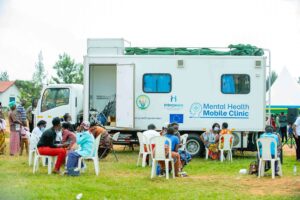
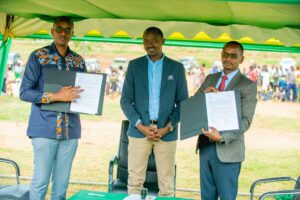
On 18 May 2022, Interpeace and the Government of Rwanda launched a Mental Health Mobile Clinic to support national efforts to strengthen a decentralised mental health system.

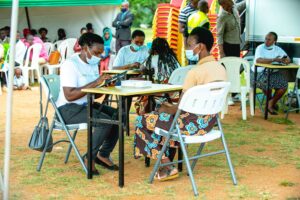
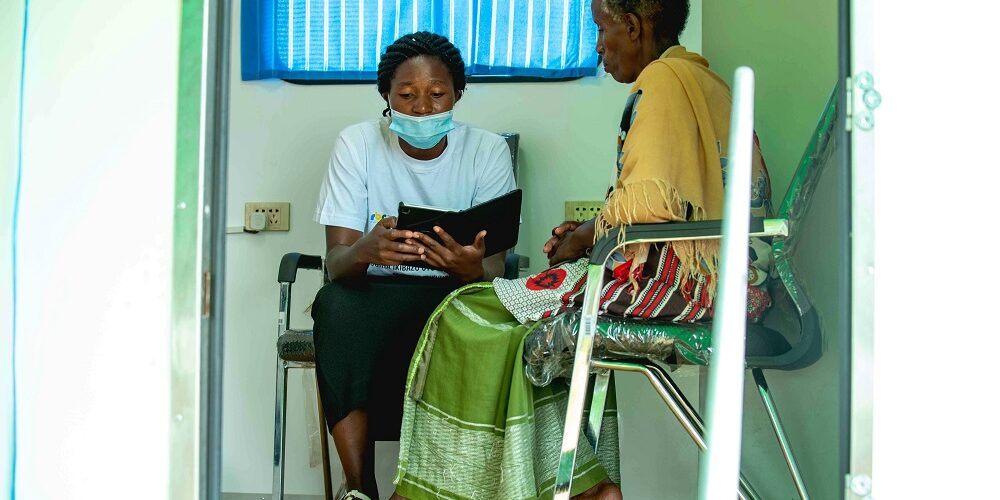
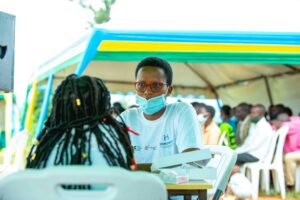
A customized and well-equipped clinic was handed over to ADEPR -Nyamata District Hospital and will be used across the Bugesera district to conduct regular screenings of individuals or groups in communities, health centers or public places such as markets and do referrals of special cases to Bugesera Referral Hospital. It will also help mental health professionals provide home-based care to patients.

“We have been facing two serious challenges. Not only is Bugesera Hospital located far from our home, but we also lack financial means to take my sister to a psychologist. Now that we have a mental health mobile clinic in Bugesera, it has renewed my hope that she will receive adequate treatment, “said Jeanne Uwayezu(this is a pseudo), a resident of Bugesera District whose sister has been struggling with mental health problems.

The RMHS indicates that the level of awareness toward mental health services offered stands at 61.7%, versus a 5.3% utilisation rate. The clinic will also be used to carry out mental health awareness campaigns across Bugesera District.

The launch of the clinic is in line with Interpeace’s programme entitled: ‘’Reinforcing community capacity for social cohesion and reconciliation through Societal Trauma Healing’’ in Bugesera District.  Funded by the European Union (EU), the programme offers a holistic approach to simultaneously address mental health issues while promoting social cohesion and fostering sustainable livelihoods in this district.

With the support from Swedish International Development Cooperation Agency (Sida), the programme has been expanded to five more districts in Rwanda, namely: Nyamagabe, Musanze, Nyabihu, Ngoma and Nyagatare. This clinic responds to the needs expressed by communities in Bugesera during the regular monitoring and evaluation process of the programme in the district.

“We have learned that mental health is an important aspect of social cohesion and reconciliation— trauma healing is an essential element in preparing communities to get together.  We are happy that with this mobile clinic, it will be much easier for mental health professionals to reach the communities and do their work in a very professional manner,” said Ben Napnau, the Deputy Head of Mission of the European Union Delegation to Rwanda who added “This is one of our flagship projects that has proven to be highly relevant and effective. It is a model in a sense that we work with Interpeace, as an international organization but at the same time we build partnership with Rwandan organizations to be closer to communities. This is an essential element of a good cooperation.”

Dr Theodorus Hollander, Interpeace’s Senior Regional Representative for the East and Central Africa, highlighted the intrinsic link between peace and mental health. “Peace is not only about absence of violence, but peace is also about a sense of inner peace, it’s about mental resilience, it’s about the capacity of communities to interact with one other and the capacity to reconcile,” he said.

Hollander also appreciated how local authorities and the EU contributed to an initiative that strengthens long-term mental health resilience in the country.

The mental health mobile clinic is an innovative and unique solution that will support the implementation of the 2020-2024 National Mental Health Strategic Plan and contribute to the achievement of the National Strategy for Transformation (NST1) and Rwanda’s Development Vision 2050, which considers good health and well-being of the population as a national priority.

“After the 1994 Genocide against the Tutsi, we made one choice. The choice to live together as Rwandans and to reconcile. Interpeace’s trauma healing programme is helping us to strengthen that choice. We really appreciate this mobile clinic as it will help to strengthen mental health resilience as well as foster reconciliation process and socio-economic status of communities in Bugesera,” noted Commissioner General Emmanuel Gasana, the Governor of Eastern Province, and Guest of Honor at the launch of the mobile clinic.

The vehicle is equipped with a fixed workstation for at least one Doctor and one Nurse (seats and fixed tables), two fixed passenger seats, Wi-Fi internet connection, one foldable bed for use in emergencies (as an ambulance), two large waterproof tent extensions attached to the body of the vehicle, built-in silent generator for lighting and heating in case of power outage, solar panels for power backup in case it is operating in areas without access to power, as well as a built-in washroom.

Governor CG Gasana encouraged Bugesera District authorities, the management of ADEPR-Nyamata Hospital and the community members to ensure proper management and effective use of this mobile clinic.

Interpeace welcomes Ambassador Méndez Escobar of Mexico to its Advisory Council

We are honoured to welcome Ambassador Francisca Elizabeth Méndez Escobar, Permanent Representative of Mexico to the United Nations Office at Geneva, to our Advisory Council. Ambassador Méndez Escobar was officially welcomed at the Advisory Council meeting held on Tuesday, 10 May 2022, during which Council members discussed how lessons learned from other conflict-affected contexts can be of relevance to the crisis in Ukraine.

Selected governmental and intergovernmental representatives from Europe, Asia, the Middle East, North America and Latin America are part of Interpeace’s Advisory Council. Ambassador Méndez Escobar fills the seat of the Government of Mexico, which had remained vacant after the departure of previous Ambassador María del Socorro Flores Liera.

Interpeace is grateful to Ambassador Flores Liera for her valuable contributions during her tenure and is delighted that the Government of Mexico is continuing its membership in the Advisory Council.

Ambassador Francisca Elizabeth Méndez Escobar is the Permanent Representative of Mexico to the United Nations Office at Geneva. She brings with her   a wealth of experience in diplomacy and international affairs. She joined the Mexican Foreign Service in 1991. Ms. Méndez’s previous assignments include postings in the United Arab Emirates, Belgium, Romania, Costa Rica, Spain, and Italy. She has been Director General for American Regional Organizations, and Mexico's National Coordinator for the Pacific Alliance, the Ibero-American Summit and the Community of Latin American and Caribbean States.

About the Interpeace’s Advisory Council

The Advisory Council is a high-level statutory body that provides the organization with key strategic advice and guidance on peacebuilding policy and practice. It has played a crucial role in helping Interpeace strengthen its positioning on key international policy agendas as well as our transformative work of assisting humanitarian and development agencies to become more conflict sensitive and peace responsive.

Creating epicentres for peace in the North Rift Region in Kenya

“We are in great pain, having lost our children and our property. We are living in shadows and going around in shadows. If you go to other places now, people are farming, have you seen any farm here? All of these are farms, but lack of peace has restricted us from doing any of that, we sit here staring at each other.” -Resident in Kapedo

Despite numerous mediation efforts, peace has remained elusive in the Kerio and Suguta valley of North Rift region, likely due to the noninvolvement of the communities in the identification of conflict sources, community resilience factors, as well as in the development and implementation of solutions.

It is against this background that Interpeace and the National Cohesion and Integration Commission (NCIC) began the implementation of the programme Strengthening Community Resilience for Sustainable Peace in Selected Fragile Counties in Devolved Kenya.

The programme adapted the participatory action research (PAR) methodology, and has since 2019 helped communities turn conflict-prone zones into epicentres of peace by engaging communities in formulating strategies on how they can be empowered in developing and implementing solutions on how to resolve conflict.

Creating spaces for peace along the Kapedo-Lomelo corridor

The valley of Suguta, known as the ‘valley of death’, had become synonymous with violence, grieving, and loss caused by cattle raids, pillage, or massacres. As violence spiralled between the Turkana and Pokot communities, local police recorded an average of six deaths and three livestock raids every month prior to 2021. Villages along the Chemolingot- Lokori corridor have become synonymous with bloody conflict, grieving, and loss. Escalatory cycles of violence have drawn extended ethic affinity networks into the fray, embedding animosities and fear, as the Pokot and Turkana clans have become locked in a battle for survival against each other.

In this area young pastoralists openly carried AK-47s as they herded flocks of camels, cows, and goats. These conditions rapidly created social and economic paralysis. Roads were closed, schools, businesses, and markets shuttered as a precaution and from panic.

Historically the communities in the Kapedo-Lomelo route along the Chemolingot- Lokori corridor have been strong enemies and even meeting each other was a tall order. Commerce was effectively disabled, and informal territorial no-go zones emerged.

Interpeace and its partner NCIC held multiple community dialogues to understand the challenges and grievances of both clans, as well as the exploring the benefits to erring on the side of peace. In the community dialogues, conflict parties arrived at a consensus not only in the urgent need to achieve peace, but also to agree on concrete solutions on how to sustain it.

In July 2021, Pokot and Turkana elders signed the Orwa Peace Accord, putting an end to decades of cyclical conflict and deadly violence. Before Orwa, many peace agreements signed in the North Rift had broken down, because they were not implemented or could not be transferred from the negotiating ‘table’ to the ‘town-square’. The accord put an end to decades of cyclical conflict and deadly violence, was possible due to the willingness and commitment of communities to share a new future together.

Most importantly, the 2021 Accord, designed by both clans, continues to affirm that sustainable peace is the responsibility – led and protected – by the communities.

Ceasefire monitoring committees: Ensuring self-sustaining shifts towards peace

The Tugen communities of Baringo east as well as the Ilchamus and Pokot communities in Mukutani have been tied in conflict for decades. The warring communities were not interacting with each other, creating a vacuum of fear and suspicion among them, which further exacerbated the tensions between the communities.

Since 2020, Interpeace and NCIC have been bringing the elders together to discuss on conflict as well as insecurity facing them. These engagements instilled reason in their minds thus accepting to meeting their counterparts for peaceful discussions. The partner organizations have also been engaging respective community elders on rigorous discsussions around having inter-community peace talks.

In March 2020 members of the Pokot, Tugen, Ilchamus, Turkana and Samburu communities participated in formation of community lead peace infrastructure- Ceasefire Monitoring Committees (CMCs) that spearheaded the ceasefire across the North Rift region.

CMCs create the conditions to transform conflict. They seek to identify and mitigate the key triggers of fear and mistrust that create inter-community hostility. In addition, members of the CMCs work with communities to ensure that local militias keep away guns, ensure that displaced persons return home, initiate and facilitate dialogue, and enhance social cohesion. The CMCs work to restore trust, nurture a culture of peace and reconciliation, and address structural issues that often trigger conflict in the communities.

When a conflict incident or crime occurs, members of the CMC from both clans show up on the spot, to interact with affected villagers, who can engage in their own language with an elder they trust. This inter-clan collaboration reduces fear, particularly when opposing clan members are involved in a skirmish or suspect one another of a crime. CMCs offer multi-dimensional roles and reach, like “a new sheriff in town”.

“For 85 years I have run across the Suguta Valley organising raids or recovering my raided livestock, but the last two years of my involvement in peace have shown me a life beyond this valley. I have travelled to Nakuru, Nairobi, and Mandera, learning how to live with other people. My two years of peace are worth much more than my 85 years of living in conflict,” said an member of the CMC.

Interpeace would like to thank the Government of Germany and the United Kingdom, the European Union in Kenya, and the Swiss Embassy in Kenya for their support in creating spaces for peace in the North Rift region in Kenya. Interpeace is also grateful to its local partners, NCIC, the North Rift Counties of Baringo, Elgeyo-Marakwet, West Pokot, Turkana and Samburu, as well as the Frontier Counties Development Council(FCDC) for their crucial contributions to these community-led peace efforts.