Why We Need to “Rethink Stability” – Challenges & Recommendations

“Stabilisation” has become a major part of the international toolbox in conflict affected areas. Despite their stated purpose of reducing violence and laying the structural foundations for longer-term security, these efforts have too often not only failed, but on occasion made conflict worse.

In response, Interpeace in partnership with Atlantic Council, led a two-year initiative called Rethinking Stability with the support of the Bundesakademie für Sicherheitspolitik (BAKS) and the financial support of the Governments of Germany, Netherlands, Sweden and Switzerland. Through five dialogues on three continents, in-depth research, and discussions with over 1000 policymakers, academics, practitioners, and citizens experiencing stabilisation initiatives, the project aimed to revisit and question the conceptual and operational norms behind stabilisation efforts and improve the prospect of future work contributing to lasting peace.

The initiative culminated in two reports: the first, Challenges to the Stabilisation Landscape: The case for Rethinking Stability, describes the specific challenges that have hindered stabilisation efforts; and the second Recommendations paper, suggests operational ways to address them.
Key challenges & Lessons Learned

The experiences of twenty years of stabilisation interventions in Iraq, Mali, DRC, Afghanistan, Libya and elsewhere will significantly shape future efforts. To meaningfully rethink, redo and improve the ways in which stabilisation activities are conducted, it is critical to draw the correct lessons from these experiences.

At present, ambiguity around what ‘stabilisation’ is and how it is done has led to competing priorities among security, humanitarian, development, and peacebuilding actors. This has made it difficult to develop a clear strategic vision of success around which actors can orientate their different strands of work, resulting in poorer peace outcomes for conflict affected populations.

Compounding this definitional and strategic ambiguity has limited conflict analysis. Working from incomplete conflict analyses has seen stabilisation efforts stall, or else operate in conflict insensitive ways. As such, efforts have listed and lingered, with little success in transforming the social and political drivers of conflict that would permit a safe exit strategy.

Moreover, people affected by conflict have rarely been given sufficient opportunities to design the stabilisation activities that shape their lives. In pursuit of ‘returning the state,’ stabilisation efforts tend to get stuck at the elite level in capital cities, hindering a much more inclusive process that impedes broader national input, ownership and support. This continues despite clear evidence that overly focusing on the central government, securitising one set of elites, and turning national capitals into fortresses, is no recipe for stability. Exploitative elites, corrupt bureaucracies, and captured or poorly functioning institutions have all been propped up in the interests of immediate stability, only to emerge later as significant obstacles to reform and new sources of popular grievance. This version of ‘stability’ can only be sustained by continued international military support, and is far removed from the inclusive, self-sustaining stability that people living in conflict affected areas require.

Indeed, securitised responses alone are unfit to meet what are really political, social, and economic drivers of instability. These need to be addressed through multi-disciplinary and integrated approaches able to complement each other. This has serious implications for staff recruitment, retention, and incentivisation, not to mention where funding is directed and to what end.

Learning and adaptation is difficult in unstable areas. Movement can be limited as can access to reliable data, whilst contexts can change quickly. However, resources must be apportioned to make evaluation and learning a critical component of every stabilisation programme despite these challenges. Otherwise it is verging on impossible to know whether progress is being made and where to adapt and improve. Beyond resources and capacity, the culture of stabilisation may need to shift. Stabilisation is very difficult work with setbacks highly likely. However, there is evidence that on occasion there has been pressure for staff to demonstrate success when, in fact, efforts have not been going to plan at all. All actors will need to arrest this trend and foster a culture of honesty, reflection and support. Only then can failures become learning moments rather than missed opportunities to improve.

The first paper dives deeper into these and other challenges and begins to show how more inclusive political strategies, principled approaches and realistic timelines may generate better stabilisation outcomes for people.

Actionable Recommendations

For those working on stabilisation who will have to grapple with these issues in the near future, the answers cannot be framed around the same logic of securitisation that has defined the past. Instead, the challenge will be to describe, with much more clarity, how stabilisation activities will contribute to the development of genuinely inclusive political processes able to improve governance, and construct systems, networks and institutions necessary to recognise and respond to the real grievances behind people’s instability.

To that end, and although stabilisation is understood in different ways, actors appear to agree on three central tenets around which more integrated and principled work could be designed:

  1.  Stabilisation activities should improve the stability and peace of communities in active armed conflicts.
  2. It is fundamentally a political process and cannot be attained by security arrangements alone.
  3. It should be temporary and transitional, designed to achieve the peace conditions required for legitimate stability, so that international actors can move away from security and other functions that should be the preserve of host governments.

Peace conditions are changes that conflict affected populations themselves deem necessary for durable peace and stability. Introducing it marks an important reframing of what achieving genuine stability entails. Peace conditions are put in the center of the recommendations paper, which refocuses stabilisation work on collectively understanding and responding to the political and social drivers of instability in each context. The paper makes 30 recommendations, divided across Strategic Planning, Operations, and Learning & Adaptation. Three key recommendations include:

  1. Ensure stabilisation efforts are locally and nationally owned by defining peace conditions jointly with key stakeholders. These can offer a strategic framework to guide action and measure progress, and a shared agenda for the humanitarian-development-peace nexus, promoting the right action by the right actor at the right moment.
  2. Plan exits and encourage inclusive political transitions from the start. Plans will change over time, but decisions on when and how to exit and transition should not be tied to temporal deadlines or international political whims, but based on progress towards the achievement of peace conditions indicating it is safe to do so.
  3. Design theories of change that are rooted in political economy analysis and describe how activities will solve the real problems driving instability. Theories should not privilege state authority discourses, but improve trust, resilience, and the social contracts at the core of positive peace. This approach is likely to require more support for hybrid governance solutions, and a stronger focus on resilience and prevention.

Realising peace conditions will certainly require smarter policies, practices, and resources used, and some of the recommendations address this. However, as a field, the larger challenge will be to change our stabilisation habits and processes that have brought us to where we are. Some may find this aspiration, and perhaps the very notion of peace conditions, naïve. Yet, as current stabilisation efforts stall, any serious effort of Rethinking Stability obliges us to decide what we need to improve both as individuals and institutions to make sure that future efforts are a wholesale improvement on how we currently operate. We hope these recommendations can support that process of introspection and change, and refocus future efforts on what has too often been a secondary consideration: achieving inclusive and sustainable peace for people living in conflict affected environments.

Students in the Drc Meet With Officials and Community Leaders to Discuss Ways to Solve the Crisis in Ituri

The youth have a role to play in achieving lasting peace in the province of Ituri, in the Democratic Republic of Congo (DRC). To strengthen collaboration with the authorities, students met with Bunia leaders and an advisor to the governor on 27 January 2023 at a public forum hosted at the University of Bunia. At the invitation of the consortium comprised of Interpeace, Action for Peace and Concord (APC), the Pole Institute, and the Center for International Cooperation at New York University, peace issues and challenges for youth involvement were put on the table in a no-holds-barred discussion.

Students were encouraged to openly share their views in order to appropriately explore conflict concerns. In response to issues discussed, Irene Vahweka, the governor's advisor for youth issues, explained  how including the youth in discussion pertaining to the country’s current volatile situation could be a chance to bring peace to the region. For her, the issue of resilience and peace in Ituri primarily involves the involvement of the youth.

According to Ms. Vahweka, the current approach of the provincial governor, in collaboration with other key stakeholders, to establish frameworks for inter- and intra-community dialogue should facilitate peacebuilding by providing a platform for constructive discussions. By fostering open dialogue between and within communities, the governor's initiative is likely to prove invaluable in preventing the escalation of tensions.

"You must not cross your arms; you must sensitise other young people to the volatility being experienced and let them be involved in peacebuilding dialogues because its success will allow the development of Ituri," she said.

This public meeting allowed several young people to express themselves freely before the authorities. For Daniel Ambunga, this format must be repeated regularly to encourage young people to denounce what is not working in the region.

"This province is still young. It has four major ethnic groups. With conflicts, we won't get anywhere. Back home, people are being killed every day. Spaces like this allow us to present the situation of our environment, where rebels circulate freely. We, the youth, are capable and our contribution is to be able to express ourselves through such meetings," says this student.

The public forum offered a platform for several young people to express themselves freely before their community leaders and authorities. Daniel Ambunga, a student at the university, believes that this dialogue forum should be perennial to encourage young people to speak out about the issues affecting the region and have their voices heard.

“This province is still relatively young, with four major ethnic groups. Without resolving conflicts, we will not be able to move forward. Back home, people are being killed every day. Spaces like this allow us to present the situation of our environment, where rebels circulate freely. We, the youth, are capable and our contribution is to be able to express ourselves through such meetings,” the student declared.

Like him, Emérence, a student at the same university, expressed her satisfaction with the answers given to her various questions related to community disarmament, demobilisation and reintegration process (CDRP) and its level of progress. However, she called for decisive action in dealing with conflict-related issues.

Among the participants was the president of the Provincial Youth Council, Gentil Kaniki, who asked the authorities to always involve young people in the peace process and welcomed the establishment of open platforms for discussion.

"It is a means that allows young people to present the real problem and challenges in order to propose solutions in complicity with the various stakeholders," he explains. He stated that in order to strengthen the connection between the youth and the authorities, such initiatives should be extended to the province's interior.

This forum for public dialogue is part of the programme, funded by the European Union, to support mediation for resilience and peace in Ituri and Greater North Kivu.

Facilitating Intra- And Inter-Community Dialogue in Mandera to Cease Hostilities

Mandera County, located in the Mandera Triangle, is home to the Garre, Degodia, Murulle, and Corner tribes, and shares an international border with Ethiopia to the north and Somalia to the east. This region is home to a complex cultural-political framework among the various ethnic Somali clans living across the borders of the three host countries. In December of 2022, inter-clan clashes erupted in Mandera County, resulting in 10 deaths and numerous injuries. The violence was a stark reminder of the fragility of peace in the region. On 20 December 2022, a man from the Garre tribe was tragically killed in Malkawila, Ethiopia, sparking a series of retaliatory attacks by his community on a Degodia village near Chiroqo in Kenya.

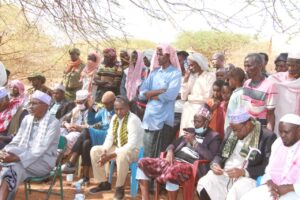
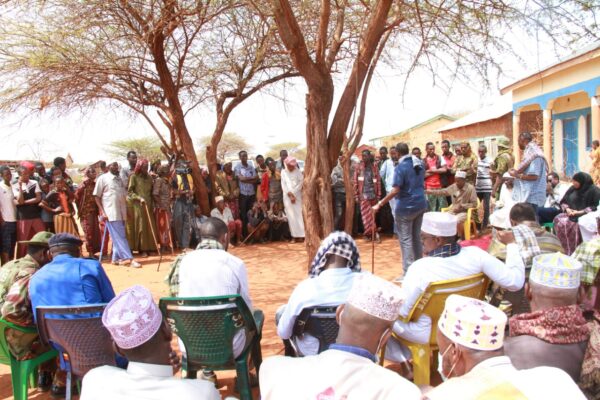
In response to the clashes, Interpeace, in coordination with officials from the Mandera county government and with the support of the Federal Foreign Office of Germany, held intercommunity peace dialogues with the Garre and Degodia communities. These meetings were divided into preliminary intra- and inter-communal gatherings for a ceasefire and a joint peace caravan for community sensitization, aimed at achieving a cessation of hostilities and restoring normalcy.

Ceasefire talks between the Garre and Degodia

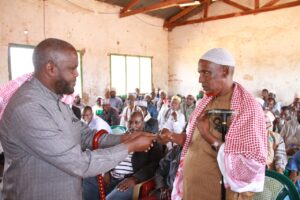
On 21 December 2022, 180 members of the Garre community gathered with the county governor, Mohamed Adan Khalif, Banisa MP, Kulow Maalim Hassan, and other Garre political leaders to discuss the recent skirmishes. The community then held an internal self-reflection meeting on 22-23 December 2022 to plan for the restitution of the murdered Degodia community members and the one Garre killed on the Kenyan side.

Traditionally, if a member of one clan kills a member of another clan, the victim's clan avenges the death by taking action against the killer clan. In 2019, Interpeace negotiated the Banisa Peace Accord, which stipulated that the offenders' group would pay compensation (dia) to the group of the deceased as a reparation in lieu of the offender's life. However, speaking on the implementation of restitution, Hon. Rtd. Major Bashir Abdullah, the Member of Parliament for Mandera North, noted that money settlement has proven to be ineffective. Despite the increase in compensation from KES 1M to KES 4.5M, the killings have not ceased, leaving many to pursue other forms of restitution.

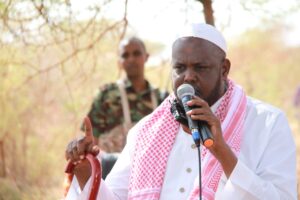
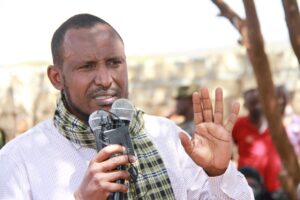
“We urge you, our people, to identify the perpetrators of these crimes and bring them to justice. If you hear I was killed by the Garre do not revenge for me, arrest the criminals,” said the Hon. Bashir.

Following extensive consultations, the village elders agreed to immediately cease hostilities and killings in reprisal for the Degodia in Kenya and on the other side of the border, as directed by the local leaders. After much deliberation, the Garre community decided to pursue a restitution plan that would provide justice for the victims and their families, while also preventing further violence.

Joint peace caravan for community sensitization

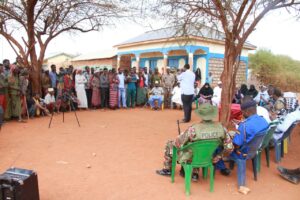
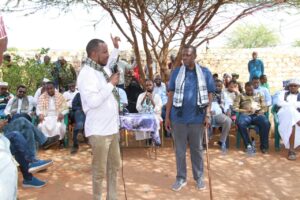
Political leaders from the county and neighbouring Wajir County, community elders, members of the Ceasefire Monitoring Committee (CMC), and the peacebuilding team recently convened in Guba, Chiroqo, and Malkamari for a peace rally to express their condolences to the Degodia community and to encourage them to commit to peace and refrain from taking revenge for the clan members killed.

The leaders used the rally to emphasise the importance of upholding peace and avoiding retaliation, imploring the Degodia in Guba to ensure that no further incidents occurred and that an immediate ceasefire was established. They also reminded the community of the consequences of retaliatory violence and the importance of resolving conflicts peacefully.

"It is forbidden to kill an innocent soul. The Quran forbids it, and anyone who does it—whether in retribution or for any other reason—will spend eternity in hell fire. According to our religion, and based on appearances, even as your leaders, the crimes done by our people would definitely condemn us to damnation. It is terribly unfortunate that you are leading us astray," stated Kullow Maalim Hassan, MP, Banisa.

The Peace Caravan then visited Chiroqo and reiterated the same message of preserving the ceasefire and refraining from retaliatory actions. However, the locals expressed their concern that they had been consistently affected by the Garre-Degodia dispute. In response, inter- and intra-communal engagements were supported by political goodwill and stakeholders from both the Garre and Degodia communities, culminating in a series of peace rallies in Banisa Town, Guba, Choroqo, and Malka Mari. This ultimately resulted in an agreement for an immediate cessation of hostilities and a return to peace and stability.

Forging ahead

Inter-communal divisions and conflicts in Dawa and Liban zone in Ethiopia whose retaliation happens in Kenya remains a major obstacle to peacebuilding efforts. It is essential that all stakeholders collaborate to ensure lasting peace. Interpeace recommends that continued focus be placed on resolving inter-Garre and Degodia conflicts for the greater good of Mandera County; that broader cross-border engagements be initiated to reach a lasting resolution to cross-border and internal conflicts; and that county ceasefire monitoring committees (CMCs) be trained to equip them with the necessary skills and resources for early warning and response systems to avert violent conflicts.

Building Blocks for the Formation of a National Independent Advisory Group for Successful Police Reform in Ethiopia

Transforming the police service is the ultimate goal of the Ethiopian Police Doctrine. Established under the Ministry of Peace, the doctrine is founded on the principles of democratization, demilitarisation, decentralisation, and depoliticisation. Through the four pillars, the doctrine aims to establish service-oriented police institutions where police officers are devoted to upholding the public’s trust and protecting the rights enshrined in the constitution.

For successful implementation of community policing programmes across the country, the police doctrine noted that creating Independent Advisory Groups (IAGs) at various levels was vital. Accordingly, all regional states, except Tigray and the Southwest, established IAGs ranging from Ketena to region-level. However, the formation of a national IAG has been slow to materialize due to various challenges encountered in bringing together all stakeholders.

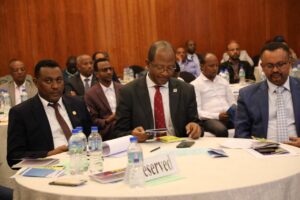
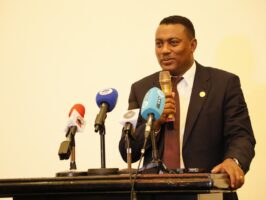
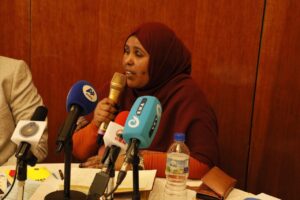
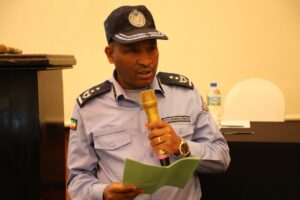
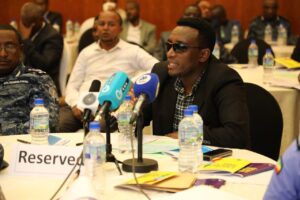
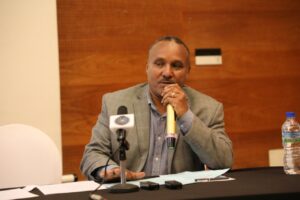
In order to facilitate the establishment of the national IAG as part of the trustbuilding project between the police and communities in Ethiopia, supported by the Kingdom of the Netherlands, Interpeace held a joint workshop with the Justice for All-Prison Fellowship in Ethiopia. This workshop brought together the Speaker of the House of People’s Representatives of the Federal Democratic Republic of Ethiopia, federal and regional police commissioners, IAG members at regional levels, and religious and community leaders. The workshop provided a platform for sharing learnings and empirical evidence, shedding light on the performance, opportunities, and challenges IAGs face at different levels.

In the past, Ethiopia’s regional and federal security architecture was marred by political interference. Despite the country’s constitution protecting the police from any form of political intrusions, police departments were organised in a way that allowed interference from the political elite. However, following major political changes in the country through the police doctrine programme, the government pledged to reform the security sector, including the police. More specifically, the doctrine explicitly outlined the indispensable role of IAGs in freeing the police from political interference. Furthermore, the IAG structure is also mandated to promote the active engagement of citizens in implementing community policing programmes at various levels.

Sharing knowledge of a similar IAG programme currently underway in the Somali Regional State, Ahmed Sultan, a religious leader and member of the IAG, noted that the lack of sufficient funding and support for a national IAG hinders the promotion of interregional cooperation across regional borders. He strongly believes that the establishment of a national IAG will help regional IAGs become more effective.

"The IAG structure is playing a critical role in encouraging citizens' active participation in ensuring regional peace and stability. As you all know, the Somali region is vulnerable to various internal and external security threats, and hence it is impossible for the police to handle all these threats. As a result, the IAG structure is collaborating closely with the police and other structures such as the Neighbourhood Watch Program (NWP) to promote peace in the region," Sultan emphasised.

IAGs are known to provide the valuable role of "critical friend" to the police service as a forum where independent advisors come together to look for solutions for common problems within the community. Amid political interference from the political elite, and hence mistrust by the public, police reforms through the IAGs could best provide the much-needed trust between communities and the police. The establishment of IAG at the national level is likely to have a positive outcome by facilitating communication among police departments across the country.

The workshop ended with the establishment and appointment of representatives to the IAG at the national level, a move that Interpeace will continue to support in a bid to democratise the police service in Ethiopia.

*Names have been changed to protect the subjects' identities. 


Strengthening the Role of Women and Youth in Security Governance in Burkina Faso

Long cited as a model of stability and social cohesion in a region facing multiple crises and violence, Burkina Faso is now facing increasingly frequent, violent and deadly armed attacks, as well as a resurgence in the number of violent intra- and inter-community conflicts.

Through an innovative approach to involve customary and religious leaders in the dissemination of peace messages, Interpeace organised caravans in 12 communes in Burkina Faso to sensitise populations on their involvement in security governance, with a particular focus on promoting the integration of women and youth in security management.

The deterioration of the security situation requires the involvement of the entire community, in particular women, who represent 51.7% of the population, and young people under the age of 15, who represent 45.3% of the population. This segment of the population suffers the worst forms of violence due to the security crisis—women become survivors of gender-based violence and young people, due to the lack of employment opportunities and frustration, tend to be recruited by organised armed groups.

Recent Interpeace research has shown the low involvement of women and youth in local security governance. Yet the participation of youth and women in Burkina Faso is a key factor in improving governance, particularly security governance in the country. The participation of youth and women is essential in strengthening local and national resilience and social cohesion.

The caravans Interpeace organised included educational talks by trained youth in forums discussing the integration of women and youth in peacebuilding, radio programmes promoting social cohesion, conflict prevention and management, and debates on the Interpeace analysis report on the security sector in the country.

Religious tradition and practice begin early in the family and continues throughout an individual's life. Religious and traditional leaders are among the most influential and respected people in society, and their involvement and ownership in peacebuilding remains central to conflict prevention and transformation.

As for the youth, they have a great role to play in national reconciliation and social cohesion. This requires that each young person demonstrate responsibility and civic engagement which strengthen their capacities on conflict transformation, non-violent communication and the responsible use of social networks.

"Women and young people are the most numerous, and if we involve them in the fight against terrorism and insecurity, we will be able to fight insecurity effectively. Women are important, young people are important," said the High Commissioner of the Séno province.

Noumpoua Tankoano from Fada N'Gourma underlined the importance of the educational talks, especially for internally displaced people like herself who have fled their localities because of the violence.

"Many of the women among us have lost their husbands, other men have abandoned their wives in the hope of surviving. Women are left as widows, with a large number of children to raise. The adversity in which they live is likely to influence them and lead them into unhealthy behaviour," she said.

"This talk we had on the theme of supporting women in terrorist actions, and resolutions to deter them was necessary and gave us the confidence to contribute to the promotion of peace in our communities.”

These caravans are part of Interpeace's initiative to improve conflict prevention and security governance in the Boucle du Mouhoun, Centre-North, East and Sahel regions. Interpeace would like to thank the Government of Canada, through the Stabilization and Peace Operations Program of Global Affairs Canada, for its financial support.

Empowering Prisoners With Hands-on Skills for Rehabilitation and Social Reintegration

Adequate prisoner rehabilitation and reintegration is key to maintaining peace and cohesion within and across families and communities in Rwanda, given its tragic past of the 1994 Genocide against the Tutsi.

Prisoner rehabilitation that takes into consideration the social and emotional well-being of prisoners, especially those convicted for crimes related to the genocide, and ensures they can acquire hands-on skills will contribute to their effective reintegration, reduce recidivism, and foster social cohesion among Rwandans. It is particularly important now because, 28 years after the genocide, a significant proportion of genocide perpetrators have completed their sentences and returned to their communities.

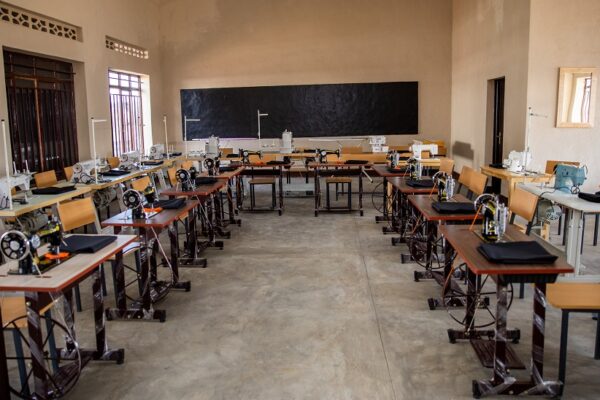
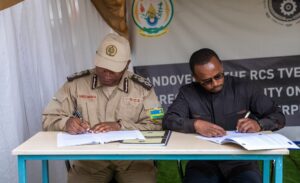
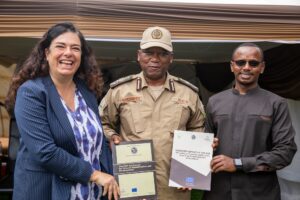
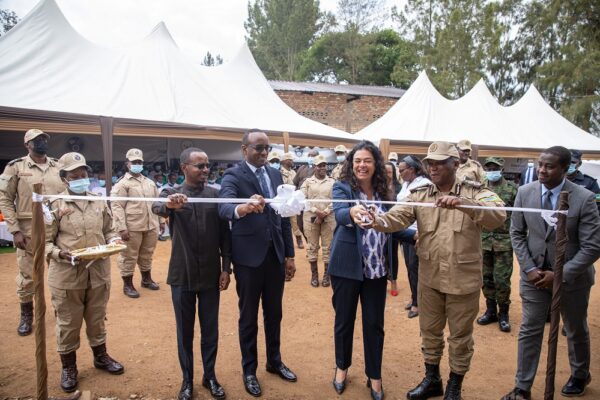
On November 10, 2022, Interpeace handed over to the Rwanda Correctional Service (RCS) a Technical and Vocational Education and Training (TVET) training facility and equipment constructed in Bugesera Prison, Eastern Rwanda, as part of its support to prisoner rehabilitation and reintegration in Rwanda. The TVET facility was constructed in line with the "Reinforcing Community Capacities for Social Cohesion and Reconciliation through Societal Trauma Healing in Bugesera District" pilot programme, funded by the European Union (EU) and co-implemented by Interpeace and Prison Fellowship Rwanda.

It will enable prisoners to learn technical and practical skills in various trades, such as welding and tailoring. Those skills will help them earn a living upon release and effectively integrate into their families and communities.

The training facility will follow the Rwanda TVET Board curriculum taught in all TVET schools across the country. Upon completion of the curriculum, trained prisoners will obtain an official certificate issued by the Ministry of Education through the Rwanda TVET Board, which will enable them to easily integrate into the job market after release.

One of the prisoners, who is part of the first cohort of 60 students, is confident that being enrolled in the training programme has started to boost his self-confidence as a functional member of society.

"I was worried about how I was going to catch up with the significant changes that occurred during my 10 years in prison and how I was going to integrate back into the job market so I could provide for myself and my family. This TVET facility is a timely solution for my worries." He emphasized.

The training facility will benefit more than 3000 prisoners who are detained in Bugesera prison.

Interpeace also handed over to Rwanda Correctional Service standardized curriculum that will guide the adequate rehabilitation and reintegration of prisoners. Validated in July 2022, the curriculum was developed with financial support from Interpeace and will be implemented in all prisons across the country. More on the curriculum here: http://bit.ly/3Ex2CzL

Kayitare Frank, Interpeace Country Representative in Rwanda, stated that both the TVET training facility in Bugesera Prison and the developed curriculum complement the work Interpeace and its partners have been doing to address post-genocide challenges related to mental health, social cohesion, and livelihoods in Rwanda.

The Commissioner General of RCS, Commissioner General of Prisons Juvenal Marizamunda, appreciates the partnership with Interpeace and the European Union that has significantly contributed to achieving RCS’s goal of transforming prisoners into productive members of society and contributing to fostering social cohesion among Rwandans.

The Ambassador of the EU to Rwanda, Belen Calvo Uyarra, who graced the handover event, applauded the initiative, saying, "I am very pleased to note that this initiative is part of our flagship programme being implemented by Interpeace to foster social cohesion in Rwanda." "I am sure that this facility will empower inmates to become productive members of society upon their release." Said Her Excellency Uyarra.

Similar support will be extended to five more districts in Rwanda, namely: Musanze, Nyamagabe, Ngoma, Nyabihu, and Nyagatare (including the prisons in those districts) with funding from the Swedish International Development Cooperation Agency (Sida).